Understanding Solar Charge Controllers: The Key to Smarter and More Sustainable Solar Systems
What Is a Solar Charge Controller and Why Is It Essential in a Solar Energy System?
In every solar power setup — from small residential installations to large industrial energy systems — the solar charge controller plays a crucial role as the “brain” between the photovoltaic (PV) panels and the battery bank. It regulates how much power flows into and out of the batteries, ensuring that every unit of solar energy is used efficiently while protecting the system from damage.
1. Core Function: Regulation Between Solar Panels and Batteries
At its most fundamental level, a solar charge controller manages the flow of electrical energy from solar panels to the battery storage. Without it, the uncontrolled power from PV panels could easily overcharge or damage the batteries. The controller automatically adjusts charging voltage and current according to the system's needs — ensuring consistent and safe operation throughout the day.

2. Protection and Stability in Energy Storage
Beyond regulation, the controller prevents overcharging, over-discharging, reverse current, and short circuits, which are common causes of premature battery failure. It acts as a guardian that stabilizes voltage output, maintains battery health, and reduces maintenance costs over time. For businesses relying on continuous operation — such as telecommunications, solar street lighting, and off-grid facilities — this stability is indispensable.
3. Enhancing Efficiency and Extending System Lifespan
A well-designed solar charge controller doesn't just protect; it optimizes. By matching voltage levels and ensuring smooth energy conversion, it helps the entire solar system operate at maximum efficiency. This means better energy yield, longer battery lifespan, and fewer technical issues even under fluctuating sunlight conditions.
4. Foundation of a Reliable Solar Energy System
In essence, the solar charge controller ensures that solar energy systems function safely, efficiently, and reliably — day after day. Whether the system is used for powering remote agricultural pumps, backup energy for homes, or hybrid setups for industrial use, the controller remains the silent yet indispensable component that determines how effectively solar power is stored and utilized.
How Does a Solar Charge Controller Improve Energy Conversion and Battery Performance?
A solar charge controller is far more than a simple switch — it is an intelligent energy management device that determines how effectively sunlight is transformed into usable electrical energy. By regulating charging and discharging processes, it maximizes the output from photovoltaic (PV) panels while keeping the batteries in peak condition.
1. Regulating Voltage and Current for Optimal Efficiency
Solar panels rarely generate constant voltage and current because sunlight intensity changes throughout the day. A controller continuously adjusts these parameters to ensure that the connected batteries receive the correct charging voltage.
During peak sunlight hours, it prevents excessive voltage from reaching the batteries.
Under low light, it still allows current to flow steadily for gradual charging.
This dynamic regulation enhances total system efficiency and prevents the instability that can damage components or waste valuable energy.
2. PWM vs MPPT: Two Core Control Technologies
Solar charge controllers mainly use two technologies — PWM (Pulse Width Modulation) and MPPT (Maximum Power Point Tracking) — each suited for different applications.
PWM controllers are cost-effective and ideal for smaller systems. They maintain battery voltage by rapidly switching current on and off, ensuring smooth charging.
MPPT controllers, however, are more advanced. They track the ideal voltage and current point (the “maximum power point”) of the PV array, allowing up to 20–30% higher energy yield compared to PWM models, especially in environments with variable sunlight or temperature changes.
For industrial and off-grid systems where efficiency matters, MPPT technology has become the preferred standard.
3. Protecting Battery Health Through Smart Charging Stages
A quality controller uses multi-stage charging — typically bulk, absorption, and float phases — to optimize battery performance.
In the bulk phase, it delivers maximum current for fast charging.
During absorption, it maintains a steady voltage to top up the battery safely.
Finally, in the float phase, it reduces current to keep the battery fully charged without overcharging.
This process extends battery lifespan, minimizes heat buildup, and ensures reliable energy storage even under demanding operational conditions.
4. Reducing Energy Loss and Maintenance Needs
By maintaining voltage balance and preventing over-discharge, a charge controller significantly reduces the stress on both batteries and inverters. This means fewer replacements, lower downtime, and reduced overall system cost — all while improving power availability for daily operations.
In short, a solar charge controller enhances the conversion of sunlight into electrical power and preserves the long-term stability of the battery system. It ensures that every kilowatt generated by the PV panels contributes effectively to the system's overall performance.

What Are the Key Factors to Consider When Choosing the Right Solar Charge Controller?
Selecting the right solar charge controller is one of the most critical steps in designing a stable and efficient solar power system. A mismatch between controller capacity, system voltage, or battery type can cause energy loss, system instability, or even long-term damage to electrical components. To ensure reliable operation, several factors must be carefully evaluated before installation.
1. Matching System Voltage and Power Capacity
The first step in selecting a controller is ensuring compatibility with system voltage — typically 12V, 24V, or 48V, depending on the scale of the installation.
For small residential or lighting systems, 12V or 24V models are sufficient.
Industrial or off-grid installations, however, often require 48V or higher capacity controllers.
Additionally, the controller's current rating (in amperes) must exceed the maximum output current of the solar panels. For example, if a PV array produces 20A at peak sunlight, a 30A controller provides the necessary safety margin to prevent overheating and overloading.
2. Choosing Between PWM and MPPT Technology
The choice between PWM and MPPT controllers depends on both performance expectations and environmental conditions.
PWM controllers are suitable for smaller systems with consistent sunlight and lower cost requirements.
MPPT controllers deliver significantly better efficiency for systems installed in regions with fluctuating sunlight, colder climates, or large-scale PV setups.
MPPT models can adjust dynamically to extract the highest possible power from solar panels, making them ideal for industrial, agricultural, and commercial applications where efficiency translates directly to long-term savings.
3. Battery Type Compatibility
Different energy storage systems demand unique charging characteristics. A proper controller must match the battery chemistry to optimize charging cycles.
Lead-acid batteries require precise voltage control to prevent sulfation and overcharging.
Lithium-ion batteries need advanced protection features and customized charging curves.
Some modern controllers offer programmable settings that can adapt to multiple battery types, ensuring flexibility and compatibility as technology evolves.
4. Protection Features and System Safety
Reliable controllers integrate essential protection mechanisms such as:
Overcharge and over-discharge protection to safeguard batteries.
Reverse polarity and short-circuit protection to prevent wiring errors.
Overload and temperature compensation to ensure continuous and safe operation.
For outdoor or industrial installations, high IP-rated enclosures (e.g., IP65 or IP67) are crucial for protection against dust, humidity, and extreme temperatures.
5. Monitoring, Communication, and Expansion Capabilities
Modern solar systems increasingly rely on digital monitoring and smart control. Advanced controllers often include:
LCD or LED displays for real-time voltage and current readings.
RS485 or Modbus communication ports for integration with energy management systems.
Remote monitoring options via Wi-Fi or Bluetooth for mobile applications.
These functions not only simplify maintenance but also allow operators to analyze system performance data and make informed optimization decisions.
In summary, choosing the right solar charge controller involves more than just checking technical parameters — it requires aligning efficiency goals, environmental conditions, and long-term reliability. The correct selection ensures stable operation, maximized solar yield, and reduced system maintenance over time.
How Do Solar Charge Controllers Support Reliable Off-Grid and Hybrid Solar Systems?
In modern energy infrastructure, the solar charge controller is the central component that enables both off-grid and hybrid solar systems to function efficiently and independently. By managing the interaction between PV panels, batteries, and inverters, it ensures that every part of the system operates harmoniously — regardless of whether the source is solar energy, grid power, or a generator.
1. Ensuring Stable Operation in Off-Grid Solar Systems
In off-grid systems, where no public utility connection exists, the solar charge controller becomes the key to consistent power delivery.
It regulates charging from solar panels to the batteries and prevents overcharging during peak sunlight hours.
It controls discharging, ensuring that the stored energy is released steadily to meet load demands at night or during cloudy conditions.
It also balances system voltage, preventing sudden fluctuations that can damage sensitive equipment.
In remote areas — such as rural installations, agricultural water pumping stations, or telecommunications towers — this reliability ensures continuous operation without grid dependency.
2. Balancing Power Sources in Hybrid Systems
Hybrid solar systems combine solar energy with grid power, diesel generators, or wind turbines. In these configurations, the solar charge controller plays a coordinating role by prioritizing energy sources intelligently:
When sunlight is strong, it directs solar power to charge the batteries and supply the load.
When solar input is low, it automatically switches to grid or generator support.
Some advanced controllers even communicate with inverters to synchronize power flow, ensuring seamless energy transition without manual intervention.
This balance reduces fuel consumption, minimizes grid reliance, and enhances overall energy resilience — particularly valuable in industrial or commercial environments.
3. Supporting Diverse Applications Across Industries
The flexibility of modern charge controllers allows them to be applied in a wide range of sectors:
Agricultural irrigation systems — managing power for solar water pumps and storage tanks.
Telecommunication towers — ensuring continuous operation of critical equipment in remote zones.
Solar street lighting — providing automated dusk-to-dawn control for city and rural infrastructure.
Residential and commercial backup systems — integrating renewable energy for cost-efficient power supply.
Their adaptability makes them an indispensable element in both standalone and integrated energy systems.
4. Integrating Smart Monitoring and Control
Many of today's charge controllers are equipped with intelligent management features, such as IoT connectivity, cloud monitoring, and real-time diagnostics.
Users can remotely check system performance via mobile apps or web dashboards.
Alerts and notifications are generated for maintenance or system faults.
Advanced models even support data logging and predictive maintenance, helping engineers analyze long-term performance trends.
These smart features turn traditional off-grid systems into digitally managed energy networks, enhancing reliability and reducing downtime.
5. Guaranteeing Long-Term Sustainability
Whether in a small off-grid cabin or a large hybrid solar power station, a high-quality solar charge controller directly influences system longevity and energy stability. By maintaining voltage accuracy, controlling battery charge cycles, and enabling intelligent power distribution, it ensures that every component — from panels to storage — performs optimally over the years.
Through these roles, the solar charge controller acts as the silent architect of reliability in off-grid and hybrid energy solutions — bridging the gap between nature's variability and human energy needs.
Why Are Advanced Solar Charge Controllers the Key to Sustainable and Smart Energy Management?
As global energy systems evolve toward greater efficiency and sustainability, the solar charge controller has transformed from a simple protection device into an intelligent hub for energy management, data monitoring, and smart control. Its technological advancement not only improves system reliability but also supports the transition toward renewable, connected, and environmentally responsible power infrastructures.
1. From Manual Regulation to Intelligent Energy Management
Traditional controllers merely regulated voltage and current, but modern MPPT charge controllers now integrate microprocessors and advanced algorithms that constantly analyze real-time data.
They track sunlight conditions, automatically adjusting to extract the maximum available power from PV panels.
They coordinate charging and load priorities, optimizing energy flow for efficiency and longevity.
They even record performance data, helping users detect patterns or inefficiencies over time.
This evolution transforms solar energy systems into intelligent ecosystems capable of self-adjustment and continuous optimization.
2. Integration with Smart Grids and IoT Platforms
With the rise of the Internet of Things (IoT) and smart grids, charge controllers are no longer isolated devices. Many now feature communication protocols such as RS485, Modbus, or CAN bus, enabling seamless integration with remote monitoring platforms.
Operators can view performance metrics via cloud dashboards or mobile applications.
Predictive maintenance becomes possible — controllers can alert users before a component fails.
System data can be shared with centralized energy management software for large-scale optimization.
This connectivity ensures not only convenience but also transparency and efficiency in modern solar operations.
3. Enhancing System Efficiency and Reducing Carbon Footprint
Advanced charge controllers contribute directly to energy conservation and carbon reduction goals by maximizing the output of every PV module.
MPPT algorithms can increase energy conversion efficiency by up to 30%, ensuring minimal waste.
Optimal charging strategies reduce battery degradation, cutting down replacement frequency and material consumption.
When integrated with hybrid systems, they enable intelligent energy scheduling, prioritizing renewable sources over fossil-fuel generators.
This synergy between technology and sustainability strengthens the global shift toward clean and responsible energy use.
4. Expanding Applications for Industrial and Commercial Use
Today's controllers are built not just for small-scale installations but also for industrial-grade environments, supporting larger capacities, higher voltages, and modular scalability.
In factories and logistics facilities, they help stabilize internal solar backup systems.
In telecommunication and data networks, they maintain uninterrupted power for sensitive equipment.
In remote monitoring stations and microgrids, they enable self-sustained, autonomous operation.
Such adaptability makes them indispensable in both standalone solar systems and multi-source smart grids.
5. Driving the Future of Renewable Power Systems
The evolution of solar charge controllers reflects a broader shift toward digitalized, intelligent, and sustainable energy infrastructure. With features like remote monitoring, adaptive charging, and IoT integration, these devices form the technological backbone of modern solar power systems — ensuring not just power stability, but smarter energy consumption and environmental stewardship.
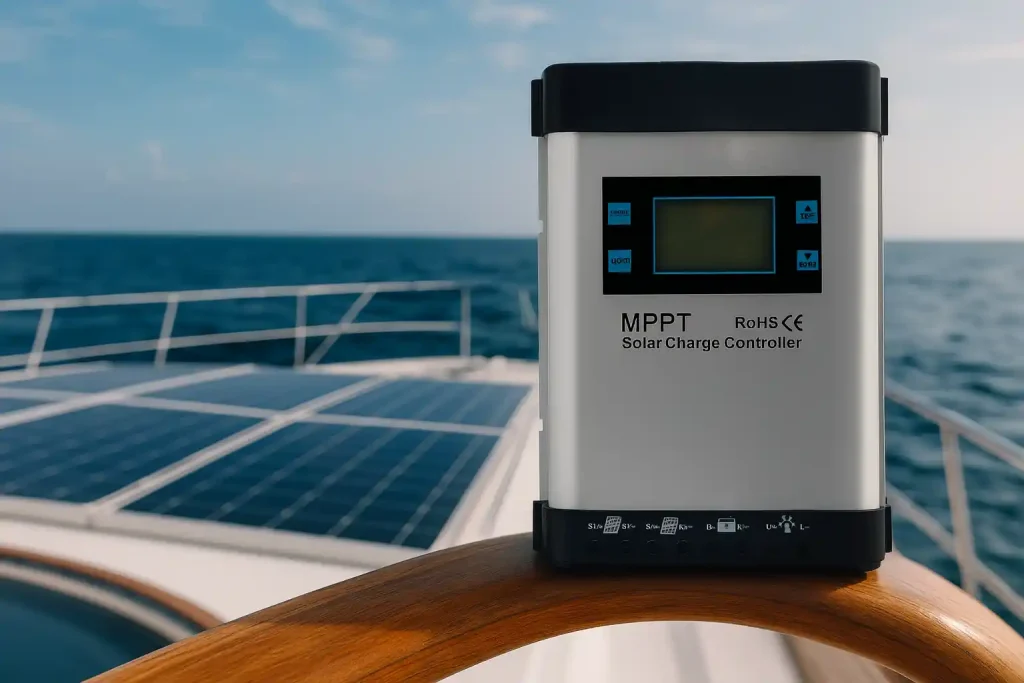
Conclusion
The solar charge controller has become the heart of every efficient and intelligent solar energy system. From basic voltage regulation to data-driven smart control, it ensures stability, safety, and long-term sustainability for residential, commercial, and industrial applications alike.
For dependable and high-performance solar solutions, CARSPA offers advanced solar charge controllers engineered to maximize energy conversion, protect your power system, and support a greener, more intelligent future.