
How Is Home Energy Storage Used in Modern Power Applications?
Introduction
Home Energy Storage is no longer a niche solution reserved for experimental solar projects or remote locations. As power systems become more decentralized and energy usage patterns grow increasingly complex, energy storage is emerging as a structural component of modern electrical infrastructure. Homes and small-scale facilities are now expected to manage variable energy sources, intermittent grid conditions, and rising demand for stable power—all within limited space and budget constraints.
Traditional power setups were designed around one-way energy flow: electricity was generated centrally and consumed passively. Today, that model is shifting. Solar generation, backup requirements, and load optimization are turning end users into active participants in energy management. Home Energy Storage plays a critical role in this transition by allowing energy to be stored, regulated, and deployed when it is most needed, rather than when it is merely available.
From improving solar self-consumption to maintaining continuity during power interruptions, Home Energy Storage supports a wide range of real-world applications. Its value lies not only in storing electricity, but in enabling smarter, more resilient energy systems that adapt to changing conditions. Understanding where and how these systems are applied is essential for selecting the right configuration and achieving long-term performance and reliability.
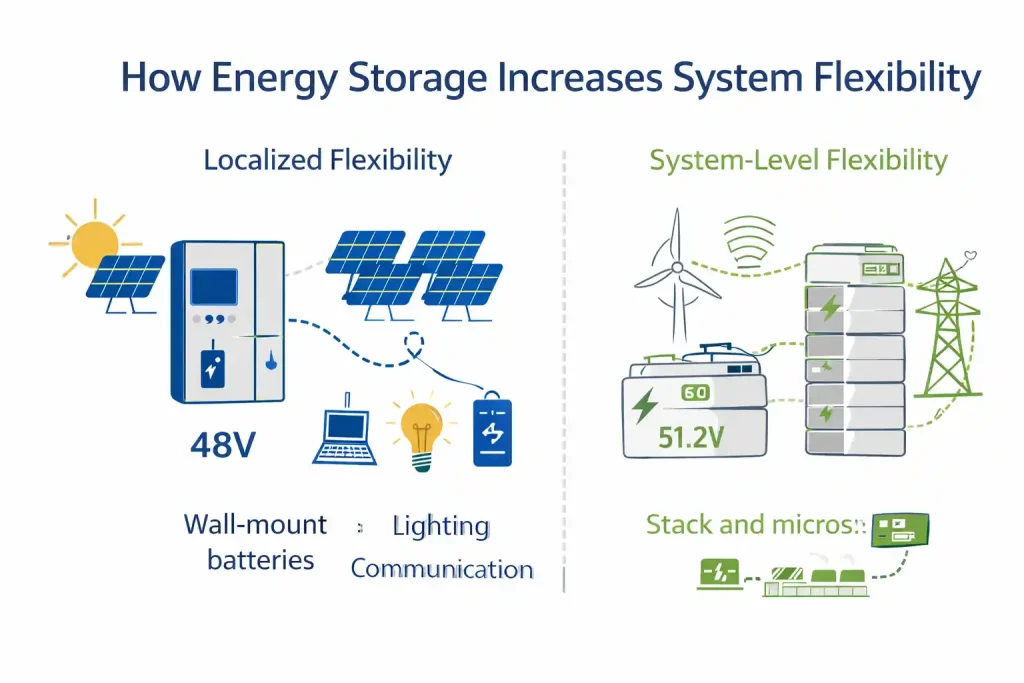
Where Is Home Energy Storage Most Commonly Applied in Modern Power Systems?
Home Energy Storage is applied across a growing range of power scenarios where flexibility, reliability, and energy control are required. Rather than serving a single purpose, these systems are increasingly designed to adapt to different operating conditions and usage patterns. The most common applications reflect how modern power systems are evolving at the consumption level.
Residential Backup Power Environments
One of the most widespread applications is residential backup power. In many regions, short-term outages, voltage drops, or unstable grid conditions can disrupt daily life and damage sensitive equipment. Home Energy Storage allows essential loads—such as lighting, communication devices, control systems, and basic appliances—to continue operating without interruption. Unlike traditional backup solutions, storage systems respond instantly and operate quietly, making them suitable for long-term residential use.
Solar-Integrated Home Energy Systems
Homes equipped with solar panels increasingly rely on energy storage to balance production and consumption. Solar generation is inherently variable and often does not align with actual energy demand. Home Energy Storage captures excess solar energy during peak generation periods and releases it when demand rises, enabling more efficient use of locally generated power. This application is especially relevant in systems aiming to reduce dependence on external power sources.
Off-Grid and Weak-Grid Installations
In areas where grid infrastructure is limited or unreliable, Home Energy Storage serves as a core system component rather than a supplementary one. Off-grid homes, rural installations, and locations with frequent voltage fluctuations depend on storage to maintain consistent power delivery. In these cases, energy storage works alongside solar or hybrid power sources to stabilize output and protect connected loads.
Multi-Scenario Residential and Hybrid Use
Modern homes often combine multiple energy use scenarios within a single installation. A property may require backup capability, solar integration, and load management simultaneously. Home Energy Storage systems are increasingly designed to handle these overlapping requirements, allowing one system to support daily energy optimization while remaining ready for unexpected power events.
These application scenarios demonstrate that Home Energy Storage is no longer defined by a single use case. Instead, it functions as a flexible energy management layer that adapts to different power conditions and user priorities.
How Does Home Energy Storage Support Reliable Solar Self-Consumption?
Solar power has become a core energy source in many residential systems, but its effectiveness depends heavily on how well generation can be matched with actual consumption. Home Energy Storage bridges this gap by turning intermittent solar output into a controllable and reliable energy resource.
Converting Daytime Solar Generation into Usable Energy
Solar panels typically generate the most electricity during midday, while household demand often peaks in the morning and evening. Without storage, excess solar energy is either exported or wasted. Home Energy Storage captures this surplus energy and stores it for later use, allowing solar-generated power to be consumed when it is truly needed. This time-shifting capability is fundamental to improving overall system efficiency.
Improving Solar Self-Consumption Rates
By storing excess energy locally, Home Energy Storage significantly increases the proportion of solar power used on-site. Higher self-consumption means less reliance on external power sources and more predictable energy performance. This is particularly valuable in systems designed to operate independently or semi-independently from the grid.
Managing Fluctuations in Solar Output
Solar generation is influenced by weather conditions, shading, and seasonal changes. Home Energy Storage smooths these fluctuations by providing a buffer between generation and consumption. Stored energy compensates for short-term drops in solar output, helping maintain stable voltage and consistent power delivery to connected loads.
Enabling Smarter Energy Control Strategies
Energy storage allows solar systems to move beyond simple generation and consumption. With storage in place, power can be prioritized for critical loads, distributed more evenly throughout the day, and reserved for specific operating conditions. This level of control transforms solar installations into balanced energy systems rather than isolated power sources.
Through these functions, Home Energy Storage enhances the practicality of solar power, ensuring that generated energy is not only clean, but also dependable and usable under real-world operating conditions.

Why Is Home Energy Storage Important for Backup Power and Load Continuity?
Power interruptions are no longer rare, isolated events. Grid congestion, extreme weather, maintenance cycles, and localized faults can all disrupt electricity supply with little warning. Home Energy Storage addresses these challenges by providing an immediate and controlled source of backup power, ensuring continuity where it matters most.
Instant Response During Power Outages
Unlike traditional backup solutions that require manual intervention or startup time, Home Energy Storage systems respond almost instantly when grid power is interrupted. This seamless transition minimizes disruption and prevents sudden shutdowns of connected devices. For systems supporting sensitive electronics or control equipment, this rapid response is critical to avoiding data loss and equipment stress.
Protecting Critical and Priority Loads
Not all loads carry the same importance during an outage. Home Energy Storage enables selective load support, allowing critical circuits—such as lighting, communication systems, monitoring devices, or essential appliances—to remain operational while non-essential loads are temporarily reduced or disconnected. This targeted approach extends backup duration and improves overall system resilience.
Maintaining Stability During Grid Instability
Backup power is not only about complete outages. Voltage dips, frequency fluctuations, and short interruptions can be just as damaging over time. Home Energy Storage acts as a stabilizing buffer, smoothing out irregularities in incoming power and delivering consistent output to connected loads. This function helps protect equipment and reduces long-term wear caused by unstable power conditions.
Reducing Dependence on Conventional Backup Methods
Traditional backup options often involve fuel-based generators, which introduce noise, emissions, and maintenance requirements. Home Energy Storage offers a cleaner, quieter alternative that integrates naturally with existing electrical systems. When paired with solar input, storage systems can recharge during normal operation, maintaining readiness without external fuel dependence.
By supporting both emergency backup and everyday power stability, Home Energy Storage becomes an integral part of load continuity planning rather than a last-resort solution.
How Do Different Home Energy Storage Configurations Match Different Applications?
Home Energy Storage is not a one-size-fits-all solution. Different applications place different demands on capacity, installation space, scalability, and long-term flexibility. For this reason, modern energy storage systems are commonly offered in multiple configurations to better align with real-world usage scenarios.
Wall-Mounted Systems for Space-Efficient Installations
Wall-mounted energy storage units are well suited for applications where installation space is limited and capacity requirements are moderate. These systems are commonly used in residential environments where simplicity, compact design, and ease of integration are priorities. Their streamlined form factor allows them to be installed close to existing electrical infrastructure, reducing wiring complexity and improving overall system efficiency.
Stackable Systems for Scalable Energy Demand
In applications where energy demand may increase over time, stackable energy storage systems provide a flexible solution. These configurations allow capacity to be expanded by adding additional battery modules without redesigning the entire system. This approach is particularly useful in homes or hybrid installations where initial requirements are modest but future expansion is anticipated.
Modular Design for Long-Term System Planning
Modular storage architectures support phased investment and long-term planning. Rather than oversizing a system from the outset, users can deploy an initial configuration and expand capacity as usage patterns evolve. This adaptability makes modular systems suitable for applications that combine daily energy optimization with backup power readiness.
Supporting Multiple Operating Modes Within One System
Different configurations also enable a single energy storage system to support multiple operating modes. A system may function primarily for solar self-consumption during normal operation while maintaining reserve capacity for backup purposes. The ability to balance these roles depends heavily on system structure and capacity layout.
By matching system configuration to application requirements, Home Energy Storage becomes easier to integrate, scale, and optimize over its operational lifetime—ensuring that performance aligns with actual energy usage rather than fixed assumptions.
What Practical Benefits Does Home Energy Storage Bring to System Owners Over Time?
Beyond immediate applications such as solar utilization and backup power, Home Energy Storage delivers long-term operational and economic benefits. These advantages become more apparent as energy usage stabilizes and systems operate continuously over extended periods.
Long Cycle Life and Reduced Replacement Frequency
Modern energy storage systems built on lithium battery technology are designed for high cycle durability. Long cycle life allows systems to perform daily charge and discharge operations for many years with minimal performance degradation. This reduces the need for frequent battery replacement and supports predictable long-term operation.
Improved Energy Management Efficiency
Home Energy Storage enables energy to be used more intentionally. By storing energy when it is abundant and deploying it when demand is higher, systems operate closer to optimal efficiency. Over time, this structured energy flow reduces unnecessary losses and supports more consistent system behavior across changing load conditions.
Lower Long-Term Operating Costs
While energy storage represents an upfront investment, its impact on operating costs becomes clearer over time. Reduced reliance on external power sources, improved utilization of self-generated energy, and minimized disruption-related losses all contribute to a lower total cost of ownership. This makes storage systems attractive not only for resilience, but also for sustained cost control.
Enhanced System Stability and Equipment Protection
Stable power delivery extends the lifespan of connected electrical equipment. By smoothing voltage variations and minimizing sudden power interruptions, Home Energy Storage helps reduce electrical stress on inverters, control systems, and end-use devices. This indirect benefit supports overall system reliability and reduces maintenance demands.

Conclusion
Home Energy Storage has evolved into a versatile and practical component of modern power systems. From supporting solar self-consumption to ensuring backup power continuity and enabling scalable system design, its applications extend well beyond simple energy storage. When properly configured, these systems enhance energy control, improve reliability, and deliver measurable long-term value.
As energy demands continue to diversify, choosing storage solutions that align with real application needs is essential. Manufacturers such as CARSPA provide a range of wall-mounted and stackable Home Energy Storage systems designed to support flexible deployment, reliable performance, and long service life across diverse operating scenarios.


