
How a Solar Charge Controller Maximizes Battery Life and Efficiency in PV Systems?5 Critical Questions Answered
As solar energy becomes a more reliable and accessible source of power, the components that support and regulate photovoltaic (PV) systems have become equally important. Among them, the solar charge controller plays a vital role in ensuring that energy generated by solar panels is efficiently stored and used, especially in systems that include battery storage.
Without a charge controller, fluctuations in sunlight and inconsistent charging currents could damage batteries or reduce their lifespan significantly. In today’s solar systems—whether off-grid, hybrid, or backup-oriented—charge controllers act as intelligent gatekeepers. They manage how energy flows from panels to batteries and load circuits, prevent overcharging or deep discharging, and protect the system from voltage irregularities.
Whether you are designing a compact residential PV setup or a robust commercial solar installation, understanding the role of the solar charge controller is critical to long-term performance, safety, and return on investment. In the following sections, we’ll explore what a solar charge controller does, how it works, and why choosing the right one makes all the difference in your system’s stability and efficiency.

What Is a Solar Charge Controller and How Does It Work in a PV System?
Definition and Purpose
A solar charge controller is an essential electronic device used in photovoltaic (PV) systems to regulate the voltage and current coming from solar panels before they reach the battery or load. Its primary function is to ensure that batteries are charged efficiently and safely without being overcharged or deeply discharged—two common causes of premature battery failure in solar systems.
Whether you’re building an off-grid cabin, powering a telecommunications tower, or managing a backup energy system for remote operations, the charge controller is the gatekeeper that keeps everything in balance.
Basic Working Principle
The charge controller is installed between the solar panels and the battery bank. As sunlight hits the panels and generates DC electricity, the charge controller continuously monitors both the incoming voltage and the battery’s charge level. When the battery reaches full charge, the controller either stops the charging process or reduces it to a safe trickle, depending on the system type.
This dynamic regulation helps prevent dangerous overvoltage, heat buildup, or chemical degradation in the batteries—all of which could reduce performance or create safety risks.
Types of Solar Charge Controllers: PWM vs. MPPT
There are two major types of charge controllers used in solar systems:
PWM (Pulse Width Modulation):
A more basic type of controller that gradually reduces the amount of power sent to the batteries as they near full charge. It’s cost-effective and works best in small-scale systems where the panel voltage closely matches the battery voltage.
MPPT (Maximum Power Point Tracking):
A more advanced type that actively tracks and adjusts for the maximum power point of the solar array in real-time. MPPT controllers are up to 30% more efficient than PWM in certain conditions, especially in colder climates or where panel voltage significantly exceeds battery voltage. This makes them ideal for larger, high-efficiency installations.
Integration with PV System Components
A well-integrated solar charge controller communicates seamlessly with other system components:
Solar Panels: Receives variable DC input depending on sunlight intensity
Battery Bank: Stores regulated power for use when sunlight is not available
Inverter (optional): Converts stored DC into AC for appliances and equipment
Monitoring Systems: Allows real-time tracking of system health and performance
This coordination helps maintain a stable and dependable energy supply, especially for systems requiring 24/7 availability or remote operation.

Why Is a Solar Charge Controller Essential for Battery Protection and System Efficiency?
Preventing Overcharging and Deep Discharging
One of the most critical roles of a solar charge controller is to protect batteries from overcharging and deep discharging. Overcharging can cause excessive heat, battery swelling, electrolyte loss, or even leakage and fire in extreme cases. On the other hand, deep discharging (draining the battery below a safe voltage) shortens the battery’s lifespan and reduces its capacity.
By automatically adjusting the current flow to the battery, the charge controller ensures that batteries operate within a safe voltage range, extending their usable life and reducing maintenance needs. This is especially important in solar setups where power generation is intermittent and unpredictable due to weather conditions.
Maximizing Energy Harvesting Efficiency
Every watt generated by the solar panels is valuable, especially in off-grid or remote installations. Without a controller, excess energy may be lost or improperly managed. A solar charge controller ensures that the system extracts the maximum usable energy from the panels, particularly in systems using MPPT technology, which dynamically adapts to changing light conditions.
By keeping the system operating at optimal voltage and current levels, the controller improves the overall energy conversion efficiency, ensuring that more sunlight is turned into usable electricity without waste.
Balancing Power Between Loads and Storage
Solar systems often face competing demands between charging the battery and powering live loads (devices or appliances drawing current). A good charge controller manages this balance intelligently—prioritizing charging when battery levels are low, and redistributing excess power to the load once the battery is sufficiently charged.
Some advanced controllers offer programmable load output control, enabling scheduled operation of devices (e.g., water pumps or lights), which improves system reliability and avoids energy shortages during critical usage hours.
Maintaining Voltage Stability Across the System
Voltage fluctuations caused by varying solar input (due to passing clouds, shadows, or seasonal changes) can destabilize the entire solar system. A charge controller mitigates this risk by stabilizing the output voltage, ensuring connected equipment receives a consistent power supply.
This is especially important when sensitive electronics or communication equipment are part of the system, as voltage spikes can lead to malfunction, data loss, or permanent damage.
Reducing Long-Term Costs and Downtime
Because the solar charge controller protects the most expensive and failure-prone components of the system—primarily the batteries—it directly contributes to lowering operational costs and system downtime. When batteries are well-managed and perform consistently over their expected life cycle, users benefit from fewer replacements, less maintenance, and fewer disruptions.
How Does the Type of Solar Charge Controller Affect System Performance?
Understanding the Two Main Types: PWM vs. MPPT
When selecting a solar charge controller, the first critical decision is choosing between PWM (Pulse Width Modulation) and MPPT (Maximum Power Point Tracking) models. Each offers distinct advantages depending on the system’s design, size, and location.
PWM Controllers:
These are simpler and more cost-effective. PWM works by directly connecting the solar panel to the battery and reducing the panel voltage to match the battery voltage. While reliable for smaller systems, this results in energy loss if the panel voltage is significantly higher than the battery voltage. PWM controllers are best suited for low-power applications with a small number of panels and where efficiency is not the top priority.
MPPT Controllers:
These controllers constantly monitor the voltage and current output of the solar array to identify the "maximum power point"—the point where the array produces the most power. They then convert excess voltage into additional current, increasing charging efficiency by up to 30% compared to PWM models. MPPT is ideal for larger systems, especially in colder climates or when using high-voltage panels with lower-voltage battery banks.
System Scale and Complexity Considerations
The performance of your overall PV system depends heavily on how well the charge controller matches the system scale:
Small Residential Systems: PWM controllers may suffice where cost control is critical and power needs are minimal.
Commercial and Industrial Systems: MPPT is typically recommended for installations involving multiple solar panels, larger battery banks, or mission-critical applications where every kilowatt-hour counts.
In large setups, MPPT’s higher efficiency can quickly offset its initial higher cost by providing better energy capture throughout the day.
Environmental Conditions and Temperature Sensitivity
Environmental conditions also influence performance differences between controller types:
High Temperatures: In hot climates, panel voltage drops, which can reduce the effectiveness of MPPT. However, it still performs better than PWM in most cases due to dynamic tracking.
Cold Temperatures: MPPT excels in cold environments where panel voltage is naturally higher, allowing the controller to extract significantly more energy than PWM.
Therefore, if your system operates in a region with wide temperature variations, MPPT controllers offer greater resilience and output consistency.
Impact on Long-Term System ROI
Choosing the right type of charge controller doesn’t just affect daily performance—it influences long-term return on investment (ROI). MPPT controllers, despite their higher initial cost, often result in:
Shorter battery charging time
Better use of available sunlight during partial shading or cloudy conditions
Higher stored energy yield across seasons
This translates into better uptime, reduced reliance on backup power sources, and ultimately, lower total cost of ownership for the solar system.
What Are the Key Features to Consider When Choosing a Solar Charge Controller?
System Voltage Compatibility
One of the first technical specifications to evaluate is the voltage range supported by the solar charge controller. Most modern controllers support 12V, 24V, or 48V battery systems, with some advanced models offering auto-detection or even compatibility with higher voltages. Ensuring voltage match between your controller, solar array, and battery bank is crucial for system safety and performance.
If you anticipate expanding your system in the future—such as adding more panels or switching to a higher voltage battery bank—choosing a controller with flexible voltage support is a smart long-term investment.
Current Rating and Solar Input Capacity
Another vital factor is the controller’s current rating, typically measured in amps (A). This value must match or exceed the total current generated by the solar panels under peak conditions. Undersized controllers may overheat or fail; oversized ones add unnecessary cost. For systems that operate in sunny regions or use multiple high-wattage panels, selecting a controller with sufficient input amperage and wattage capacity ensures reliable performance even under full sun.
For example, a 40A MPPT controller is commonly used in mid-sized systems and can handle solar arrays of up to 1000W (12V system) or 2000W (24V system).
Display Interface and Monitoring Options
Modern solar charge controllers often feature LCD displays, providing real-time information on voltage, current, charging mode, battery level, and error codes. This is particularly useful for users who need to perform regular inspections or troubleshoot issues on-site.
For remote or commercial systems, consider models with remote monitoring via RS485, Wi-Fi, or Bluetooth. This allows administrators to access performance logs, adjust settings, or receive alerts from a distance—critical for maintaining uptime in isolated or critical installations.
Temperature Compensation and Environmental Protection
High-quality controllers incorporate temperature compensation, adjusting charging parameters automatically based on ambient conditions. This feature is especially important for systems installed outdoors or in uninsulated environments where temperature fluctuations are common. It helps prevent undercharging in cold conditions or overcharging in hot ones, thereby improving battery longevity.
Key Features Comparison Table
| Feature | Description | Recommendation |
| System Voltage | Compatible with 12V / 24V / 48V systems; some support auto-detection | Choose auto-detect for flexible setups |
| Current Rating (Amps) | Must match or exceed total solar panel output | Slightly oversize to prevent overload |
| Controller Type | PWM for small systems; MPPT for high-efficiency, larger systems | MPPT recommended for most modern setups |
| Monitoring Interface | LCD display, Bluetooth, RS485, or Wi-Fi | Use remote monitoring in critical systems |
| Temperature Compensation | Adjusts charging voltage based on ambient temperature | Essential for outdoor or seasonal systems |
| Protection Features | Overvoltage, reverse polarity, short-circuit, surge | Must-have for long-term reliability |
Request a Free Sample
Interested in testing a charge controller before full deployment?
Click here to request a free sample
In addition, look for IP-rated enclosures (e.g., IP32, IP65) if the controller is to be installed in dusty, humid, or outdoor locations. Durable casings with anti-corrosion coatings also extend service life and reduce maintenance frequency.
Built-in Protections and Smart Features
Advanced charge controllers come equipped with comprehensive protection features, including:
Overvoltage and undervoltage protection
Reverse polarity protection
Overload and short-circuit protection
Lightning surge protection (optional in some models)
Other smart features might include programmable load output (to control lights, pumps, etc.), USB charging ports, or even dual-battery support for hybrid systems. Depending on your application, such functionalities can simplify wiring and reduce the need for extra control hardware.
How Can a Well-Selected Charge Controller Optimize Off-Grid and Hybrid Solar Systems?
Supporting the Unique Demands of Off-Grid Systems
In off-grid solar installations, where there is no connection to a public power grid, the solar charge controller becomes the central coordinator of energy flow. It must ensure:
Stable power delivery to loads even during low sunlight periods
Efficient battery charging and discharging to meet daily energy demand
Automatic protection during voltage drops, surges, or excessive loads
A well-chosen MPPT controller is especially important in these setups because it can maximize power harvesting during cloudy or low-light conditions, making the most of every available watt to charge batteries and reduce generator usage or blackout risks.
Enhancing Reliability in Hybrid Solar Systems
Hybrid systems combine solar generation with other sources such as grid electricity, diesel generators, or wind turbines. Here, the charge controller plays a coordinating role by ensuring the solar component:
Charges batteries when grid power is unavailable
Works harmoniously with inverters or grid-tied converters
Switches between energy sources without interruption
Some advanced charge controllers offer programmable logic or communication protocols (like MODBUS), enabling integration with energy management systems. This ensures that solar energy remains the primary source, with backups kicking in only when necessary—maximizing energy independence and cost savings.
Meeting Specialized Load Requirements
Certain off-grid or hybrid solar applications involve critical loads, such as:
Agricultural irrigation pumps
Telecommunications towers
Security or surveillance systems
Remote medical or refrigeration equipment
In these scenarios, voltage stability, uninterrupted load support, and smart control are non-negotiable. A charge controller with dedicated load terminals, programmable timers, or even dual-battery support can help manage usage schedules and prioritize critical functions.
Additionally, in locations with variable sunlight—such as desert edges or mountainous regions—a controller with real-time MPPT tracking ensures the system dynamically adapts, maintaining power availability despite environmental fluctuations.
Scaling for Future Expansion
As solar systems expand with added panels or battery banks, the charge controller must accommodate growth. Choosing a model that supports higher voltage ranges, stackable input, or external monitoring via cloud-based platforms can simplify scaling up without needing a full system redesign.
For example, a controller that supports parallel operation or integrates easily with modular energy management software can allow businesses or property owners to start small and build their energy infrastructure gradually, without bottlenecking performance.
Maximizing Return on Investment
Ultimately, a high-quality, correctly sized charge controller:
Prolongs battery and equipment lifespan
Reduces energy waste
Minimizes system failures and outages
Enables long-term system monitoring and adjustment
This translates into fewer maintenance calls, lower total cost of ownership, and better overall efficiency—especially valuable in remote or cost-sensitive installations where technical access is limited.
Conclusion
Why the Right Solar Charge Controller Is Key to Solar System Success
From preventing battery damage to improving system efficiency and enabling long-term scalability, the solar charge controller is far more than a simple regulator—it’s the brain of your PV system. Whether operating in an off-grid environment or supporting a hybrid configuration, the controller ensures safe, intelligent energy flow between your solar panels, batteries, and connected loads.
Choosing the right controller type (PWM or MPPT), ensuring compatibility with your voltage and current requirements, and selecting models with advanced protection and monitoring features are all critical steps toward building a reliable and high-performance solar energy solution.
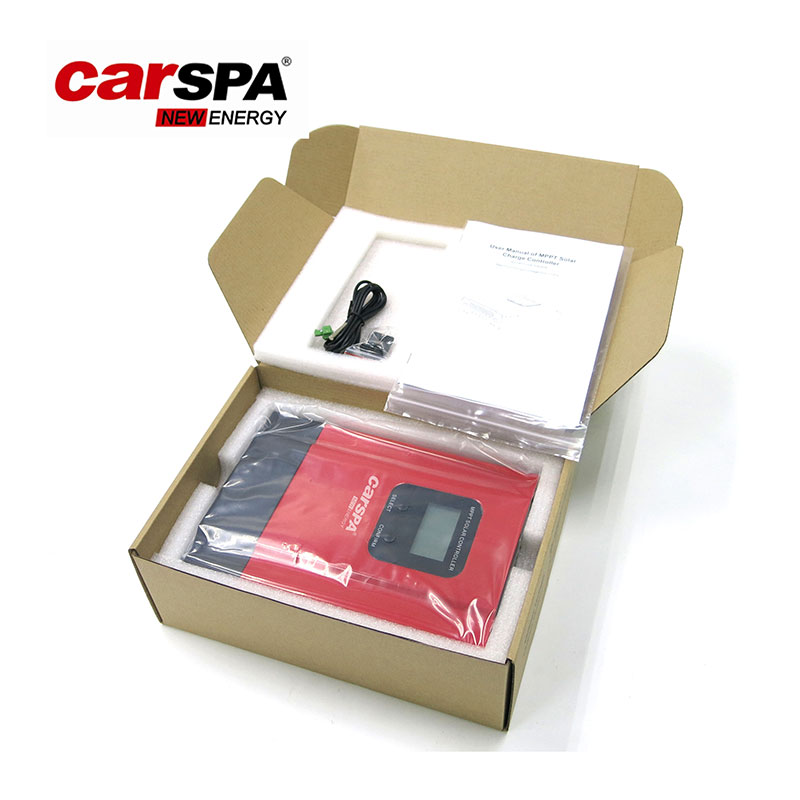
For professionals and businesses seeking dependable solar charge controllers built for real-world challenges, CARSPA offers a comprehensive range of advanced MPPT and PWM models engineered to meet diverse system requirements with efficiency and durability.


