
How Can a Solar Charge Controller Improve Outdoor Power Reliability and Equipment Lifespan?
In today's increasingly mobile and off-grid world, reliable outdoor power systems are essential across a wide range of applications—from surveillance equipment in remote areas to lighting systems in campgrounds, communication stations, or agricultural fields. At the core of these solar-powered setups lies one critical component: the solar charge controller.
A solar charge controller serves as the intelligent bridge between your solar panels and the battery bank, ensuring that energy is safely stored and efficiently used. Without it, batteries risk being overcharged, undercharged, or damaged by fluctuations in solar input—especially in unpredictable outdoor environments where temperature, sunlight intensity, and power demand vary constantly.
This article explores how solar charge controllers enhance the performance, durability, and reliability of outdoor solar systems. Whether you're managing a small-scale portable system or a large off-grid installation, understanding the key functions, types, and selection criteria of a solar charge controller can make a real difference in operational success.
Let's begin by understanding its core role.
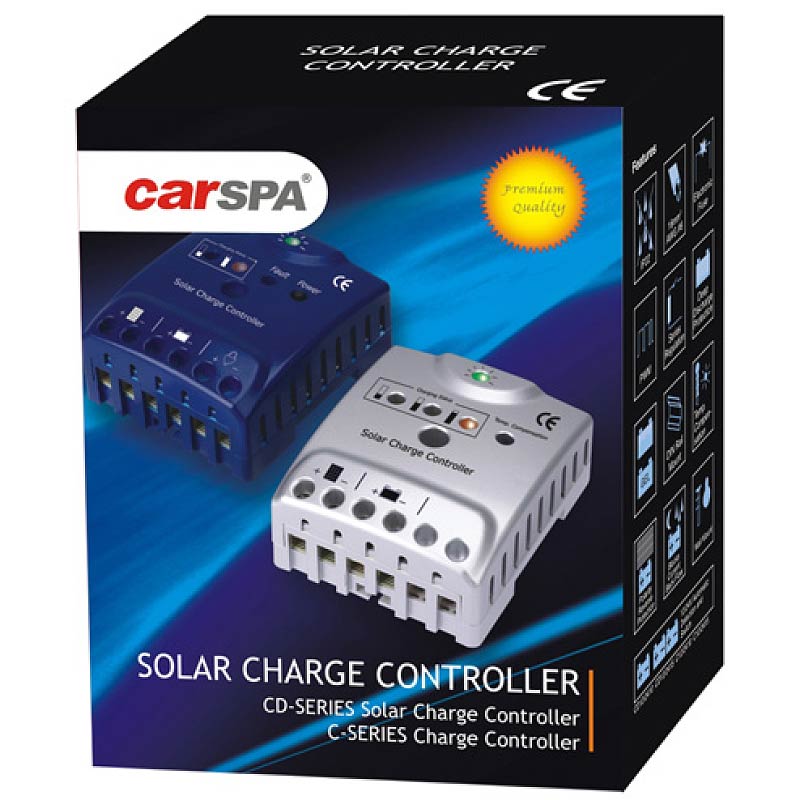
What Role Does a Solar Charge Controller Play in Outdoor Power Systems?
In an outdoor solar power system, a solar charge controller is not just a supportive accessory—it's a central component that determines the overall performance and safety of the setup. It regulates the flow of energy between the solar panels and the batteries, preventing overcharging, deep discharging, or reverse current flow at night.
1. Voltage Regulation for Battery Safety
Outdoor environments often present varying levels of solar irradiance. On bright sunny days, the voltage from solar panels can spike, potentially damaging battery banks. The charge controller ensures that this voltage stays within safe limits, prolonging battery life and maintaining system integrity.
2. Real-Time Power Management
Modern charge controllers continuously monitor charging and discharging cycles. They optimize the delivery of current based on battery status and connected loads, ensuring that outdoor devices—whether lights, sensors, or communication systems—receive stable power without sudden drops or overloads.
3. Environmental Adaptability
A robust solar charge controller is engineered to perform reliably under extreme outdoor conditions, including high heat, humidity, dust, and rain. Enclosures with proper IP ratings and corrosion-resistant components are essential for long-term deployment in areas such as construction sites, agriculture fields, or mountainous terrains.
4. System Efficiency Optimization
By managing energy flow intelligently, charge controllers reduce energy loss during transmission and storage. This is especially important in mobile and compact outdoor setups where every watt counts, such as in RV systems, portable monitoring units, or temporary emergency response stations.
In short, the solar charge controller acts as the “brain” of an outdoor solar system—balancing generation, storage, and usage in real-time. Without this component, even the best solar panels and batteries could fail to deliver consistent performance in field conditions.
How Does a Solar Charge Controller Protect Batteries in Harsh Outdoor Environments?
Outdoor solar systems often face unpredictable and demanding environmental conditions—extreme heat, cold, moisture, dust, and fluctuating sunlight levels. Under these circumstances, the battery becomes the most vulnerable component of the system. A well-designed solar charge controller plays a vital role in protecting and extending battery lifespan, especially in harsh outdoor scenarios.

1. Overcharge Prevention
In high-irradiance environments, solar panels can generate more voltage than the battery can handle. Overcharging can lead to battery overheating, swelling, and even leakage. A solar charge controller regulates this input by cutting off or reducing the charging current once the battery reaches full capacity, preventing irreversible damage.
2. Deep Discharge Protection
At night or during long periods of poor sunlight, batteries risk being deeply discharged—especially if outdoor loads like LED lights or sensors continue drawing power. The controller automatically disconnects the load once the battery voltage drops below a defined threshold, preserving the battery's health and maintaining a reserve for critical functions.
3. Temperature Compensation
Some advanced solar charge controllers come with temperature sensors that dynamically adjust the charging voltage based on the battery's surrounding temperature. This is particularly important in outdoor environments where daytime heat and nighttime cold can differ drastically, as it prevents over-voltage in high heat and undercharging in cold conditions.
4. Reverse Current and Short Circuit Protection
At night, solar panels can actually draw current back from the battery, draining power instead of supplying it. A solar charge controller includes built-in protection to prevent this reverse current. It also guards against short circuits, overcurrent, and polarity errors—common risks in mobile or outdoor-deployed systems.
5. Battery Type Customization
Different battery chemistries—like lead-acid, lithium-ion, or gel—require different charging profiles. Many modern controllers allow users to select or auto-detect the battery type, ensuring optimal charge/discharge cycles and avoiding compatibility issues common in rugged outdoor systems.
Whether the installation is exposed to desert heat, mountain cold, or coastal humidity, the solar charge controller serves as the frontline protector for your power storage unit. Investing in a controller with environmental resilience features is a critical step in ensuring long-term system stability.
What Types of Solar Charge Controllers Are Best for Outdoor Applications?
Choosing the right type of solar charge controller is essential for achieving stable and efficient performance in outdoor power systems. The selection typically comes down to two major technologies: PWM (Pulse Width Modulation) and MPPT (Maximum Power Point Tracking). Each has distinct advantages depending on the scale, environment, and purpose of your outdoor setup.
1. PWM Controllers: Simple and Cost-Effective
PWM controllers are the more traditional option, offering a straightforward method of voltage regulation. They are generally well-suited for:
Small-scale outdoor setups like solar-powered lighting or remote monitoring stations.
Stable sunlight regions, where panel voltage closely matches battery voltage.
Budget-conscious installations, where simplicity and reliability are prioritized over efficiency.
While PWM units are less efficient (especially in colder climates or with mismatched panel-battery voltages), they are durable and consume minimal standby power—making them a good fit for basic outdoor use.
2. MPPT Controllers: High-Efficiency for Demanding Systems
MPPT controllers are ideal for maximizing energy harvest, especially in variable weather conditions. These controllers continuously track the solar array's voltage and current to find the maximum power point, converting excess voltage into usable charging current. They are preferred for:
Larger outdoor systems, such as solar-powered communication towers or agricultural irrigation control units.
Cold and cloudy environments, where solar voltage often fluctuates.
Systems with higher voltage solar panels charging lower voltage battery banks.
Although MPPT controllers are more expensive, their increased efficiency—especially over long-term deployments—often results in better overall return on investment for outdoor applications.
3. Key Features to Look for in Outdoor Controllers
Regardless of type, for outdoor use, your solar charge controller should ideally include:
IP65 or higher weatherproof rating
Wide operating temperature range
Corrosion-resistant housing and connectors
Optional remote monitoring or LED display for diagnostics
Compatibility with different battery types
In summary, PWM controllers offer simplicity, while MPPT controllers provide higher efficiency and adaptability. The right choice depends on your outdoor system's size, environmental exposure, and performance expectations.
How to Size and Configure a Solar Charge Controller for Your Outdoor Setup?
Correctly sizing and configuring your solar charge controller is essential for stable operation in outdoor environments. An undersized controller can lead to system failure, while an oversized one may increase cost without added benefit. Getting this step right ensures safe charging, efficient energy use, and long-term reliability for your outdoor application.
1. Match the Controller to Panel Current and Voltage
The first step is calculating the maximum output current of your solar panel array. This is typically done using the formula:
Controller Amperage = Solar Panel Wattage ÷ Battery Voltage × 1.25 (safety factor)
For example, if you have a 300W panel charging a 12V battery:
300 ÷ 12 × 1.25 = 31.25A, so a 40A controller is recommended.
You must also verify that the controller's input voltage rating is compatible with the solar array's open-circuit voltage (Voc), especially in cold environments where panel voltage can spike.
2. Consider the Battery Bank Configuration
If your outdoor setup includes a 24V or 48V battery bank, make sure the controller supports that voltage range. Some models auto-detect the battery voltage, while others require manual selection. Also, verify compatibility with your battery chemistry (e.g., lithium, AGM, gel).
Battery size affects charging time, so a larger bank may require a controller with higher current capacity to avoid undercharging during short daylight hours.
3. Account for Outdoor Load Profiles
Outdoor systems often power specific loads—like surveillance cameras, weather sensors, pumps, or lights. Estimate the daily power consumption (in Wh) of these devices and ensure your system—including the controller—can handle both the generation and storage needs.
If the system includes a continuous or nighttime load, choose a controller with load output terminals and programmable discharge settings.
4. Safety Margins and Environmental Factors
Always add a 25–30% safety margin to account for sudden solar intensity spikes or system expansions. In dusty, hot, or humid environments, choose controllers with oversized heatsinks, fanless designs, and sealed enclosures to avoid overheating and dust ingress.
5. Optional Features for Outdoor Convenience
Look for models with:
Remote display panels or Bluetooth modules for remote areas
Low voltage disconnect (LVD) to protect critical loads
Auto-restart and error diagnostics to simplify maintenance
Proper sizing and configuration prevent system downtime, protect your components, and ensure efficient energy use—key priorities in any outdoor application, especially those deployed in remote or hard-to-access locations.
Why Should You Integrate a Reliable Solar Charge Controller in Remote Outdoor Systems?
For outdoor solar systems installed in remote or unattended locations, reliability isn't just a preference—it's a necessity. Whether powering communication equipment, environmental sensors, agricultural pumps, or lighting in isolated areas, the solar charge controller acts as the central control unit ensuring uninterrupted power flow and self-protection in the absence of human intervention.
1. Unattended Systems Need Autonomous Protection
In remote locations, it's not feasible to perform frequent manual checks. A high-quality solar charge controller autonomously manages charging cycles, monitors battery status, and activates protective mechanisms such as overvoltage shutdown, reverse polarity protection, and low voltage disconnection. This keeps your equipment safe without physical oversight.
2. Power Stability for Critical Outdoor Loads
Devices like surveillance cameras, satellite communication units, or irrigation timers depend on consistent power. A reliable controller ensures voltage and current remain stable, even when sunlight conditions fluctuate dramatically—as is common in mountainous or coastal regions.
Additionally, MPPT-based controllers help maximize power output during mornings, evenings, and cloudy days, preventing system downtime during low-sunlight hours.
3. Monitoring and Maintenance Capabilities
Many advanced controllers feature remote monitoring options—via Bluetooth, WiFi, or RS485 communication protocols. This allows centralized supervision of performance metrics such as voltage, current, temperature, and error logs—making it easier to detect issues early without a site visit.
In large distributed outdoor systems, this centralized data access dramatically reduces maintenance time and cost.
4. Long-Term Investment Value
Outdoor systems are often designed to operate continuously for 5–10 years or more. Investing in a robust, industrial-grade solar charge controller reduces the risk of premature failure, costly battery replacements, or damaged equipment due to unstable power delivery. In the long run, this translates into lower total ownership cost and greater peace of mind.
5. Modular and Scalable Design
Some solar charge controllers are designed for modular expansion, allowing the same controller to be integrated into multi-panel or multi-battery setups. This is particularly useful when outdoor systems need to scale—e.g., from a single monitoring unit to a network of sensors across a wide area.
In short, a reliable solar charge controller is the foundation of autonomous outdoor energy systems. When systems are far from human reach, only intelligent, durable, and self-regulating components can keep the power flowing.

Conclusion
Why the Right Solar Charge Controller Matters for Outdoor Success
As outdoor and remote power systems continue to expand across agriculture, infrastructure, surveillance, and environmental monitoring, the need for smart, durable, and efficient solar charge controllers becomes increasingly clear. These devices are not just about regulating voltage—they are about protecting investments, ensuring uptime, and enabling autonomous performance in some of the harshest conditions.
From managing unpredictable sunlight to safeguarding expensive batteries, a well-chosen controller can make the difference between a dependable system and one plagued by failure and maintenance issues.
Whether you're setting up a single outdoor power unit or an expansive network of remote solar installations, taking the time to understand, size, and select the right solar charge controller will pay off in reliability, efficiency, and long-term peace of mind.
Trusted Outdoor Power Solutions by CARSPA
If you're looking for outdoor-ready solar charge controllers built to handle demanding conditions with precision and safety, explore the range of solutions offered by CARSPA. With a proven reputation in solar power electronics and a commitment to robust design, CARSPA's controllers offer the advanced features and reliability required for today's outdoor and off-grid energy systems.


