How Is Home Energy Storage Applied in Modern Energy Systems?
Introduction
As energy consumption patterns continue to evolve, the way electricity is generated, stored, and used at the local level is undergoing a fundamental shift. Traditional grid-dependent power models are increasingly challenged by fluctuating energy prices, intermittent renewable generation, and growing expectations for power reliability. In this context, home energy storage has emerged not as an auxiliary component, but as a core element in modern distributed energy systems.
At its most practical level, home energy storage functions as a buffer between energy generation and energy use. Solar power systems, while efficient and sustainable, rarely align perfectly with real-time demand. Energy is often produced during daylight hours but consumed in the early morning or evening. Without storage, this mismatch leads to wasted generation or increased reliance on external power sources. By storing excess electricity and releasing it when needed, home energy storage enables more predictable and controllable energy usage.
Beyond simple energy shifting, home energy storage is increasingly applied to enhance system stability. Sensitive electrical loads, communication equipment, and automated control systems require continuous and clean power supply. Voltage fluctuations, short interruptions, or unexpected outages can disrupt operations and accelerate equipment wear. Integrated energy storage systems help smooth these variations, providing a stable power foundation across different operating conditions.
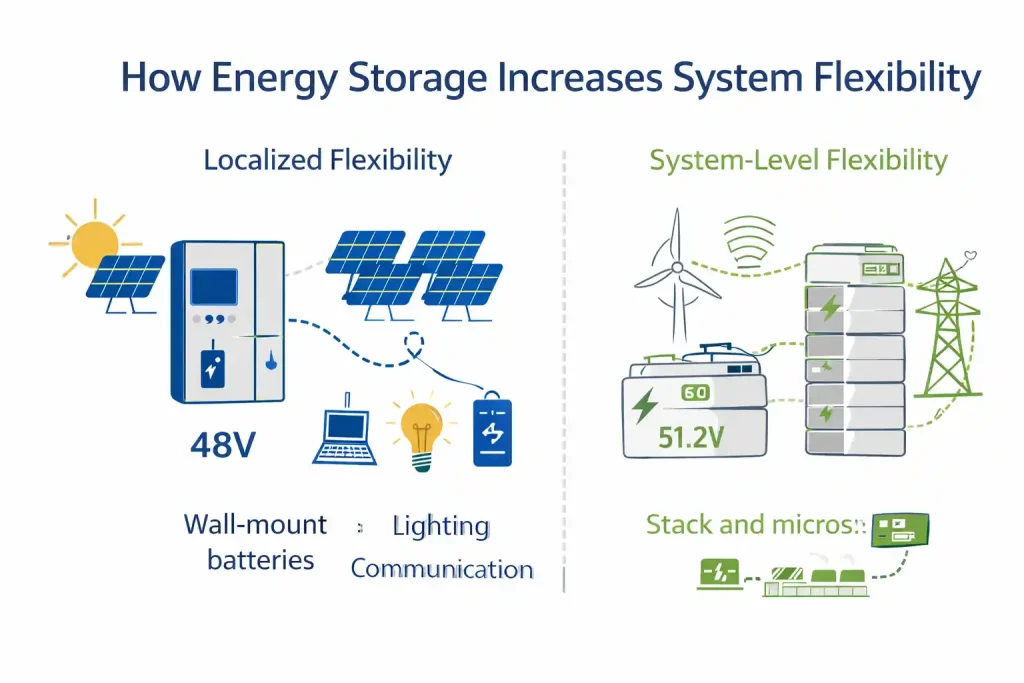
Another key driver behind the adoption of home energy storage is flexibility in system design. Modern storage solutions are no longer limited to fixed, one-size-fits-all configurations. Wall-mounted units, stacked battery systems, and modular architectures allow energy storage capacity to be adapted to available space, load scale, and future expansion needs. This flexibility makes home energy storage suitable for a wide range of real-world applications rather than a single predefined scenario.
As energy systems continue to decentralize, home energy storage plays a growing role in connecting renewable generation, electrical loads, and backup power into a unified structure. Understanding how these systems are applied in practice is essential for evaluating their long-term value and performance across different use cases.
How Is Home Energy Storage Used to Optimize Solar Power Utilization?
One of the most common and practical applications of home energy storage is improving how solar energy is actually used after it is generated. While solar photovoltaic systems are highly effective at producing clean electricity, their output is inherently variable and time-dependent. Energy production peaks during daylight hours, while consumption patterns often rise in the early morning, evening, or overnight. Home energy storage addresses this imbalance by aligning generation with real demand.
Storing Excess Solar Energy Instead of Exporting It
In many installations, solar systems produce more electricity than is immediately required. Without energy storage, this excess power is either exported to the grid or curtailed, depending on system configuration and local grid conditions. Home energy storage captures this surplus energy and stores it for later use, allowing generated power to be retained on-site rather than lost or undervalued.
This approach increases overall system efficiency by ensuring that a higher proportion of generated solar energy is actually consumed where it is produced. Instead of relying on external energy sources during non-solar hours, stored energy becomes available exactly when it is needed.
Improving Energy Availability During Peak Demand Periods
Energy demand is rarely constant throughout the day. Peaks often occur when solar output is low, creating a mismatch that traditional solar-only systems cannot resolve. Home energy storage fills this gap by releasing stored energy during high-demand periods, reducing dependency on external supply and improving power availability.
From an application perspective, this capability is especially important for systems supporting lighting, automation, monitoring equipment, and other continuous loads that must remain operational regardless of solar conditions.
Enhancing System Stability and Power Quality
Beyond energy shifting, home energy storage contributes to overall system stability. Solar generation can fluctuate due to weather conditions, shading, or transient load changes. These fluctuations may cause voltage instability or power interruptions in sensitive electrical systems.
By acting as a stabilizing layer between generation and consumption, energy storage helps smooth short-term variations and provides consistent output. This leads to more predictable system behavior and reduced stress on connected equipment.
Enabling Smarter Energy Control Strategies
Modern home energy storage systems are often integrated with intelligent control logic that prioritizes how and when energy is stored or discharged. This enables smarter energy management strategies, such as maximizing self-consumption, reserving capacity for backup power, or balancing loads across different operating periods.
As a result, home energy storage becomes more than a passive battery—it functions as an active component within a coordinated energy ecosystem.

How Does Home Energy Storage Support Reliable Power for Residential and Light Commercial Applications?
Power reliability is a critical requirement in many modern energy applications. Even brief interruptions, voltage dips, or unstable output can disrupt equipment operation and compromise system performance. Home energy storage plays a central role in maintaining consistent power delivery by acting as a dependable intermediary between energy sources and electrical loads.
Providing Continuous Power During Grid Instability
Grid power is not always stable. Short outages, voltage fluctuations, and unexpected interruptions can occur due to network congestion, weather conditions, or maintenance activities. Home energy storage systems are designed to respond instantly to these events, supplying stored energy when external power becomes unavailable or unstable.
This rapid response capability ensures that connected loads continue operating without noticeable disruption, maintaining continuity across daily operations and automated systems.
Supporting Sensitive and Mission-Critical Electrical Loads
Many modern electrical systems rely on sensitive components such as controllers, communication modules, monitoring devices, and power electronics. These loads require clean and stable power to function correctly. Irregular voltage or sudden power loss can cause data errors, system resets, or long-term equipment degradation.
By delivering a steady and controlled power output, home energy storage helps protect these sensitive loads, reducing failure risks and improving overall system reliability.
Reducing Dependence on Single Power Sources
Relying on a single power source increases vulnerability to unexpected failures. Home energy storage introduces an additional layer of redundancy, allowing systems to operate independently for extended periods when primary power sources are unavailable.
This multi-layer power structure enhances resilience and provides greater operational flexibility, especially in environments where uninterrupted power is essential.
Improving Overall System Confidence and Predictability
Reliable power supply is not only about preventing outages—it is also about predictability. When energy availability becomes consistent and controllable, system planning, load scheduling, and operational management become more straightforward.
Home energy storage contributes to this predictability by ensuring that power availability is not solely dependent on external conditions, allowing systems to operate with greater confidence over the long term.
How Can Home Energy Storage Improve Energy Cost Control and Load Management?
Energy consumption is rarely uniform. Peaks and valleys in demand place stress on power systems and often lead to inefficient energy usage. Home energy storage enables more controlled and deliberate energy distribution by actively managing when and how electricity is consumed.
Balancing Load Demand Across Different Operating Periods
Electrical loads tend to concentrate during specific time windows, creating demand spikes that strain power infrastructure. Home energy storage absorbs energy during low-demand periods and releases it when demand increases, effectively smoothing the load profile.
This load balancing capability reduces sudden surges, helps maintain stable system operation, and supports more efficient use of available energy resources.
Reducing the Impact of High-Load Equipment Start-Up
Certain electrical devices draw significantly higher current during start-up phases. These transient peaks can cause voltage drops or system instability if not properly managed. Home energy storage provides supplementary power during these moments, reducing the burden on primary energy sources.
As a result, equipment operates more smoothly, and the overall power system experiences less stress during dynamic load changes.
Enabling Smarter Energy Prioritization
Modern energy storage systems can be configured to prioritize critical loads over non-essential ones. During periods of limited energy availability, stored power can be allocated strategically to ensure essential systems remain operational.
This prioritization capability allows for more intelligent energy usage and ensures that available power is directed where it has the greatest operational value.
Supporting Long-Term Energy Efficiency Strategies
Over time, unmanaged energy consumption patterns lead to inefficiencies and increased system wear. Home energy storage supports long-term efficiency by promoting balanced load behavior and reducing reliance on reactive energy supply measures.
By integrating storage into daily operation, energy systems become more predictable, manageable, and optimized for sustained performance.
How Is Home Energy Storage Applied in Backup Power and Emergency Scenarios?
Unexpected power interruptions are an unavoidable reality in many electrical environments. Whether caused by grid instability, extreme weather, or maintenance-related outages, loss of power can disrupt operations and damage connected equipment. Home energy storage provides a structured and reliable solution for maintaining power availability during these critical moments.
Delivering Instant Power During Outages
One of the most valuable applications of home energy storage is its ability to respond immediately when external power is lost. Unlike traditional backup solutions that require manual intervention or startup time, energy storage systems can switch to stored power within milliseconds.
This seamless transition ensures that essential loads continue operating without interruption, preserving system stability and preventing data loss or equipment shutdown.
Maintaining Operation of Essential Systems
Not all electrical loads carry equal importance during an outage. Lighting, monitoring devices, communication systems, and control units often need to remain active even when overall power availability is limited. Home energy storage allows these critical systems to be supported selectively.
By allocating stored energy to priority loads, systems can maintain core functionality while non-essential consumption is temporarily reduced or suspended.
Extending Backup Duration Through Efficient Energy Use
Backup power is not only about availability—it is also about duration. Efficient discharge control and intelligent energy management help extend the usable backup time of stored energy. This allows systems to operate longer during outages without compromising performance.
Such controlled energy delivery ensures that available storage capacity is used strategically rather than depleted rapidly.
Enhancing Safety and System Confidence During Emergencies
Power interruptions can introduce safety risks, especially in environments relying on automated controls or security systems. Home energy storage mitigates these risks by maintaining stable power conditions when external supply becomes unreliable.
This added layer of resilience increases overall system confidence and ensures that emergency scenarios do not escalate into broader operational issues.

Conclusion
As energy systems become more decentralized and application-driven, home energy storage is no longer defined by capacity alone. Its real value lies in how effectively it integrates with generation sources, electrical loads, and operational requirements across different scenarios.
From optimizing solar energy utilization to stabilizing daily power supply, from managing fluctuating loads to maintaining continuity during outages, home energy storage functions as a control layer within modern energy systems. It transforms energy from a passive resource into a managed asset—stored, distributed, and deployed based on real operational needs.
Equally important is adaptability. Wall-mounted configurations support compact installations with limited space, while stacked and modular systems allow capacity expansion as demand grows. This flexibility enables energy storage solutions to evolve alongside changing usage patterns rather than becoming fixed constraints within the system.
When evaluated through an application-focused lens, home energy storage is not a single-use technology. It is a foundational component that supports reliability, efficiency, and long-term system resilience across a wide range of real-world environments.
For projects requiring dependable and scalable energy storage solutions, CARSPA offers lithium-based home energy storage systems designed to integrate seamlessly with solar generation and modern power management architectures, supporting stable operation and long service life in practical applications.