
Why Is Energy Storage Becoming a Foundational Element in Modern Power System Design?
Introduction
As power systems become more distributed and energy sources more diversified, the way electricity is generated, stored, and consumed is undergoing a fundamental shift. Traditional power architectures—once centered on single-direction grid supply—are increasingly challenged by fluctuating demand, intermittent renewable generation, and higher expectations for operational continuity. Under these conditions, Energy Storage is no longer viewed as an optional add-on, but as a structural element within modern power solutions.
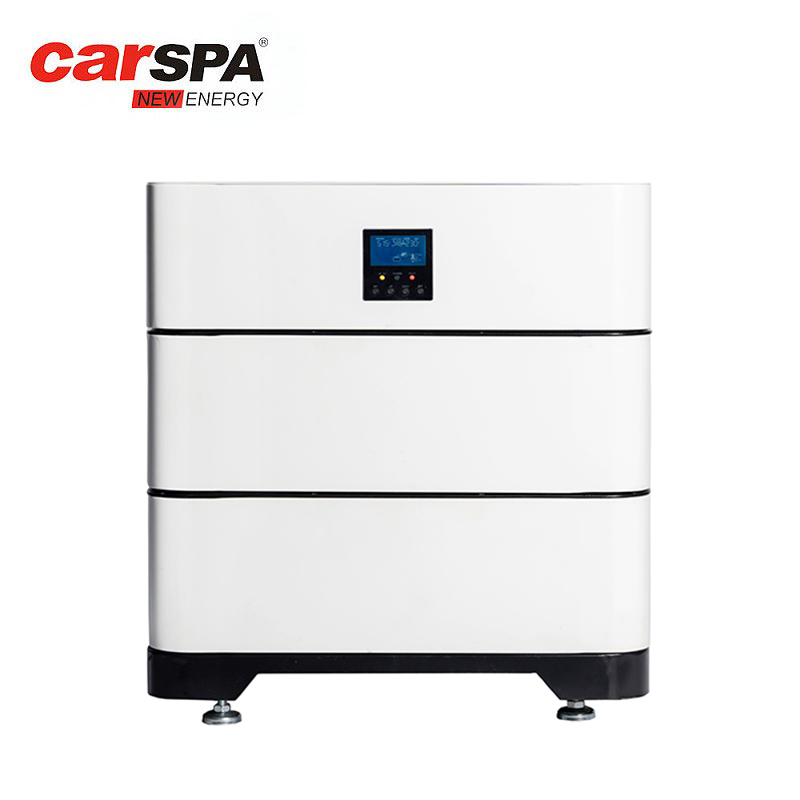
From backup power to active system component
Energy Storage has evolved far beyond its original role as an emergency backup. In contemporary applications, it actively participates in daily power management by absorbing surplus energy, supplying power during peak demand, and stabilizing system performance when external conditions change. This shift reflects a broader trend toward smarter, more responsive electrical infrastructures that prioritize efficiency, reliability, and adaptability.
Responding to space, scalability, and deployment constraints
At the same time, physical and operational constraints play an increasingly important role in system design. Limited installation space, the need for modular expansion, and diverse deployment environments require storage solutions that are compact, flexible, and easy to integrate. Wall-mounted configurations and stackable architectures have emerged as practical answers to these challenges, allowing systems to be tailored precisely to available space and evolving capacity requirements.
Energy Storage in a solar-driven landscape
As solar power continues to be integrated into power systems, Energy Storage becomes the key link between energy generation and real-world consumption. By storing energy when production exceeds demand and releasing it when generation drops, storage systems help smooth power fluctuations and improve overall system stability. This capability is essential for maintaining consistent performance in environments where solar availability varies throughout the day.
Together, these factors position Energy Storage as a foundational element in modern power design—supporting stability, scalability, and long-term system resilience across a wide range of applications.
Why Is Energy Storage Becoming a Core Component in Modern Power Systems?
As power systems evolve toward greater flexibility and decentralization, Energy Storage has moved into a central position within overall system architecture. Its role is no longer limited to compensating for power outages, but extends into daily operation, system coordination, and long-term performance optimization.

Managing demand fluctuations and load uncertainty
Modern electrical systems rarely operate under constant load conditions. Equipment start-up, peak usage periods, and variable operating schedules all introduce fluctuations that traditional grid-only supply struggles to absorb efficiently. Energy Storage provides a buffer between supply and demand, releasing stored energy precisely when load increases and absorbing excess power when demand drops. This balancing function reduces stress on upstream infrastructure and improves overall system stability.
Supporting distributed and on-site energy generation
With the increasing adoption of on-site generation—particularly solar power—power systems are no longer defined by a single source. Multiple inputs with different output characteristics must be coordinated in real time. Energy Storage acts as the stabilizing layer within this structure, ensuring that power generated intermittently can be converted into usable, predictable output. Without storage, much of this energy would remain underutilized or introduce instability into the system.
Enhancing operational continuity and control
In environments where power continuity is critical, even brief interruptions or voltage instability can disrupt operations. Energy Storage systems help maintain consistent power delivery during grid disturbances, short outages, or transition periods between energy sources. By smoothing these transitions, storage systems enable more controlled and predictable operation across the entire power network.
Laying the foundation for scalable system design
Another reason Energy Storage has become a core component lies in its scalability. Unlike fixed-capacity power infrastructure, storage systems can be designed to grow alongside demand. Modular configurations allow capacity to be added incrementally, aligning investment with actual usage while preserving system compatibility. This makes Energy Storage particularly well suited for power systems expected to evolve over time.
Through these combined functions—balancing load, coordinating multiple energy sources, ensuring continuity, and enabling scalability—Energy Storage has become an essential structural element in modern power systems rather than a supplementary feature.
How Do Wall-Mounted Energy Storage Systems Improve Space Efficiency and Installation Flexibility?
As power infrastructure is increasingly deployed closer to the point of use, available installation space has become a critical design consideration. Wall-mounted Energy Storage systems address this constraint by rethinking how storage capacity is physically integrated into the environment, offering practical advantages in both layout planning and system deployment.
Optimizing limited installation space
In many environments, floor space is reserved for core equipment, access paths, or operational activity. Wall-mounted Energy Storage systems utilize vertical space that would otherwise remain unused, allowing storage capacity to be added without expanding the system footprint. This approach is especially valuable in compact technical rooms, utility areas, or retrofitted installations where space availability is fixed.
Simplifying system layout and integration
By consolidating key storage components into a single wall-mounted unit, system layout becomes more streamlined. Shorter cable runs, clearer wiring paths, and reduced physical separation between components help simplify overall system design. This not only improves installation efficiency but also reduces the potential for connection errors and long-term maintenance complexity.
Improving installation speed and deployment consistency
Wall-mounted configurations are typically designed for standardized mounting and connection procedures. This consistency allows systems to be deployed more quickly and with fewer structural modifications compared to floor-standing alternatives. Faster installation translates into reduced downtime during upgrades or expansions and enables more predictable project timelines.
Adapting to indoor and semi-protected environments
Wall-mounted Energy Storage solutions are well suited to controlled or semi-controlled environments where exposure to dust, moisture, or mechanical impact is limited. Their enclosed, compact form helps protect internal components while maintaining accessibility for inspection and servicing. This balance between protection and accessibility supports stable long-term operation without requiring excessive enclosure infrastructure.
Supporting modular planning at smaller capacity levels
At lower to medium capacity requirements, wall-mounted systems provide a flexible entry point into Energy Storage deployment. They allow capacity to be introduced incrementally, supporting phased system development without committing to large-scale structural changes from the outset.
Through efficient use of space, simplified integration, and adaptable installation methods, wall-mounted Energy Storage systems offer a practical solution for environments where flexibility and spatial efficiency are essential.
What Makes Stackable Energy Storage Solutions Suitable for Scalable Power Demand?
As power demand evolves over time, fixed-capacity systems often struggle to keep pace with changing requirements. Stackable Energy Storage solutions are designed specifically to address this challenge by introducing modular growth into the core of system architecture, allowing capacity to scale in a controlled and predictable manner.
Enabling modular capacity expansion
Stackable designs are built around independent battery modules that can operate together as a unified system. Instead of oversizing storage capacity at the initial deployment stage, capacity can be added step by step as demand increases. This modular approach aligns system growth with actual usage patterns, avoiding unnecessary upfront investment while preserving future expansion options.
Maintaining system consistency as capacity grows
One of the key advantages of stackable Energy Storage systems is structural and electrical consistency. Each additional layer follows the same electrical interface, control logic, and protection strategy as existing modules. This uniformity ensures that system performance remains stable even as total capacity increases, reducing the complexity typically associated with system upgrades.
Supporting higher energy density within a compact footprint
By stacking modules vertically, storage capacity can be increased without significantly expanding the system’s horizontal footprint. This is particularly valuable in environments where floor space is limited but higher energy reserves are required. Vertical stacking makes efficient use of available space while keeping the system organized and accessible.
Improving system planning for long-term operation
Stackable solutions simplify long-term power planning by separating capacity decisions from structural constraints. System designers can plan for future expansion from the outset, knowing that additional modules can be integrated without major redesign. This flexibility supports evolving operational needs and helps future-proof the overall power system.
Enhancing reliability through distributed storage architecture
Rather than relying on a single large battery block, stackable Energy Storage systems distribute capacity across multiple modules. This distributed architecture can improve overall system resilience, as performance is less dependent on any single component. It also allows maintenance or replacement activities to be carried out with minimal impact on total system availability.
Through modular expansion, vertical efficiency, and consistent system design, stackable Energy Storage solutions provide a scalable foundation for power systems that must adapt to growing and changing energy demands.
How Do LiFePO4 Batteries Enhance Safety, Longevity, and System Reliability in Energy Storage?
Battery chemistry plays a decisive role in the overall performance of an Energy Storage system. Among available technologies, LiFePO4 batteries have gained widespread recognition for their balanced combination of safety, durability, and operational stability, making them particularly well suited for long-term energy storage applications.
Inherently stable chemical structure
LiFePO4 batteries are known for their strong thermal and chemical stability. Compared with other lithium-based chemistries, they are less prone to overheating, thermal runaway, or rapid degradation under stress. This intrinsic stability forms a solid foundation for Energy Storage systems that must operate continuously and predictably across varying conditions.
Improved safety under demanding operating conditions
Energy Storage systems are often required to handle frequent charge–discharge cycles, partial loads, and fluctuating input from renewable sources. LiFePO4 batteries maintain consistent performance under these conditions while minimizing safety risks. Their stable behavior reduces the need for excessive external protection measures, contributing to a cleaner and more streamlined system design.
Extended cycle life for long-term use
One of the defining characteristics of LiFePO4 technology is its long cycle life. With the ability to support thousands of charge–discharge cycles, these batteries are well suited for applications where storage is used regularly rather than only in emergency scenarios. A longer cycle life translates directly into sustained system performance and reduced replacement frequency over time.
Consistent performance across the battery lifespan
Unlike battery technologies that experience sharp capacity decline after extended use, LiFePO4 batteries deliver more gradual and predictable aging characteristics. This consistency allows Energy Storage systems to maintain stable output and reliability throughout their service life, simplifying performance planning and system management.
Supporting intelligent battery management strategies
LiFePO4 batteries integrate effectively with modern battery management systems, enabling accurate monitoring of voltage, temperature, and state of charge. This compatibility supports more precise control strategies, enhances overall system protection, and contributes to optimal battery utilization without compromising safety.
Through their stable chemistry, long service life, and predictable performance, LiFePO4 batteries strengthen the reliability of Energy Storage systems and support sustained, safe operation over extended periods.
How Can Solar-Compatible Energy Storage Systems Support Long-Term Energy Independence?
As solar generation becomes an integral part of modern power systems, the challenge shifts from energy production to energy availability. Solar-compatible Energy Storage systems bridge this gap by transforming intermittent generation into dependable, usable power, supporting long-term operational independence and system resilience.

Balancing intermittent solar generation
Solar output naturally varies with time of day, weather conditions, and seasonal changes. Without storage, this variability can lead to energy surplus during peak generation and shortages during periods of low output. Energy Storage systems absorb excess solar energy when production is high and release it when generation drops, creating a more balanced and predictable power profile.
Reducing reliance on external power sources
By storing locally generated solar energy, systems reduce dependence on external grids or auxiliary power sources. This localized energy management approach enhances autonomy and ensures that essential loads remain supported even when external supply is unstable or unavailable. Over time, this capability contributes to more self-sufficient power operation.
Improving system efficiency and energy utilization
Energy Storage allows solar-generated electricity to be used when it is most needed rather than only when it is produced. This improves overall energy utilization and reduces wasted generation. Stored energy can be strategically deployed during peak demand periods, helping stabilize system operation while maximizing the value of solar input.
Supporting flexible operating modes
Solar-compatible Energy Storage systems are designed to operate across different power scenarios, including grid-connected, hybrid, or independent configurations. This flexibility enables systems to adapt to changing conditions without structural modification, ensuring continuity as operating strategies evolve.
Enhancing long-term system resilience
By combining solar generation with reliable Energy Storage, power systems gain a resilient foundation capable of sustaining operation through environmental variability and demand changes. This resilience supports long-term planning and reduces vulnerability to external disruptions.
Through intelligent integration with solar generation, Energy Storage systems play a central role in enabling stable, efficient, and increasingly independent power solutions.
Conclusion
Energy Storage has become a foundational element in modern power systems by addressing challenges related to load fluctuation, spatial constraints, scalability, safety, and renewable integration. Wall-mounted solutions improve space efficiency and deployment flexibility, while stackable architectures support scalable capacity planning. At the core of these systems, LiFePO4 battery technology delivers the safety, longevity, and reliability required for sustained operation. When combined with solar compatibility, Energy Storage enables more predictable energy use and supports long-term system resilience.
These principles are reflected in practical Energy Storage solutions such as those developed by CARSPA, which align system design with real-world power management needs.


.jpg)


.jpg)
.jpg)
.jpg)
.jpg)
.jpg)