How Does Energy Storage Improve Power Reliability and Energy Utilization in Solar-Based Systems?
Introduction
As energy systems increasingly integrate solar generation and distributed power sources, maintaining stable and efficient electricity supply has become a critical operational challenge. Solar energy offers clear advantages in sustainability and long-term cost control, but its inherent variability introduces new demands on how power is stored, managed, and delivered. Under these conditions, Energy Storage has evolved from a supplementary component into a core element of modern power system design.
Rather than serving only as emergency backup, contemporary energy storage systems actively participate in daily energy management. They absorb excess solar generation during low-demand periods, release stored power when loads increase, and help smooth fluctuations that would otherwise impact system stability. This dynamic role allows power systems to operate more predictably, even when renewable input or load profiles change throughout the day.

At the application level, energy storage also addresses practical challenges related to space utilization, capacity planning, and long-term reliability. From compact wall-mounted units designed for limited installation areas to modular, stackable systems built for scalable energy demands, storage solutions are now tailored to fit diverse operational scenarios. Battery technology, system architecture, and installation flexibility all directly influence how effectively stored energy can support real-world applications.
By improving power continuity, enhancing energy utilization efficiency, and reducing reliance on a single power source, energy storage systems enable more resilient and adaptable power infrastructures. As solar-based systems continue to expand across residential, commercial, and light industrial environments, the strategic use of energy storage has become essential for achieving stable, efficient, and controllable power performance.
Why Is Energy Storage Essential for Stabilizing Solar Power Supply in Real-World Applications?
Solar power generation is inherently variable, influenced by daylight availability, weather conditions, and seasonal changes. While photovoltaic systems can produce abundant energy during peak sunlight hours, this generation does not always align with actual consumption patterns. Without effective buffering, sudden drops in solar output or rapid load changes can lead to voltage instability, power interruptions, or inefficient use of available energy. Energy Storage plays a critical role in bridging this gap between generation and demand.
One of the most important stabilization functions of energy storage lies in energy buffering and smoothing. By storing excess solar power when generation exceeds consumption, storage systems prevent energy from being wasted or curtailed. This stored energy can then be released gradually, allowing the power system to maintain a steady output even as solar input fluctuates. As a result, downstream equipment experiences fewer disturbances, and overall system performance becomes more predictable.
Energy storage also supports time-based energy shifting, which is essential in applications where power demand peaks outside of optimal solar generation hours. Stored energy can be dispatched during early mornings, evenings, or transient high-load periods, reducing stress on primary power sources. This capability allows solar-based systems to operate beyond daylight limitations and deliver consistent power availability throughout the operating cycle.
Another key contribution comes from load matching and peak management. In real-world installations, loads rarely remain constant. Motors, control systems, lighting, and auxiliary equipment may start or stop unpredictably, creating short-term demand spikes. Energy storage systems respond rapidly to these changes, supplying instantaneous power support that stabilizes voltage and reduces abrupt current draw from the primary source.
By mitigating generation volatility, balancing load variations, and enabling controlled energy release, energy storage systems transform solar installations into stable and usable power platforms. Rather than being constrained by intermittency, solar-based systems equipped with energy storage gain the flexibility needed to perform reliably under changing operating conditions.
How Do Wall-Mounted Energy Storage Systems Support Space-Efficient and Flexible Installation?
Compact Design for Limited Installation Areas
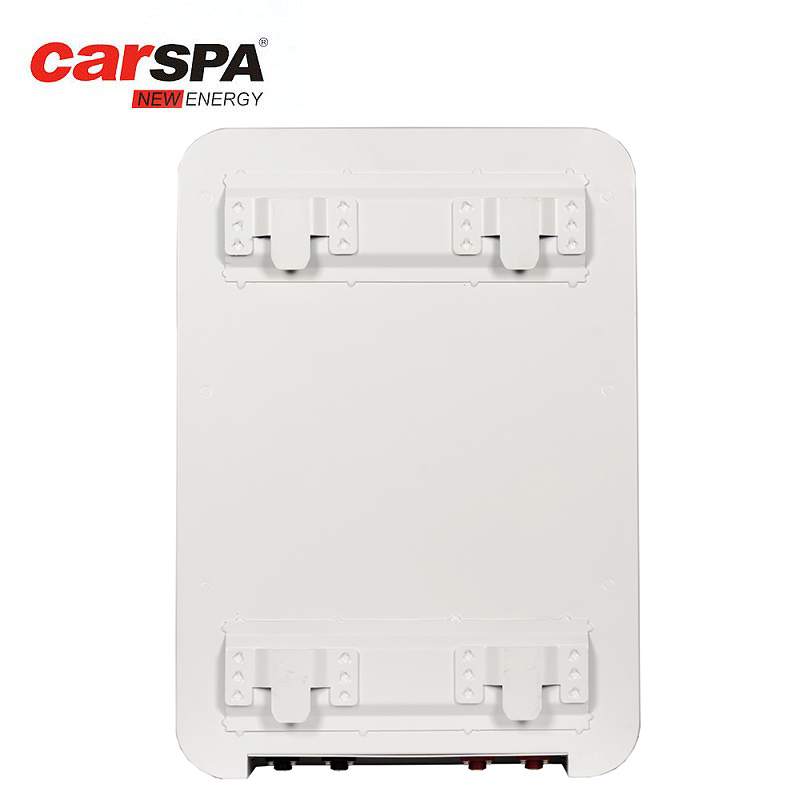
In many real-world applications, available installation space is often limited by building layout, equipment density, or structural constraints. Wall-mounted Energy Storage systems are designed specifically to address these challenges. By utilizing vertical space instead of floor area, they allow energy storage capacity to be integrated without disrupting existing equipment arrangements or operational pathways.
This compact form factor makes wall-mounted systems especially suitable for environments where space efficiency is a priority. Electrical rooms, utility areas, and hybrid solar installations benefit from a storage solution that fits neatly into constrained locations while still delivering reliable energy performance.
Simplified Installation and System Integration
Wall-mounted energy storage systems are typically engineered with streamlined installation in mind. Pre-configured battery modules, clearly defined connection interfaces, and standardized mounting structures help reduce installation complexity. This simplifies system integration with solar inverters, charge controllers, and load distribution equipment.
The result is a cleaner system layout with fewer external components and reduced wiring complexity. A well-organized installation not only improves initial deployment efficiency but also enhances long-term system maintainability and operational clarity.
Flexible Placement Across Indoor and Semi-Outdoor Environments
Another advantage of wall-mounted energy storage lies in its placement flexibility. These systems can be installed in a variety of indoor and semi-outdoor environments, provided appropriate environmental protection measures are applied. Their enclosed structure helps shield internal battery components from dust, humidity, and minor temperature variation, supporting stable operation across different conditions.
This flexibility allows system designers to adapt energy storage placement to real site conditions rather than forcing major layout changes. Storage capacity can be positioned closer to power generation or load centers, improving system efficiency and response time.
Practical Capacity for Small to Medium Power Demands
Wall-mounted energy storage systems are particularly well-suited for applications with small to medium energy requirements. They provide sufficient capacity for daily energy buffering, short-duration backup, and load balancing without introducing unnecessary system scale or complexity.
By aligning storage capacity closely with actual usage needs, these systems support efficient energy utilization while avoiding oversizing. This balanced approach helps ensure that stored energy is both accessible and effectively deployed within the power system.
How Do Stackable Energy Storage Systems Enable Scalable Capacity Expansion?
Modular Architecture for Flexible System Growth
Stackable Energy Storage systems are built around a modular architecture that allows individual battery units to be added or removed as energy demand changes. Instead of relying on a single, fixed-capacity storage unit, this approach enables capacity to grow in stages, aligning storage investment with actual system requirements.
Each module operates as part of an integrated system, sharing load and balancing energy flow. This modularity ensures that system expansion can be carried out without redesigning the entire power structure, preserving system continuity while supporting future growth.
Seamless Capacity Expansion Without System Disruption
One of the most significant advantages of stackable energy storage systems is the ability to expand capacity with minimal disruption to ongoing operations. Additional battery layers can be integrated while maintaining existing system connections and control logic.
This allows energy storage capacity to scale gradually as solar generation increases, loads expand, or operational patterns evolve. By avoiding major electrical modifications during expansion, system downtime and integration risk are reduced, resulting in a more stable long-term energy strategy.
High Energy Density for Demanding Applications
Stackable energy storage systems are often designed to deliver higher total energy capacity within a compact footprint. Vertical stacking maximizes space utilization while maintaining efficient thermal management and structural stability.
This design is particularly valuable in applications with sustained or high energy demands, where long discharge durations and consistent power output are required. By combining multiple battery modules, the system can support extended operating cycles without compromising performance.
Long-Term Planning and Investment Efficiency
From a planning perspective, stackable energy storage enables a phased approach to capacity deployment. Initial system installations can be sized for current needs, with additional modules added as demand grows or system objectives change.
This incremental expansion model improves investment efficiency by avoiding early overcapacity while ensuring that future scalability remains straightforward. It also supports evolving energy strategies, allowing systems to adapt without requiring complete replacement or major redesign.
What Role Does LiFePO4 Battery Technology Play in Long-Term Energy Storage Performance?
Enhanced Safety and Thermal Stability
Battery safety is a fundamental consideration in any Energy Storage application, especially in systems designed for continuous operation or installation within occupied environments. LiFePO4 battery technology is widely recognized for its inherent thermal stability and resistance to overheating. Compared with other lithium chemistries, it demonstrates a lower risk of thermal runaway, even under high load or extended charge–discharge cycles.
This stability allows energy storage systems to operate with greater confidence across varying environmental conditions. Consistent thermal behavior reduces the need for complex cooling strategies and contributes to overall system robustness.
Long Cycle Life for Continuous Daily Operation
One of the defining advantages of LiFePO4 batteries is their extended cycle life. In practical applications, energy storage systems are often charged and discharged daily as part of normal energy management. A battery technology capable of sustaining thousands of cycles without significant capacity degradation is therefore essential.
LiFePO4 batteries maintain stable performance over long service periods, supporting frequent cycling while preserving usable capacity. This makes them well-suited for solar-based systems where daily energy shifting and buffering are routine operating requirements.
Consistent Performance Across Charge Levels
In real-world applications, energy storage systems rarely operate at a fixed state of charge. Load variations, solar input changes, and operational priorities all influence how energy is stored and released throughout the day. LiFePO4 batteries are known for delivering stable voltage and predictable discharge behavior across a wide range of charge levels.
This consistency helps maintain reliable system output and simplifies power management. Downstream equipment benefits from steady voltage characteristics, reducing stress on inverters, controllers, and connected loads.
Reduced Maintenance and Improved System Reliability
LiFePO4-based energy storage systems typically require minimal maintenance compared to traditional battery solutions. Their chemical stability, resistance to deep discharge damage, and slow aging characteristics contribute to predictable long-term behavior.
Lower maintenance demands translate into higher system availability and fewer operational interruptions. Over time, this reliability supports smoother energy system management and reinforces the role of energy storage as a dependable component rather than a consumable asset.
How Can Energy Storage Systems Enhance System Independence and Operational Continuity?
Reducing Dependence on a Single Power Source
In practical applications, relying on a single energy source can expose power systems to instability caused by grid fluctuations, generation variability, or unexpected interruptions. Energy Storage introduces an additional layer of autonomy by decoupling energy generation from real-time consumption.
By storing energy when it is available and delivering it when needed, storage systems reduce immediate dependence on external supply conditions. This independence allows power systems to maintain stable operation even when primary energy input becomes inconsistent.
Supporting Hybrid and Semi-Independent Power Configurations
Energy storage systems are increasingly deployed within hybrid power architectures that combine solar generation, grid input, and stored energy. In such configurations, storage acts as a balancing element that coordinates multiple power sources rather than replacing them.
Stored energy can supplement solar output during low-generation periods or temporarily support loads when grid quality is unstable. This flexible interaction enables smoother transitions between power sources and improves overall system resilience.
Maintaining Power Continuity During Disturbances
Short-term disturbances such as voltage dips, brief outages, or sudden load changes can disrupt sensitive equipment and interrupt normal operation. Energy storage systems respond rapidly to these events, delivering immediate power support that helps maintain continuity.
This fast response capability minimizes operational disruption and protects connected equipment from stress caused by abrupt power loss or instability. As a result, systems equipped with energy storage can continue operating through transient events that would otherwise cause downtime.
Improving Predictability and Control of Energy Use
Beyond backup functionality, energy storage enhances predictability in daily energy management. Operators gain greater control over when and how stored energy is used, allowing power delivery to follow planned schedules rather than reacting solely to external conditions.
This control supports more efficient energy utilization, smoother load management, and improved alignment between generation and consumption. Over time, it contributes to a more stable and controllable power environment.

Conclusion
As solar-based and distributed power systems continue to expand, Energy Storage has become a foundational component for achieving reliability, flexibility, and long-term operational stability. From compact wall-mounted solutions that optimize limited space to stackable systems that enable scalable capacity growth, modern energy storage designs address a wide range of real-world application needs.
Advances in battery technology, particularly the use of LiFePO4 chemistry, further enhance safety, longevity, and performance consistency. Combined with modular system architectures, energy storage systems now offer a practical pathway toward greater energy independence and continuous power availability.
CARSPA provides a range of energy storage solutions designed to support these application requirements, including wall-mounted systems such as the CSPB-48V 50Ah and stackable configurations like the CSPC-51.2V series, delivering reliable performance, scalable capacity, and long service life across diverse energy storage scenarios.