
How Battery Monitors Improve Performance, Safety, and Long-Term Power Reliability
Introduction
A battery monitor has become an essential tool for ensuring the stability, efficiency, and long-term reliability of modern power systems. As more applications rely on stored energy—whether in backup power units, mobile equipment, off-grid solutions, or renewable energy setups—the ability to accurately track battery health is no longer optional. Voltage fluctuations, unseen degradation, and improper charging cycles can lead to unexpected downtime, reduced equipment lifespan, and system failures that are often costly to repair.

A well-designed battery monitor provides continuous insights into key parameters such as state of charge (SOC), state of health (SOH), current flow, temperature, and real-time consumption. By transforming raw electrical data into clear, actionable information, it helps operators make better decisions about charge management, load distribution, and maintenance planning. This level of visibility is especially important when multiple batteries operate in parallel or when system performance depends on consistent power delivery.
As battery-based systems expand across various industrial, mobile, and energy-storage environments, the demand for smarter monitoring tools continues to grow. A reliable battery monitor not only safeguards system performance but also supports predictable operations, reduced maintenance effort, and greater overall energy efficiency.

Why Do Modern Energy Systems Depend on a Reliable Battery Monitor?
Ensuring Stable Power Supply in Varying Load Conditions
Modern electrical systems often operate under fluctuating loads, which place continuous stress on battery banks. Without proper visibility into voltage levels and discharge behavior, unexpected dropouts can occur during peak demand. A reliable battery monitor helps detect early signs of instability and ensures that batteries are operating within safe thresholds.
Preventing Hidden Battery Degradation
Batteries naturally age, but degradation accelerates when factors such as over-discharging, high temperatures, or inconsistent charging cycles are present. A monitoring device tracks these conditions in real time, enabling proactive intervention before a decline in capacity affects the entire system. This reduces the risk of failures that could interrupt critical processes.
Supporting Efficient Energy Management
Energy efficiency depends heavily on how well power is distributed and managed. By providing accurate data on current usage, charge status, and estimated runtime, a battery monitor allows operators to optimize load allocation. This insight helps reduce unnecessary strain, improves charge–discharge balance, and extends overall battery service life.
Building Predictable and Maintainable Power Systems
Predictability is essential for systems that must run continuously or in remote locations. A battery monitor provides consistent reporting and trend analysis, enabling better scheduling of maintenance activities. With early alerts and historical data, operators can prepare parts, adjust cycle strategies, or replace batteries at the right time, reducing operational downtime.
How Does a Battery Monitor Improve Performance, Safety, and System Visibility?
Enhancing Real-Time Performance Tracking
A battery monitor continuously measures voltage, current, and remaining charge to build an accurate picture of system status. This real-time insight allows operators to detect abnormal discharge patterns or irregular charging behavior before they cause performance drops. The ability to spot deviations early helps maintain consistent output and prevents energy loss.
Strengthening Safety Through Early Fault Detection
Safety risks often arise from issues such as overheating, overcharging, and excessive current draw. A battery monitor includes temperature sensing, protection alerts, and threshold alarms to warn users of dangerous conditions. This early warning system helps prevent thermal damage, electrical hazards, and potential system fires, ensuring safer operation under demanding environments.
Improving System Visibility Across Multiple Battery Units
In setups where numerous batteries operate together—such as backup power banks, mobile machinery, or renewable storage systems—monitoring each unit manually is nearly impossible. A battery monitor consolidates data and displays it in a unified interface, giving operators complete visibility across the entire energy system. This makes it easier to identify weak cells, unbalanced strings, or inconsistent charging behavior.
Reducing Downtime Through Predictive Insights
Predictive analytics plays an important role in maintaining operational continuity. By analyzing historical data and tracking trend changes, a battery monitor can estimate remaining lifespan, upcoming maintenance needs, and potential failure points. The result is a more predictable maintenance schedule, reduced unplanned downtime, and more efficient resource allocation.
What Battery Monitoring Features Matter Most in Real-World Applications?
Accurate State of Charge (SOC) and State of Health (SOH) Measurement
SOC tells how much usable energy remains, while SOH reflects long-term battery condition. These two indicators are crucial for systems that depend on continuous, predictable operation. A high-quality battery monitor uses advanced algorithms and precise sensing to calculate both values accurately, helping users avoid unexpected power shortages and plan replacement cycles more effectively.
High-Resolution Current and Voltage Monitoring
In many applications, even minor fluctuations in voltage or current can affect equipment performance. A battery monitor capable of high-resolution measurements can detect spikes, drops, and irregular load patterns. This allows for precise load balancing, better charge control, and improved system protection—especially important when batteries support sensitive electronics or mission-critical systems.
Temperature Monitoring and Thermal Protection
Temperature directly affects battery performance, efficiency, and lifespan. High temperatures accelerate aging, while low temperatures reduce discharge capacity. A battery monitor with integrated temperature sensors provides real-time thermal tracking and can activate alarms or system protections when temperatures reach unsafe levels. This helps avoid overheating events and prolongs battery life.
Historical Data Logging and Trend Analysis
Real-world usage patterns often reveal hidden issues that cannot be detected through single-point measurements. A battery monitor that logs historical data allows operators to review long-term trends, compare performance over different periods, and identify early warning signs such as gradual capacity loss or inconsistent charging behavior. These insights support smarter maintenance plans and reduce unexpected failures.
Communication Interfaces for System Integration
Modern power systems increasingly rely on digital communication for data sharing, automation, and centralized control. Battery monitors with communication options such as RS485, CANbus, or Bluetooth make integration easier. These interfaces enable remote monitoring, real-time reporting to controllers, and seamless communication with energy management systems.
How Can a Battery Monitor Support Critical Power, Mobility, and Renewable Systems?
Ensuring Reliability in Backup and Critical Power Applications
Backup power systems—whether used for emergency lighting, communication equipment, or essential machinery—depend on batteries that must perform flawlessly when needed. A battery monitor provides continuous updates on charge status, discharge rate, and readiness, ensuring batteries maintain sufficient capacity for sudden activation. Early alarms help prevent unexpected failures during power outages, where reliability is the top priority.
Improving Efficiency in Mobile and Portable Power Systems
Mobile equipment such as service vehicles, trailers, portable tools, and field-deployed devices often rely heavily on onboard batteries. Operating conditions can vary widely, making energy planning more complex. With a battery monitor, operators can track consumption in real time, estimate remaining runtime, and avoid over-discharging, which is especially important when equipment must travel long distances or operate independently for extended periods.
Increasing Productivity in Renewable Energy Storage Systems
Renewable systems—such as solar-powered installations—depend on batteries to store and deliver energy when sunlight is unavailable. A battery monitor helps regulate the charge–discharge cycle, ensures batteries receive optimal charging during peak generation hours, and provides accurate data for managing daily energy use. In long-term operation, this monitoring significantly improves battery utilization and increases the overall stability of the renewable system.
Supporting Multi-Battery Banks Used in Larger Power Setups
Large-scale systems often require multiple batteries connected in series or parallel. Without proper balancing, some batteries may overwork while others remain underused. A battery monitor allows operators to view the performance of each battery individually, identify deviations, and correct imbalances. This leads to improved lifecycle consistency across the entire battery bank.
Enhancing Remote Monitoring for Off-Grid and Hard-to-Reach Installations
In remote sites—such as rural stations, outdoor equipment shelters, or temporary installations—routine manual checks can be impractical. With communication-enabled battery monitors, operators can review system health from a centralized location. Alerts, logs, and real-time data allow teams to respond quickly to voltage drops or temperature spikes, reducing the risk of system shutdowns in areas where access is limited.
How Do You Choose the Right Battery Monitor for Your Power System?
Assessing Battery Type and System Voltage Requirements
Different batteries—such as lead-acid, AGM, gel, or lithium—require different monitoring approaches. Voltage levels also vary across applications, from 12V and 24V systems to higher-voltage industrial setups. Selecting a battery monitor that supports your specific battery chemistry and system voltage ensures accurate readings and stable operation.
Evaluating Measurement Accuracy and Sensor Quality
Precision is essential for effective energy management. A high-quality battery monitor should provide accurate readings for voltage, current, SOC, SOH, and temperature. Look for monitors equipped with shunt-based sensing or advanced measuring chips, as these offer superior accuracy compared to simpler voltage-only monitors.
Considering Display, Interface, and Data Accessibility
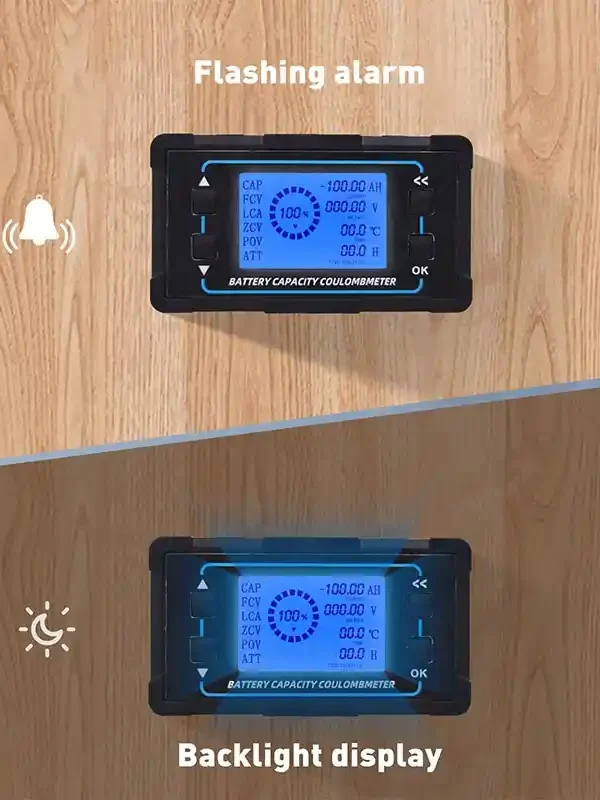
Ease of use plays a major role in day-to-day operation. Monitors with clear LCD/LED displays, mobile app connectivity, or integrated dashboards allow operators to review information quickly. Systems that provide trend visualization or remote notifications can further enhance real-time awareness and responsiveness.
Checking Communication and Integration Capabilities
If the power system integrates with controllers, inverters, or centralized management platforms, communication interfaces become essential. Options such as RS485, CANbus, and Bluetooth make it easier to integrate the battery monitor into the broader energy ecosystem. This improves data flow and simplifies long-term monitoring.
Matching Durability and Environmental Protection Levels
Some monitoring environments may involve vibration, dust, moisture, or temperature extremes. Choosing a battery monitor with durable construction or appropriate IP protection ensures stable performance in demanding conditions. This is especially important for outdoor, mobile, or industrial installations where equipment must withstand daily stress.
Conclusion
A battery monitor plays a central role in building power systems that are stable, efficient, and predictable. By providing continuous visibility into key performance indicators such as voltage, current, temperature, and long-term health, it empowers operators to make informed decisions that enhance reliability and extend battery life. As energy storage becomes increasingly important in mobile equipment, backup systems, renewable solutions, and multi-battery networks, the value of accurate monitoring continues to rise.
From early fault detection to improved energy planning and system integration, a well-designed battery monitor supports smoother operation and reduces the risk of unexpected downtime. Selecting a device with the right accuracy, communication capabilities, environmental durability, and compatibility ensures that the monitoring solution aligns perfectly with real-world demands.
For users seeking dependable performance and long-term stability, choosing a trusted brand makes all the difference. CARSPA offers battery monitoring solutions engineered to meet modern power requirements with reliability and precision.


.jpg)
.jpg)
.jpg)
.jpg)
.jpg)
.jpg)


