
How to Choose the Best Solar Charge Controller for Outdoor Applications
In today’s outdoor energy setups—whether for camping, remote cabins, mobile workstations, or off-grid monitoring stations—solar power has become the preferred choice for clean and self-sustaining electricity. At the heart of these systems lies a critical component: the solar charge controller. Acting as the intelligent manager between solar panels and batteries, the controller ensures energy is stored efficiently and safely. This article answers the most essential questions for anyone considering a solar power system for outdoor use, helping you understand how the right controller can optimize performance and extend system life.

What Is a Solar Charge Controller and Why Is It Essential for Outdoor Power Systems?
A solar charge controller is the critical bridge between your solar panel array and the battery storage system, regulating voltage and current to prevent battery overcharging or deep discharging. In outdoor applications such as camping, mobile workstations, RVs, and off-grid cabins, it becomes the brain of the power system—constantly monitoring energy flow and adjusting it to match environmental conditions.
There are two main types: PWM (Pulse Width Modulation) and MPPT (Maximum Power Point Tracking). For outdoor systems that face variable sunlight—like shaded campsites or cloudy days—MPPT controllers offer far better energy conversion efficiency, often increasing usable power by up to 30%. This makes them especially suitable for unpredictable outdoor environments.
Without a solar charge controller, batteries would quickly degrade due to inconsistent charge cycles. Outdoor users often rely on deep-cycle batteries, which require precise charging parameters. A high-quality controller prevents overheating, prolongs battery life, and optimizes solar energy use throughout the day—even when weather conditions fluctuate.
In addition to basic regulation, most modern controllers offer LCD displays, Bluetooth connectivity, and smartphone app monitoring, which allows real-time system management even in remote zones. For users relying on solar as their primary outdoor power source, a dependable charge controller isn’t optional—it’s essential for stable, safe, and long-lasting performance.
How Does a Solar Charge Controller Improve Battery Life in Remote Locations?
In remote outdoor setups, battery maintenance becomes a major concern—especially when backup power or replacements are not readily available. A solar charge controller plays a pivotal role in preserving battery health by maintaining optimal voltage levels and ensuring that batteries receive the correct amount of power throughout each charging cycle.
One of the most common issues in remote locations is overcharging, which causes batteries to overheat, lose capacity, and ultimately fail prematurely. A charge controller prevents this by disconnecting the solar input when the battery reaches full charge. On the other hand, in extended periods of low sunlight, deep discharge can also be harmful—especially for lead-acid or gel batteries. Many advanced controllers feature low-voltage disconnect functionality to protect against excessive depletion.
Furthermore, solar charge controllers apply multi-stage charging algorithms, including bulk, absorption, and float stages. This method ensures batteries charge efficiently while reducing long-term stress. Especially in outdoor conditions where solar input may vary due to clouds or shadows, such intelligent control helps batteries recharge fully during peak sun hours and remain topped off without strain.
Some modern models also support temperature compensation, which adjusts charging parameters based on ambient temperature—vital for outdoor locations exposed to extreme cold or heat. This feature prevents both undercharging in cold climates and overcharging in hot ones, preserving battery performance across all seasons.
For users operating off-grid in forests, deserts, or mountainous terrain, relying on battery power alone is a daily reality. A robust solar charge controller not only extends the usable lifespan of the battery bank but also safeguards against costly and inconvenient failures—making it a fundamental component of any reliable outdoor power solution.
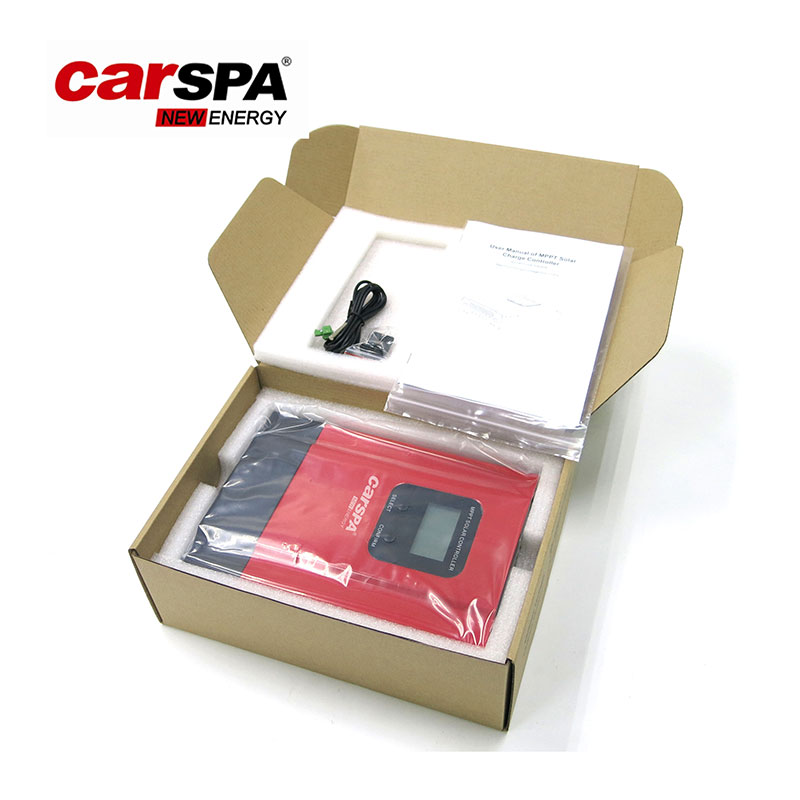
Which Features Should You Look for in a Solar Charge Controller for Outdoor Use?
Choosing the right solar charge controller for outdoor applications goes beyond just power ratings. In rugged environments—whether you're powering a mountain cabin, a mobile food trailer, or a field-based monitoring system—the controller must be intelligent, durable, and adaptable.
1. MPPT vs. PWM Technology
One of the first decisions is between PWM (Pulse Width Modulation) and MPPT (Maximum Power Point Tracking) controllers. MPPT controllers are more efficient, especially in variable light conditions common in outdoor use. They dynamically adjust input voltage to find the optimal operating point, delivering up to 30% more charging efficiency compared to PWM.
2. Weatherproof Housing and Build Quality
Outdoor use demands a tough controller. Look for IP-rated enclosures that offer protection against dust, water splashes, and even light rain. A rugged casing with corrosion-resistant terminals and reinforced insulation ensures that the device withstands harsh environments without internal damage.
3. Temperature Compensation and Sensor Support
In places with fluctuating temperatures, temperature compensation becomes critical. This feature adjusts the charging voltage based on ambient conditions to prevent battery damage from overcharging (in hot climates) or undercharging (in cold ones). Some models allow external temperature sensors for even more precise control.
4. Display and Remote Monitoring
User interface matters—especially when managing the system far from technical support. Choose a controller with an intuitive LCD display, LED indicators, or better yet, Bluetooth or Wi-Fi connectivity for remote diagnostics via mobile apps. This makes it easier to track performance and spot issues early.
5. Compatibility and Load Control Features
Verify that the controller is compatible with your battery type—be it lithium, AGM, gel, or flooded lead-acid. Some models also offer programmable load terminals, which allow you to power lights or devices directly while maintaining control over voltage thresholds.
By focusing on these core features, outdoor users can select a solar charge controller that not only matches their power system—but also enhances its resilience, efficiency, and convenience in any remote environment.
Can a Solar Charge Controller Ensure Reliable Operation in Harsh Outdoor Environments?
When operating in extreme outdoor environments, power reliability is everything. Whether it's an arid desert, a humid forest, or a snow-covered outpost, a solar power system must function consistently. At the heart of this system, the solar charge controller plays a vital role in ensuring uninterrupted performance—even when conditions are far from ideal.
1. Resistance to Heat, Cold, and Moisture
Harsh weather can disrupt poorly protected electronics. A high-quality solar charge controller designed for outdoor use should offer wide temperature operating ranges (often from -20°C to +50°C or more) and IP65 or higher enclosure ratings to block out dust, water spray, and insects. This kind of durability is essential for camping sites, remote telecom towers, or agricultural equipment placed in open fields.
2. Surge and Overload Protection
Outdoor systems are vulnerable to voltage surges from lightning or unstable solar inputs. Advanced controllers are equipped with electrical protection mechanisms, including reverse polarity protection, short circuit protection, and overvoltage cutoff. These features guard both the controller and the connected battery bank from unexpected damage.
3. Auto-Recovery and Self-Diagnostics
In isolated locations, manual resets aren’t always feasible. Some premium charge controllers offer auto-recovery functions—automatically restoring operation after faults. Built-in self-diagnostics and status LEDs help users or technicians quickly understand what’s happening without opening the case or using tools.
4. Long-Term Operation Without Maintenance
The best controllers for harsh environments are designed to be maintenance-free, with fanless cooling, corrosion-resistant internal components, and solid-state circuitry. These factors reduce the likelihood of dust buildup, oxidation, or component wear—making them ideal for long deployments in off-grid scenarios.
5. Real-World Use Cases
In real-world deployments, such as solar-powered weather monitoring stations or irrigation control systems in desert zones, solar charge controllers with these reliability features have shown to operate continuously for years without intervention. These success stories underscore the importance of investing in a controller built to handle outdoor extremes.
Whether you're deploying solar systems in remote mountain terrain, coastal climates, or high-altitude sites, the controller's resilience can be the deciding factor between consistent energy delivery and unexpected system failure.
How to Choose the Right Solar Charge Controller for Your Off-Grid Setup?
Selecting the right solar charge controller is essential for the stability, safety, and efficiency of your off-grid power system. The wrong controller can limit your system’s potential or even damage batteries over time. To make an informed decision, users should evaluate both system requirements and environmental conditions.
1. Understand Your System Voltage and Current
The first step is identifying your system’s voltage (12V/24V/48V) and the maximum current output of your solar array. The controller’s rating must match or exceed these figures. For example, a 12V system with 400W of solar panels needs a controller that handles at least 35A of current.
2. Match the Controller Type to Your Application
For most outdoor or mobile setups, MPPT controllers are recommended due to their higher efficiency and flexibility with panel configurations. However, PWM controllers can still be suitable for small-scale, budget-conscious applications with minimal fluctuation in sunlight.
3. Battery Compatibility Is Crucial
Your controller must support your battery chemistry—whether lithium-ion, sealed lead-acid (SLA), AGM, gel, or flooded. Some MPPT controllers offer customizable charging profiles, which are particularly important when using LiFePO4 batteries, which require precise voltage regulation and protections.
4. Consider Installation Environment
Outdoor setups require robust hardware. Look for weather-sealed units, mounting brackets, and screw terminals designed for vibration or movement (especially important for RVs or boats). A controller with passive cooling (no fan) is preferred for dusty or sandy environments.
5. Evaluate Additional Features for Convenience
Modern charge controllers offer useful extras like load control outputs, programmable timers, USB ports, and real-time data monitoring via Bluetooth apps. These can be extremely valuable for remote monitoring and energy optimization without needing additional equipment.
6. Plan for Future Expansion
If you're likely to expand your solar array or battery bank, choose a controller that allows scalability. It’s often more economical to invest in a slightly higher-capacity controller than to replace it entirely down the line.
By carefully assessing these technical and environmental factors, users can select a solar charge controller that not only meets current power needs—but also ensures reliability, longevity, and adaptability for future upgrades and changing outdoor conditions.

Conclusion
A reliable solar charge controller is more than just a regulator—it's the command center of your outdoor solar system. From protecting your batteries to adapting to extreme climates, the right controller ensures your power stays stable, safe, and optimized, even when you're far from the grid. Whether you’re powering tools in the field, lights at a campsite, or systems in an off-grid shelter, making the right controller choice can define the long-term success of your solar setup.
For users seeking dependable solar charge controller solutions designed specifically for outdoor and off-grid environments, CARSPA offers a wide range of high-performance MPPT and PWM models, built to handle real-world demands with precision and durability.


.jpg)
.jpg)
.jpg)
.jpg)
-1631.jpg)
-1631.jpg)


