
Why Is a Solar Charge Controller Essential for Any Off-Grid Camping Solar System?
Introduction
A solar charge controller plays one of the most crucial roles in any off-grid camping power system, ensuring that portable solar panels and batteries work together safely and efficiently. As outdoor travel becomes more advanced and energy-dependent, campers rely on solar power not only for convenience but also for lighting, refrigeration, communication devices, and essential electronics. However, without proper regulation, the energy coming from solar panels can fluctuate dramatically—especially during early mornings, cloudy conditions, or rapid changes in sunlight.

This is where a solar charge controller becomes indispensable. It stabilizes incoming solar power, prevents battery overcharging, optimizes charging efficiency, and ensures that sensitive equipment receives clean, predictable energy. For long-distance travelers, RV users, and tent campers who rely heavily on off-grid electricity, the controller is the core intelligence of the entire system. It automatically adjusts charging voltage and current, helping batteries maintain a longer lifespan while maximizing the performance of every watt generated by portable solar panels.
As camping evolves toward cleaner, quieter, and more sustainable energy solutions, the solar charge controller is no longer just an accessory—it is the foundation of a reliable mobile power ecosystem. Without it, systems become inefficient, unstable, and prone to battery damage. With it, campers gain consistent energy, safer operation, and the freedom to explore remote locations with confidence.
How Does a Solar Charge Controller Protect Your Camping Battery from Damage?
Preventing Overcharging During Strong Sunlight
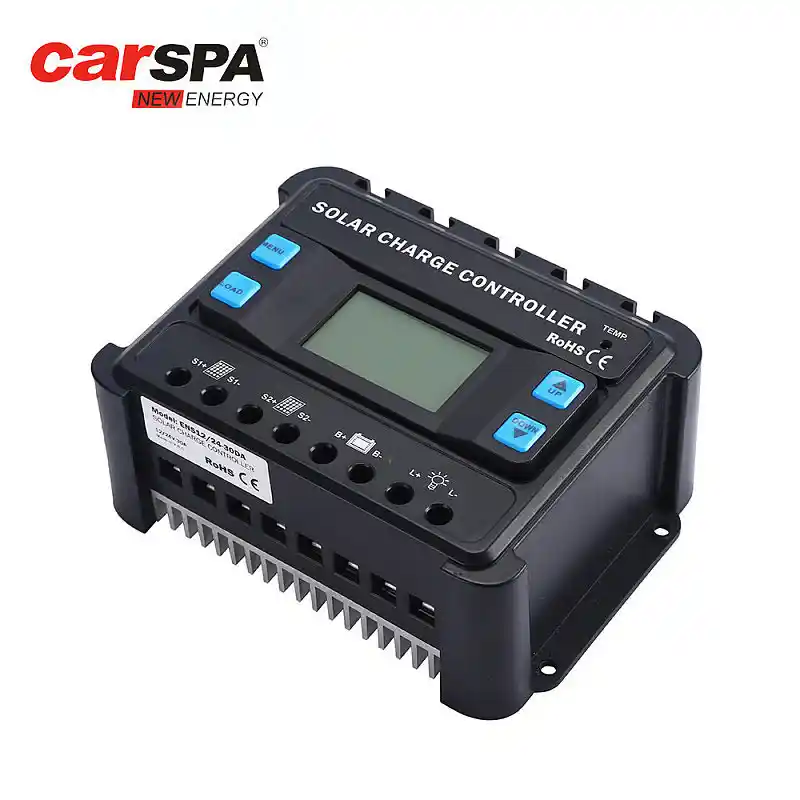
In an off-grid camping setup, solar panels can generate fluctuating voltage depending on the strength and angle of sunlight. Without regulation, these surges can push excessive voltage into the battery, causing overheating, electrolyte loss, or internal damage. A solar charge controller prevents this by actively limiting the input once the battery reaches full capacity. This safeguard is crucial during midday peaks or high-altitude camping sites where sunlight intensity is stronger.
Controlling Voltage and Current for Safe Battery Charging
Different types of batteries—such as LiFePO₄, AGM, and GEL—require specific charging voltages to maintain health. A solar charge controller monitors both voltage and current in real time, ensuring the battery receives a safe and appropriate level of energy. This controlled charging process reduces the risk of swelling, premature wear, and reduced cycle life. For long camping trips, maintaining battery integrity directly affects how long your power system can run.
Preventing Reverse Current Flow at Night
When sunlight disappears, solar panels can naturally draw current back from the battery, causing slow overnight discharge. A charge controller includes built-in reverse current protection, blocking the backward flow and preserving stored energy. This is especially important in colder temperatures, where batteries already lose efficiency and cannot afford accidental nighttime discharge.
Enhancing Safety in Diverse Outdoor Conditions
Outdoor environments can be unpredictable—rapid cloud movement, sudden bursts of sunlight, or partial shading can cause inconsistent power output from panels. A solar charge controller smooths these variations, ensuring that the battery is never exposed to unstable charging levels. Whether camping in forests, deserts, mountains, or coastal areas, the controller acts as a protective buffer that stabilizes the entire system.
Extending Battery Lifespan for Long-Term Outdoor Use
A well-maintained battery can last for years, while an unregulated system can degrade quickly due to repeated overcharging or deep discharging. By keeping the battery within safe operating ranges, a solar charge controller significantly extends its usable life. This means fewer replacements, lower long-term costs, and more dependable performance on every camping adventure.
How Does a Solar Charge Controller Improve Charging Efficiency in Off-Grid Camping Systems?
Maximizing Solar Energy Harvest with MPPT Technology
Modern MPPT (Maximum Power Point Tracking) solar charge controllers can dramatically increase charging efficiency—often by 20–30% compared to PWM controllers. They continuously scan the solar panel’s voltage-current curve to identify its maximum power point, adjusting operation in real time. This is especially valuable during camping, where sunlight angles, shading from trees, and cloud movement change frequently. MPPT ensures the system captures every possible watt, providing more reliable power throughout the day.
Optimizing Charging Under Low-Light or Cloudy Conditions
Camping environments vary—mountain valleys, dense forests, or overcast mornings can limit sunlight. An MPPT solar charge controller boosts usable energy even from weak or scattered light, allowing the battery to charge earlier in the morning and continue charging later into the evening. This extended harvesting window is critical for campers who rely on electricity for cooking tools, lighting, communication devices, and portable refrigerators.
Balancing Solar Input and Battery Requirements Automatically
Solar panels rarely produce the exact voltage needed by a battery. A solar charge controller acts as the intermediary, converting panel output into the appropriate voltage and current required for optimal charging. This adaptive behavior prevents wasted power, ensuring that even partial sunlight contributes meaningfully to the battery instead of being lost due to mismatch.
Reducing Energy Loss Across the System
Without a controller, excess energy often goes unused, and voltage mismatching leads to inefficient transfer. A high-quality solar charge controller reduces conversion loss through intelligent regulation, stable circuitry, and optimized power pathways. As a result, more solar energy is stored instead of dissipated as heat. For multi-day camping trips, this efficiency translates into longer runtimes and fewer power shortages.
Maintaining Stable Power Flow for Sensitive Devices
Some camping equipment—such as GPS units, drone batteries, medical devices, and LED lighting—requires steady voltage without fluctuations. By stabilizing solar output and maintaining consistent charging curves, a solar charge controller ensures that connected devices receive cleaner, more stable power. This results in safer charging, fewer interruptions, and extended device lifespan.
What Features Matter Most When Choosing a Solar Charge Controller for Camping?
Selecting Between MPPT and PWM for Outdoor Efficiency
The first choice campers face is whether to use an MPPT or PWM controller.
MPPT controllers provide higher efficiency, better performance in cloudy or cold conditions, and improved compatibility with higher-voltage solar panels.
PWM controllers are simpler, more affordable, and suitable for smaller systems or casual weekend trips.
For extended or energy-heavy camping, MPPT is the superior option due to its significant charging advantages.
Ensuring Compatibility with Battery Type and Voltage
Camping setups often use 12V lithium, AGM, or GEL deep-cycle batteries. A good controller must support the battery type, correct charging parameters, and automatic detection features. Adjustable charging profiles ensure that each battery receives optimal voltage, preventing overcharging and extending cycle life—critical for long-distance or multi-day outdoor use.
Assessing Current Rating and Solar Input Capacity
The controller’s amperage rating determines how much solar power it can safely handle. For common camping systems:
10A–20A controllers suit small panel kits(50–200W).
20A–40A controllers handle larger camping setups with 200–400W panels.
Choosing a controller with a slightly higher rating ensures safety, flexibility, and future expansion without requiring replacement.
Checking for Multi-Stage Charging Modes
High-quality controllers use multi-stage charging (bulk, boost, float, equalization) to maintain battery health. These modes optimize charging efficiency, prevent internal crystal buildup, and ensure long-term stability. For lithium batteries, smart charging logic further enhances lifespan by avoiding deep discharge and maintaining temperature protection.
Prioritizing Display, Monitoring, and Real-Time Data
For campers, visibility into system performance is essential. Useful features include:
LCD screens or LED indicators
Battery voltage status
Charging current and real-time solar input
Bluetooth or mobile app monitoring
These tools help campers understand energy usage, optimize system configuration, and quickly detect abnormalities.
Choosing a Durable, Outdoor-Ready Design
Camping conditions require a controller that withstands dust, vibrations, humidity, and temperature changes. Look for:
Aluminum or reinforced housing
Corrosion-resistant components
Wide temperature operating range
Secure terminals and robust wiring ports
A rugged design ensures stable performance, even in remote areas or harsh environments.
How Can You Build a Stable Solar + Battery + Charge Controller Setup for Off-Grid Camping?
Choosing the Right Solar Panel Size for Camping Needs
A balanced system begins with selecting the correct solar panel capacity. For typical camping setups:
100W panels suit small loads such as lighting and phone charging.
200–300W kits support portable refrigerators, fans, and drones.
400W or more are ideal for long trips or powering multiple devices.
A solar charge controller ensures that regardless of panel size, the energy harvested is regulated efficiently and safely stored in the battery.
Pairing the Controller with an Appropriate Battery Bank
Batteries store energy for nighttime and cloudy conditions. Deep-cycle LiFePO₄ batteries are highly recommended due to their long lifespan, safety, and lightweight design—perfect for mobile camping systems. The solar charge controller manages the voltage and ensures the battery receives proper charging, whether you're on a one-night trip or a week-long outdoor adventure.

Integrating the Controller into the Solar Power Flow
A proper power flow typically follows this sequence:
Solar Panels → Charge Controller → Battery → Loads (12V DC or Inverter for AC)
The charge controller acts as the central manager of the system, regulating input from the panels and delivering the correct charging profile to the battery. Good wiring practices—like using the proper cable gauge and secure terminals—ensure reduced power loss and safer operation.
Planning for Peak Power Use and Daily Energy Cycles
Different camping activities require varying amounts of power. For example:
Running a fridge may require 40–80W continuously.
Drone charging, laptops, and cameras draw intermittent but higher loads.
LED lights and fans run for hours at night.
A solar charge controller helps distribute and optimize energy flow, ensuring consistent performance even during heavy use or limited sunlight.
Adding Expansion Options for Long Camping Trips
One advantage of solar-based camping systems is scalability. A quality charge controller allows future upgrades such as:
Adding additional solar panels
Increasing battery capacity
Connecting multiple DC devices
Integrating a portable inverter for AC power
With expansion support, campers can adapt the system for winter camping, extended off-grid stays, or additional devices without replacing the controller.
Testing the System Before the Camping Trip
To avoid surprises in the wilderness, campers should test the complete setup at home. This includes checking solar panel output, verifying charge controller settings, ensuring battery charge cycles work properly, and reviewing device compatibility. A well-tested solar power system reduces the risk of power shortages and ensures smooth operation during the actual trip.
How Do You Ensure Long-Term Reliability and Safe Operation of a Solar Charge Controller in Camping Environments?
Protecting the Controller from Dust, Moisture, and Outdoor Exposure
Camping environments expose equipment to unpredictable elements. A solar charge controller should always be placed in a sheltered, ventilated area—such as inside an RV compartment, tent vestibule, or waterproof equipment box. This protects its electronic components from dust, accidental splashes, morning dew, and sudden weather changes. Simple precautions significantly extend lifespan and ensure stable performance throughout the trip.
Maintaining Proper Ventilation for Heat Management
Controllers generate heat during operation, especially under strong sunlight or high charging currents. Adequate ventilation is essential to prevent overheating and thermal shutdowns. Keeping the controller raised on a flat surface, leaving space around the vents, and avoiding tight enclosures helps maintain safe temperatures. For summer camping or desert trips, this becomes even more important.
Inspecting Wiring and Connections Regularly
Movement, vibration, and frequent packing/unpacking of gear can loosen wires. Campers should perform quick daily checks:
Ensure terminals are tight
Inspect cables for wear
Confirm polarity before reconnecting panels
Keep connectors dry and clean
Stable wiring ensures consistent charging efficiency and prevents accidental sparks or power interruptions.
Avoiding Overloading Beyond Controller Capacity
Even though a charge controller is robust, it still has limits. Exceeding its rated amperage or connecting oversized solar panels can cause overheating or internal damage. Campers should select a controller with enough headroom for future expansion and avoid connecting additional panels without verifying ratings. Matching panel voltage and battery requirements is a key safety step.
Monitoring System Performance Through Displays or Apps
Many modern controllers support LCD screens or mobile app monitoring. These features help campers track:
Solar input (W / V / A)
Battery status (SOC, voltage, health)
Charging mode (bulk, boost, float)
Load output performance
Real-time monitoring allows quick troubleshooting, energy planning, and optimized power usage throughout the camping trip.
Performing Routine Cleaning and Proper Storage After the Trip
After returning home, the controller should be wiped clean and stored in a dry, cool environment. Dust should be removed from vents and terminal areas. If the system was exposed to humidity or rain, allowing the controller to dry properly before storage prevents corrosion. Good storage habits ensure the controller remains ready for the next trip without performance degradation.
Conclusion
A solar charge controller is more than just a supporting component—it is the heart of every reliable off-grid camping solar system. As outdoor travel increasingly depends on portable power for lighting, refrigeration, communication, entertainment, and safety, the controller ensures that the entire solar ecosystem operates smoothly. By regulating voltage, preventing battery damage, optimizing charging efficiency, and adapting to changing sunlight conditions, it plays a vital role in keeping campers powered throughout their journey.
With features such as MPPT tracking, multi-stage charging, real-time monitoring, and robust protection systems, a quality solar charge controller transforms solar energy into dependable, safe, and efficient battery storage. It enables campers to travel farther, stay longer, and enjoy greater freedom in remote areas—without worrying about unstable power or battery degradation.
For anyone planning an off-grid camping setup, choosing a trusted, durable, and intelligent solar charge controller is one of the most important decisions you can make. A well-designed controller not only enhances the system’s performance but also extends battery life and improves overall safety, ensuring a worry-free outdoor experience.
To build a stable and efficient solar-powered camping system, selecting a reliable manufacturer is essential. CARSPA offers a range of high-performance solar charge controllers designed for outdoor and off-grid applications, giving campers the confidence and power they need wherever their adventures take them.


.jpg)

.jpg)
.jpg)
.jpg)
.jpg)


