
How Does a Battery Monitor Improve the Efficiency and Reliability of Solar Power Systems?
Introduction
In solar power systems, energy storage is the bridge between sunlight and usable electricity. While solar panels convert sunlight into energy, it is the battery bank that ensures power availability during the night or cloudy hours. However, without accurate monitoring, even the most advanced batteries can underperform, degrade prematurely, or fail unexpectedly. This is where a battery monitor becomes an indispensable part of the solar setup.

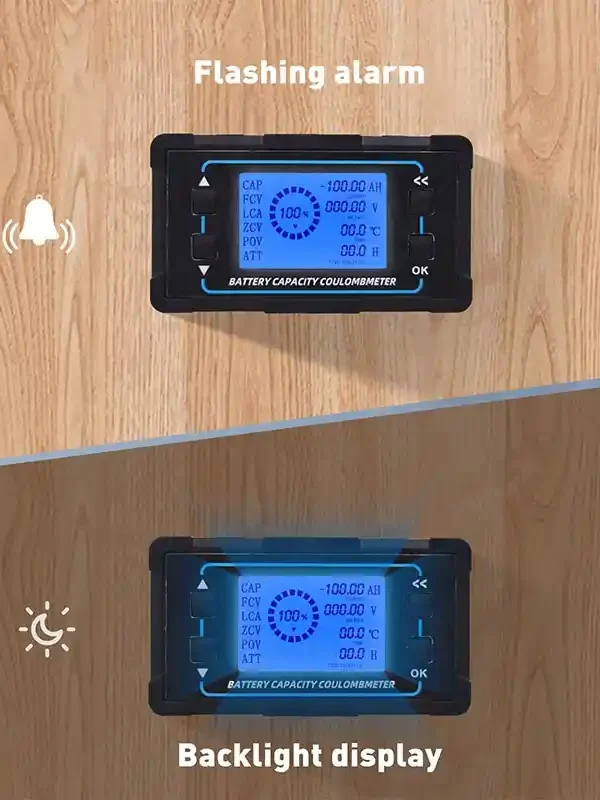
A battery monitor acts as the “nervous system” of a solar power installation — continuously tracking parameters such as voltage, current, temperature, and state of charge (SOC). By analyzing these data points, it provides real-time insights into battery health and overall system performance. This not only helps optimize charging and discharging cycles but also prevents critical issues like overcharging, deep discharging, or imbalance between cells.
In modern solar applications — from off-grid cabins and mobile RV systems to large-scale industrial power stations — maintaining stable and efficient energy storage is key to long-term reliability. Battery monitors empower users and system integrators to make data-driven decisions, extend battery life, and ensure every watt of solar energy is effectively stored and used.
In the following sections, we'll explore why battery monitoring is essential, how it works, its benefits, and what to consider when selecting one for your solar projects.
Why Is Battery Monitoring Essential in Solar Power Systems?
In any solar energy setup, the battery bank serves as the heart of the system — storing the energy generated by solar panels and releasing it when needed. However, without proper monitoring, that heart can quickly become unreliable or inefficient. A battery monitor ensures that this critical component operates safely, efficiently, and predictably over time.
1. Ensuring Accurate Energy Management
Solar systems rely on balanced charging and discharging cycles. A battery monitor provides real-time feedback on state of charge (SOC), state of health (SOH), and depth of discharge (DOD). These parameters help system operators understand exactly how much energy is available and when to recharge or rest the battery bank. This level of precision prevents both overuse and underuse, leading to longer battery life and improved system efficiency.
2. Preventing Performance Loss and Damage
Even small voltage fluctuations or temperature changes can cause battery degradation. A high-quality monitor continuously tracks these variations, issuing alerts when thresholds are exceeded. This helps protect against common issues such as overcharging, deep discharge, or uneven cell balance, all of which can shorten lifespan or cause irreversible damage.
3. Supporting System Stability and Safety
Safety is another key reason why battery monitoring is vital. Overheated batteries, incorrect polarity connections, or excessive current can pose serious risks. A battery monitor not only logs these abnormalities but can also trigger automatic shutdowns or load disconnections to prevent accidents. In remote or unmanned solar installations, this proactive monitoring plays a crucial role in preventing downtime and ensuring operational safety.
4. Optimizing Renewable Energy Utilization
Without monitoring, much of the potential solar energy can be wasted due to inefficient storage or conversion. By providing detailed data analytics, a battery monitor helps optimize energy harvesting and storage efficiency, ensuring that solar power is used to its fullest — reducing reliance on backup generators or grid electricity.

How Does a Battery Monitor Work Within a Solar Setup?
To understand the value of a battery monitor, it helps to see how it integrates into the solar power system. Acting as the intelligent observer between the solar charge controller, inverter, and battery bank, the monitor provides real-time visibility into the entire energy flow.
1. Monitoring Key Electrical Parameters
A battery monitor continuously measures voltage, current, temperature, and power flow direction — whether the system is charging from solar panels or discharging to power loads. These readings are combined to calculate the State of Charge (SOC) and State of Health (SOH), two critical indicators for determining battery performance and lifespan.
2. Data Integration with Solar Controllers and Inverters
In a complete solar setup, the monitor communicates with MPPT charge controllers, battery management systems (BMS), and inverters through communication protocols such as RS485, CAN, or Modbus. This allows the monitor to exchange data seamlessly, enabling centralized control and smart decision-making — such as adjusting charge current, switching load priorities, or triggering protection actions when anomalies are detected.
3. Real-Time Display and Remote Access
Modern battery monitors feature LCD or digital displays for on-site readings, while advanced models offer Bluetooth, Wi-Fi, or app-based interfaces for remote monitoring. These tools provide users with instant visibility into performance trends, allowing proactive maintenance before issues arise. In larger installations, remote dashboards enable operators to track multiple battery banks from a single interface, reducing inspection costs and improving response time.
4. Data Logging and Historical Analysis
Beyond real-time tracking, most monitors store historical performance data — such as charge cycles, peak loads, and temperature variations. This record is invaluable for long-term performance analysis, warranty verification, and predictive maintenance. It helps identify gradual degradation patterns, allowing adjustments before critical failures occur.
By continuously collecting, analyzing, and sharing battery performance data, a battery monitor acts as the intelligence layer in solar systems — ensuring every component works in harmony and every watt of energy is used efficiently.
What Are the Key Benefits of Using a Battery Monitor in Solar Applications?
A battery monitor is far more than a measuring device—it is a smart management tool that directly influences the efficiency, reliability, and lifespan of an entire solar power system. Whether applied in residential, commercial, or industrial installations, its benefits extend across performance optimization, cost reduction, and safety assurance.
1. Enhancing Energy Efficiency and Utilization
Solar energy is intermittent, and efficient storage is key to maximizing its use. A battery monitor helps track charge and discharge efficiency, ensuring energy from the solar panels is stored and released at the right time. By analyzing SOC (State of Charge) and DOD (Depth of Discharge), operators can prevent energy waste and maintain optimal charge cycles, which leads to improved overall energy conversion efficiency.
2. Extending Battery Life and Reducing Replacement Costs
Every battery has a finite number of charge-discharge cycles. Overcharging or deep discharging significantly reduces its lifespan. A monitor safeguards against these conditions by providing real-time voltage and current alerts, allowing for timely intervention. In long-term operation, this preventive control can extend battery life by 20–30%, reducing costly replacements in large solar systems.
3. Preventing Failures and Improving Reliability
Unmonitored systems are prone to sudden battery failures due to temperature imbalance, internal resistance issues, or cell degradation. A battery monitor detects abnormal patterns early—such as uneven cell voltages or rising temperatures—and triggers warnings or automatic shutdowns. This predictive capability minimizes system downtime, ensuring reliable operation even under harsh environmental conditions.
4. Enabling Smart Energy Management
When integrated with smart solar controllers or IoT platforms, the battery monitor becomes part of a larger intelligent energy ecosystem. Data collected from multiple battery banks can be used to forecast energy demand, prioritize load management, and coordinate charging schedules with peak sunlight hours. This leads to improved energy autonomy and better load balancing across connected systems.
5. Supporting Sustainability and Operational Transparency
For organizations committed to sustainable energy, a battery monitor provides measurable data that supports energy audits and compliance reporting. The ability to track energy storage efficiency, carbon offset, and power reliability enables companies to quantify their sustainability impact and optimize future system expansions with confidence.
In short, a battery monitor transforms a passive energy storage setup into a dynamic, intelligent, and self-optimizing system—ensuring that solar power is not just generated, but also managed and utilized to its fullest potential.
How Can Battery Monitors Help Prevent System Failures and Downtime?
In solar energy systems, downtime equals loss—both in terms of power supply and financial return. A single unnoticed fault in a battery bank can lead to cascading failures across the entire setup. This is where a battery monitor plays a crucial preventive role. By identifying small irregularities before they escalate, it ensures system continuity, safety, and cost efficiency.
1. Early Detection of Battery Imbalances
Batteries connected in series or parallel must operate in perfect harmony. Over time, however, differences in internal resistance or temperature can cause imbalance—where one battery charges or discharges faster than others. A battery monitor constantly compares voltage and current across cells, identifying deviations instantly. This early detection prevents overstress and overheat in individual batteries, avoiding performance loss and dangerous conditions such as thermal runaway.
2. Protection Against Overcharge and Deep Discharge
One of the most common causes of battery damage in solar systems is improper charging. Overcharging accelerates chemical degradation, while deep discharging reduces capacity permanently. By monitoring real-time voltage thresholds, a battery monitor can trigger automatic disconnects or alerts when unsafe conditions arise. This layer of protection keeps the system within safe operating limits, greatly reducing unexpected breakdowns.
3. Temperature and Environmental Safeguards
Temperature has a profound effect on battery efficiency and lifespan. Excessive heat speeds up chemical reactions and can cause permanent damage, while low temperatures reduce charge acceptance. Many modern battery monitors integrate thermal sensors that track battery surface or ambient temperature. If the system detects abnormal heat buildup, it can prompt cooling measures or shut down charging processes—protecting both the battery bank and surrounding equipment.
4. Data-Driven Maintenance and Predictive Alerts
Rather than relying on manual inspections or guesswork, a battery monitor provides predictive maintenance insights. It logs trends in voltage drop, charge cycles, and internal resistance, helping operators identify gradual degradation before it turns into failure. Through historical data analysis, maintenance schedules can be optimized, ensuring timely replacement or rebalancing of cells and minimizing unplanned downtime.
5. Ensuring Continuous Power for Critical Loads
In hybrid or off-grid solar power systems—such as telecom towers, rural installations, or emergency power supplies—continuity is non-negotiable. A reliable battery monitor ensures the system maintains adequate backup charge, automatically prioritizing critical loads when energy is limited. This function keeps essential systems running even under fault conditions or low-sunlight scenarios.
By combining real-time diagnostics, safety automation, and predictive analytics, battery monitors transform solar systems from reactive to proactive energy networks. Instead of merely responding to problems, operators can anticipate and prevent them—maximizing uptime, extending battery service life, and ensuring stable energy delivery across all environments.
What Should You Consider When Choosing the Right Battery Monitor for Your Solar Project?
Selecting the right battery monitor is not a one-size-fits-all decision. The ideal model depends on your system's size, configuration, communication needs, and maintenance goals. A well-chosen monitor can significantly improve overall system performance, while a mismatched one may fail to deliver meaningful insights. Here are key factors to consider before making your choice.
1. Compatibility with Battery Type and System Voltage
Battery monitors must match the type of batteries used in your solar setup — whether they are lithium-ion, AGM, gel, or lead-acid. Each battery chemistry has unique charge characteristics and requires specific monitoring algorithms to calculate accurate SOC and SOH values. Additionally, ensure that the monitor supports the system voltage level (12V, 24V, 48V, or higher) to guarantee precise readings and stable operation.
2. Accuracy and Data Refresh Rate
In professional solar installations, accuracy is non-negotiable. Choose a monitor that provides high sampling frequency and low measurement error for both current and voltage readings. A faster data refresh rate ensures that system controllers and operators receive real-time information, crucial for adjusting charging behavior or preventing overload.
3. Communication Interface and Integration
Modern solar systems often rely on centralized management through inverters, BMS, or cloud-based platforms. Look for monitors that support standard communication protocols such as RS485, CANbus, or Modbus RTU. Seamless integration allows data to flow directly into monitoring software or remote dashboards, enabling unified control and advanced analytics.
4. Display and User Accessibility
For small installations or field technicians, a clear and intuitive LCD or digital display is essential. It should show key parameters like voltage, current, power, and charge status at a glance. In larger setups or smart systems, consider models with Bluetooth, Wi-Fi, or mobile app connectivity. These allow remote monitoring and historical data visualization, helping maintenance teams diagnose issues without being physically on-site.
5. Data Logging and Historical Analysis
Long-term performance tracking is vital for both warranty support and predictive maintenance. Advanced monitors come with built-in data storage or SD card slots, enabling trend analysis of battery cycles, charge efficiency, and temperature fluctuations. This historical data can reveal degradation patterns early, ensuring batteries are replaced or reconditioned before failure.
6. Safety Features and Alarm Functions
Safety is a core requirement. The monitor should include configurable alarms for over-voltage, under-voltage, over-current, and temperature limits. Some industrial-grade models even support relay outputs for automatic disconnects or integration with protection systems. Such features provide an additional layer of defense against operational faults or hazardous conditions.
7. Durability and Environmental Resistance
If your solar system is installed in outdoor or remote environments, the monitor's build quality matters. Look for devices with high IP ratings (IP65 or above), UV-resistant enclosures, and wide operating temperature ranges. These ensure consistent performance under extreme sunlight, humidity, or dust exposure.
Choosing a battery monitor with the right technical specifications and protection features ensures long-term stability, efficiency, and safety for your solar investment.
Conclusion
In the transition toward renewable energy, every detail in a solar system contributes to its success—and battery monitoring is one of the most decisive factors. A battery monitor not only measures performance but also enables intelligent energy management, predictive maintenance, and full operational transparency. By providing accurate insights into charge status, energy flow, and system health, it ensures that solar energy is always available, stable, and efficiently utilized.
CARSPA offers a range of advanced battery monitoring solutions designed for various solar applications—from residential setups to industrial energy systems—helping users achieve smarter, safer, and more sustainable power management.


.jpg)


.jpg)
.jpg)
.jpg)
.jpg)
.jpg)