Why Is a Battery Monitor Essential for Outdoor Power Systems? 5 Critical Questions Answered
In today's energy-conscious world, more people are turning to off-grid and mobile power solutions—whether for camping, boating, remote work, or solar-powered homes. But while batteries lie at the heart of these systems, managing them without visibility can be risky and inefficient. That's where a battery monitor becomes essential. It doesn't just show how much power you have left—it helps you make informed, real-time decisions to keep your outdoor operations running smoothly.
This article explores how battery monitors improve the performance, reliability, and efficiency of outdoor power setups. From helping avoid deep discharges to optimizing renewable energy usage, the right monitor can make all the difference.
Why Is a Battery Monitor Important for Outdoor Power Systems?
Ensuring Reliable Off-Grid Energy Management
Outdoor power systems are often deployed in locations far from electrical grids—such as mountain cabins, agricultural fields, and expedition camps—where battery banks serve as the only source of energy. In these environments, the stability of the entire system hinges on the accurate management of power storage and consumption. A battery monitor allows users to visualize the state of charge (SOC), energy consumption trends, and even historical data that helps with forecasting usage. With this information, users can plan their energy needs more effectively, avoiding blackouts and extending the time between recharges.
Preventing Overcharge and Deep Discharge
Batteries used in outdoor environments are often expensive deep-cycle models like LiFePO4, AGM, or Gel types. Improper charging or discharging cycles can significantly reduce their lifespan. A high-quality battery monitor continuously tracks voltage and current in both directions and can issue alerts when the battery approaches dangerous thresholds—before actual damage occurs. This is especially important in outdoor systems relying on inconsistent energy sources like solar or wind, where power input may fluctuate due to weather. By receiving real-time warnings, users can disconnect heavy loads, switch to backup sources, or adjust power consumption proactively.
Supporting Long-Term System Health
In remote systems, users typically install expensive inverters, charge controllers, and solar arrays alongside batteries. Damage to the battery pack due to lack of monitoring can compromise the performance of the entire system. Battery monitors help protect this investment by ensuring the battery is operating within safe limits, thus maintaining the integrity of connected equipment. Moreover, in applications such as RV travel or outdoor photography expeditions, users often operate sensitive electronics that demand a stable voltage. A monitor ensures that these devices are powered safely without voltage dips that could cause malfunction or data loss.
How Does a Battery Monitor Improve Outdoor Efficiency?
Real-Time Data for Smarter Power Decisions
Efficiency in outdoor energy systems depends on understanding how power is being used at any given moment. A battery monitor provides instant visibility into current draw, battery voltage, power consumption, and remaining amp-hours. This level of transparency allows users to make intelligent decisions—such as turning off non-essential loads when battery levels are low or adjusting solar panel orientation to improve charging rates. In high-demand scenarios like running multiple devices during night camping or powering tools on a remote worksite, the ability to monitor real-time consumption helps prevent overloads and ensures system balance.
Moreover, this data empowers users to understand usage patterns over time. For example, if a battery consistently drains faster than expected at night, it might suggest an appliance is drawing standby current or that battery capacity is degrading. Over the long term, this insight leads to better battery maintenance, timely replacements, and cost savings by preventing system downtime.
Customizable Alerts and Programmable Alarms
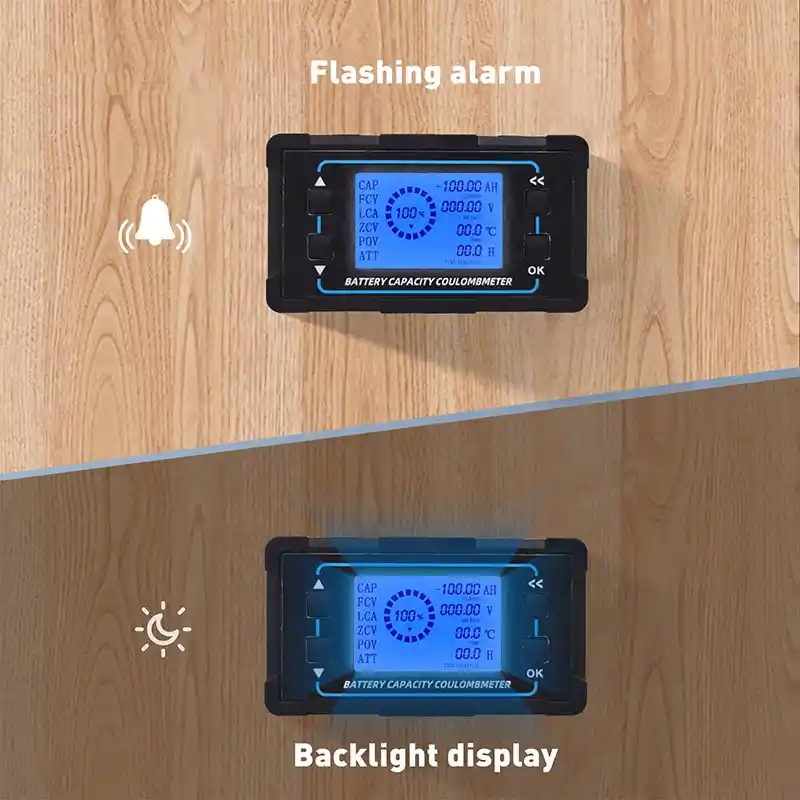
Another major way battery monitors enhance outdoor efficiency is through their intelligent alert systems. High-end units allow users to set custom alarm parameters for voltage, charge/discharge current, remaining capacity, and even temperature. In outdoor applications where users may be engaged in other tasks—such as driving, boating, or hiking—these audible or visual alarms serve as a critical early-warning system.
For instance, if the battery voltage drops below 10.5V while running a refrigerator and lights in an RV, the monitor can immediately alert the user to reduce consumption or start charging. Conversely, when overcharging threatens lithium batteries due to strong midday solar input, the system can issue a warning before damage occurs. This automated awareness reduces the need for manual checking, making energy usage safer and more efficient.
Enhancing Renewable Integration
Battery monitors also play an essential role in managing energy from renewable sources like solar and wind. These sources are variable and weather-dependent, which makes consistent charging a challenge. By integrating a battery monitor, users can observe how much energy is being stored during sunlight hours, how fast it's depleting during night use, and how much reserve is realistically available for cloudy days. This allows for better load scheduling—such as delaying high-wattage tasks like water pumping or welding until batteries are sufficiently recharged—resulting in smoother, more reliable outdoor energy operations.

What Features Should You Look for in an Outdoor Battery Monitor?
Wide Voltage and Current Range
When operating in outdoor conditions, versatility is key. A high-quality battery monitor should support a broad voltage range—ideally from as low as 8V up to 120V—to accommodate 12V, 24V, 48V, and even high-voltage battery banks used in larger off-grid solar systems or marine setups. Similarly, the current range should be capable of handling large loads, with support for up to 500A or more. This ensures compatibility with not only lighting and communication devices, but also with high-demand equipment like inverters, refrigerators, electric motors, or satellite systems.
Such capacity also makes the battery monitor adaptable to future upgrades. As outdoor energy systems expand—perhaps with more solar panels or higher-capacity batteries—the monitor must scale with the system without needing to be replaced. This scalability offers long-term value and convenience.
User-Friendly Display and Connectivity
Readability and usability are especially important in outdoor environments where users may be wearing gloves, facing bright sun, or working in dim conditions. A good battery monitor will have a high-contrast backlit LCD or LED display that clearly shows voltage, current, SOC, and alarm indicators even from a distance.
Some advanced models also include touch buttons or tactile keys that respond well in humid or dusty environments. Furthermore, monitors with Bluetooth or RS485 communication allow integration with mobile apps or remote monitoring terminals. This connectivity is crucial in setups where the battery system is physically difficult to access—like on a rooftop, inside an RV compartment, or in a sealed marine cabinet. It enables users to check battery status remotely and react faster to any anomalies.
Programmability and Data Logging
Battery monitors designed for outdoor use should include programmable features to customize alarm thresholds, sleep modes, and screen behaviors. For instance, the user may want a silent alarm when voltage dips slightly, but a loud one when it drops below critical limits. Advanced models also offer data logging functions, capturing daily trends in usage, charging efficiency, and battery degradation. This historical data becomes an invaluable tool for diagnosing issues, improving energy use patterns, or planning for seasonal changes in solar output.
Ruggedness and Installation Flexibility
Finally, outdoor battery monitors should be designed to handle rough conditions—extreme temperatures, moisture, vibrations, and dust. Look for monitors with protective enclosures, corrosion-resistant connectors, and certifications for outdoor or marine-grade usage. Also, flexible mounting options—panel-mount, flush-mount, or surface-mount—help the device adapt to RV dashboards, cabin walls, or waterproof enclosures.
Where Can a Battery Monitor Be Used Outdoors?
RVs and Campers
For recreational vehicles, battery monitors are an indispensable part of the electrical system. These mobile platforms often rely on deep-cycle batteries to power everything from LED lighting and ventilation fans to microwaves and televisions. A battery monitor helps travelers track their power usage in real-time, allowing them to manage consumption and plan charging cycles—especially during extended off-grid stays. For solar-equipped campers, the monitor ensures solar input is being effectively utilized and that batteries are not being over-discharged overnight.
In more advanced RVs, the battery monitor may also work in tandem with smart controllers or inverters, triggering automatic engine starts or generator runs when battery capacity falls below a certain threshold. This level of automation not only improves comfort but also enhances system reliability in remote environments.
Solar Power Stations and Remote Cabins
In isolated rural or mountainous areas where grid access is unavailable, solar-powered cabins and small-scale stations often depend entirely on batteries for electricity. A battery monitor helps users keep track of energy reserves, allowing them to predict how many days of usage remain based on current load and solar charging input.
This is especially useful in winter or cloudy seasons when solar production drops significantly. By using a monitor, users can make better choices about when to reduce consumption, schedule high-load tasks during peak sunlight hours, or activate backup systems such as wind turbines or diesel generators. Without this visibility, power loss in critical systems like water pumps or heating units can occur without warning.
Marine and Boating Applications
Boats and yachts rely on batteries not only for propulsion (in electric systems) but also for running essential electronics like GPS, radios, lighting, and bilge pumps. A high-quality battery monitor designed for marine use allows sailors to stay informed about power availability even in open waters. This is critical, as misjudging battery capacity offshore can compromise navigation or safety systems.
Moreover, saltwater environments can accelerate corrosion, so choosing a monitor with marine-grade construction is key. Monitors with waterproof displays and sealed connectors ensure long-term durability. In hybrid boats with solar charging panels or auxiliary generators, the monitor also aids in balancing multiple charging inputs, preventing overcharging or uneven battery loading.
Off-Grid Worksites and Utility Installations
Battery monitors are also useful in temporary outdoor setups such as construction sites, field laboratories, mobile communication towers, and surveillance systems. These systems often operate unattended and must be continuously monitored for power integrity. With proper alarms and remote connectivity, battery monitors ensure that technical teams can intervene before a full power loss occurs—reducing downtime and preventing equipment damage.

Conclusion
Why Choose a Reliable Battery Monitor for Outdoor Use?
Whether you're exploring remote landscapes in an RV, sailing across coastal waters, or maintaining an off-grid solar-powered cabin, a reliable battery monitor isn't just a convenience—it's a critical component of your outdoor power strategy. In environments where electricity is not a guaranteed utility but a carefully managed resource, knowing the exact status of your battery system can mean the difference between smooth operation and costly disruption.
A high-quality battery monitor offers visibility into key electrical parameters—voltage, current, power flow, state of charge, and consumption history—allowing users to plan, prioritize, and protect their energy usage. It minimizes guesswork, enabling proactive action rather than reactive troubleshooting. With customizable alarms, wide voltage and current range support, and user-friendly interfaces, these devices empower you to take full control of your off-grid system, even in harsh or dynamic environments.
For professionals and serious outdoor users alike, investing in a rugged, precise, and programmable battery monitor translates directly into longer battery life, greater operational safety, and lower system maintenance costs. It's not just about monitoring voltage—it's about enabling smarter decisions, protecting expensive assets, and ensuring energy availability exactly when it's needed most.
If you're looking for a dependable, outdoor-ready solution, the CARSPA BMC500 Battery Monitor delivers on every front. Supporting a voltage range of 8V–120V and up to 500A current monitoring, with programmable high/low alarms and precision shunt-based measurement, it's engineered for serious off-grid applications—from solar cabins to mobile workstations and beyond.