
Battery Monitor Guide: 5 Must-Know Questions for Smarter Power Use
Battery monitoring has become a crucial element in modern power systems, especially as energy applications evolve toward higher efficiency, autonomy, and safety. Whether used in solar storage, industrial automation, or mobile energy platforms, a battery monitor serves as the intelligent interface between your energy source and the system’s demand. It not only displays the real-time condition of the battery but also provides key insights to avoid operational failures, extend battery life, and improve system performance. With energy costs rising and downtime becoming increasingly unacceptable, investing in a smart battery monitor is no longer optional—it’s essential. This article explores the core questions professionals ask when selecting and using a battery monitor to ensure the most effective power management strategy.
Why Is Battery Monitoring Essential for Energy Systems?
Real-Time Insights into Battery Health
Battery monitors provide continuous feedback on key parameters such as voltage, current, temperature, and state of charge (SOC). These readings give users a complete view of battery performance at any given moment, helping to identify anomalies such as voltage imbalance, low charge levels, or irregular current flow. In systems where battery health is critical—like renewable energy storage or industrial UPS setups—such real-time data serves as the foundation for proactive maintenance.
Ensuring System Stability and Safety
A stable power supply relies on batteries functioning within safe operational thresholds. Battery monitors protect the system by alerting users when values approach dangerous limits, such as when voltage drops below minimum safe discharge levels or when temperatures rise beyond acceptable thresholds. These warnings enable swift corrective action, reducing risks of battery overheating, swelling, or failure. In large-scale or remote installations, such automated alerts are crucial for minimizing operational hazards and ensuring continuous performance.
Long-Term Cost Efficiency
Battery replacements can be costly, especially in systems where downtime leads to productivity loss. By preventing overcharging, over-discharging, or unbalanced charging cycles, a quality battery monitor helps extend battery lifespan by up to 30–50%. This not only reduces the need for frequent replacements but also minimizes overall system costs. Additionally, battery monitors can identify inefficient usage habits or load patterns, allowing users to optimize consumption and enhance system-wide energy efficiency.
Regulatory Compliance and Sustainability Goals
In certain industries, compliance with power management regulations or sustainability goals may require detailed logging and proof of responsible battery usage. Advanced battery monitors offer data recording and export capabilities, supporting documentation for audits or environmental certifications. This feature is particularly useful for companies committed to reducing their carbon footprint or improving energy transparency.

What Key Parameters Should a Battery Monitor Track?
Voltage Range and Accuracy
A reliable battery monitor must accurately measure the voltage across individual batteries or entire battery banks. A broad operating range—for example, from 8V to 120V—ensures compatibility with systems using 12V, 24V, 48V, or even higher-voltage battery configurations. High-resolution voltage sensing (with ±0.1V accuracy or better) is essential for detecting subtle fluctuations that may indicate early-stage battery imbalance, sulfation, or excessive load draw. In mission-critical systems, even a minor voltage deviation can escalate into a significant issue if not promptly addressed.
Current Measurement with Shunt Support
Current monitoring is equally important, especially in applications where batteries power high-load devices or motors. Battery monitors equipped with external shunt resistors—typically rated for up to 500A—provide precise current readings without interfering with the system’s natural flow. These shunts allow the monitor to detect charging and discharging currents, track amp-hour (Ah) usage over time, and measure power consumption patterns. This is particularly useful for large battery banks in solar PV systems, where current flow varies significantly throughout the day and must be optimized to prevent inefficient storage.
Programmable Alarms for Preventive Action
Advanced battery monitors allow users to define high/low voltage thresholds and customize alerts for critical conditions. For example, if voltage drops below 11.5V in a 12V system, the monitor can trigger an audible alarm or visual warning. This immediate notification helps operators take action—such as disconnecting loads or activating backup generators—before the battery reaches a damaging state. Some monitors also offer programmable current alarms, warning users of abnormal draw or charging faults, further enhancing system safety.
Additional Parameters: Temperature and SOC
Some modern battery monitors include temperature sensors to prevent thermal runaway, a common failure in lithium or AGM batteries. Monitoring internal or ambient temperature helps manage charging profiles and maintain efficiency. Additionally, many units calculate state of charge (SOC) in real time, giving an estimate of remaining battery capacity—similar to a fuel gauge for batteries. This helps in load planning, especially in off-grid or mobile applications where overuse could lead to power depletion.
Where Are Battery Monitors Commonly Used?
Solar and Renewable Energy Setups
In renewable energy systems, especially off-grid solar applications, battery monitors play a vital role in managing energy flow between solar panels, inverters, and battery storage. These setups typically experience fluctuating power input due to changing sunlight conditions. A battery monitor ensures that the batteries are neither overcharged during peak sunlight nor overly discharged during the night or cloudy days. It also helps maintain charge balance across multiple battery units, which is essential for maximizing the performance and lifespan of the system. In hybrid systems with both solar and grid input, the monitor can provide data to optimize switching between power sources.
Marine and RV Power Systems
Battery-powered mobile systems such as boats, yachts, and RVs rely heavily on power autonomy. These environments often combine engine alternators, solar panels, and inverters to supply power to lighting, refrigeration, and appliances. Battery monitors help travelers and sailors manage consumption based on real-time data. Knowing how many amp-hours have been used or how many remain allows users to plan energy use effectively—especially critical when off-grid or at sea. In addition, waterproof or vibration-resistant models are often chosen to suit harsh marine or off-road environments.
Telecom and Industrial Backup Systems
Telecommunications infrastructure, such as remote cell towers, and industrial setups like control panels or factory automation systems require constant uptime. Battery backup systems act as a fail-safe in the event of grid outages. Battery monitors in these applications help maintenance teams schedule battery checks, plan replacements, and generate data logs for compliance purposes. In unmanned or remote stations, remote monitoring capability allows teams to observe battery health without physically visiting the site, saving both time and cost.
Data Centers and Critical IT Systems
Modern data centers deploy uninterruptible power supplies (UPS) that rely on robust battery banks. Battery monitors enable IT managers to detect performance issues before they lead to downtime. For example, uneven charging across battery strings can reduce efficiency or trigger alarms in the UPS system. Detailed monitoring ensures consistent performance, especially during load transitions or emergency situations.
Emergency and Medical Equipment
Some portable medical devices, mobile clinics, and emergency backup carts are powered by battery systems. Monitoring ensures that these batteries are always ready for immediate deployment, which is essential in life-saving environments. Here, battery monitors with clear displays and audible alarms are highly valued for their usability and dependability.

How Do Battery Monitors Improve Maintenance and Troubleshooting?
Historical Data Logging for Predictive Maintenance
One of the most valuable features of advanced battery monitors is their ability to log operational data over time. This includes voltage history, current flow, amp-hour consumption, and charge/discharge cycles. By analyzing this data, technicians can detect early warning signs such as gradual capacity loss, increasing internal resistance, or inconsistent charging behavior. These insights support predictive maintenance strategies—replacing or servicing batteries before failure occurs, thus reducing the risk of costly system downtimes.
Simplified Diagnostics for Field Technicians
When a battery system experiences issues—such as voltage drops, failed starts, or premature shutdowns—a battery monitor helps isolate the problem quickly. Instead of manually checking each connection or cell, technicians can access a summary of live and historical data directly from the monitor or via a connected display module. This significantly cuts down troubleshooting time. For example, a monitor may reveal that one battery in a series is underperforming, which may indicate a sulfated cell, loose terminal, or wiring fault.
Improved Workflow Efficiency in Large-Scale Systems
In multi-battery systems (such as those used in solar farms, telecom hubs, or fleet vehicles), battery monitors can simplify system-wide diagnostics. Some models allow integration with centralized control units or cloud-based dashboards, enabling remote status checks and automated reporting. This eliminates the need for manual inspections across every battery block, helping maintenance teams focus on actionable tasks rather than routine checks.
Visual and Audible Alerts for Real-Time Response
Monitors equipped with visual LEDs and programmable audible alarms serve as front-line indicators. If voltage drops below a critical threshold, the monitor can instantly notify personnel, allowing them to reduce load, switch to an alternate power source, or start a generator. In environments where even brief power interruptions are unacceptable—such as hospital systems or network control centers—this immediate response capability is indispensable.
Integration with Remote Monitoring Systems
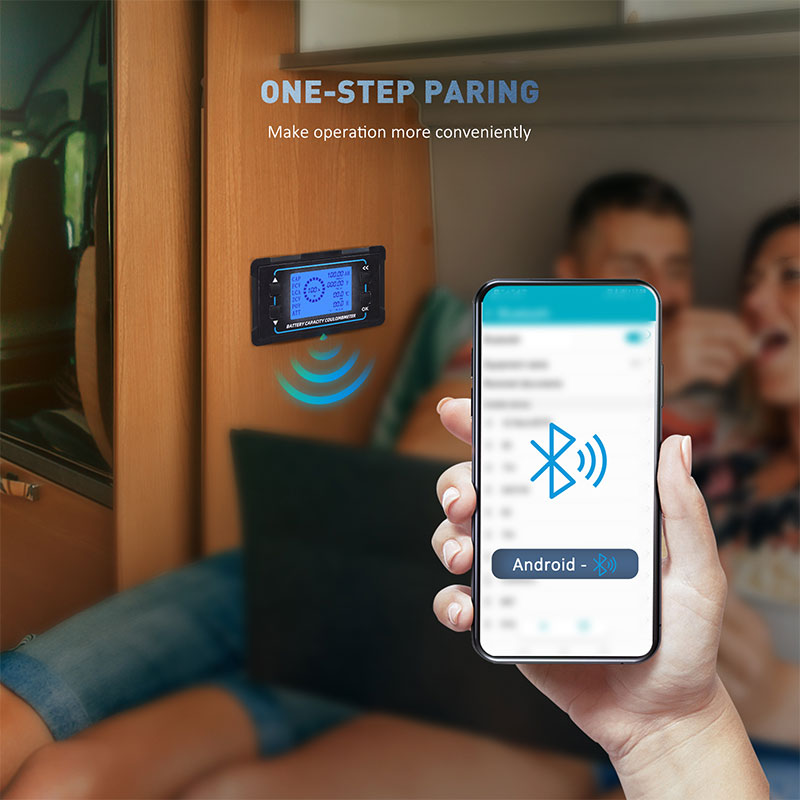
Many modern battery monitors support data transmission via RS485, CAN, or Bluetooth. This enables real-time monitoring on smartphones, PCs, or building automation systems. For remote or unmanned installations, this is critical: alerts can be pushed via SMS or mobile apps, allowing timely intervention even if the site is miles away. This not only increases safety but also helps companies maintain high uptime and service continuity.
What Should You Consider When Choosing a Battery Monitor?
Compatibility with System Voltage and Load
The first and foremost consideration is voltage and current compatibility. A battery monitor must match your system’s nominal voltage—whether it's a 12V system in a recreational vehicle, a 48V array in a telecom station, or even a 96V or 120V setup in industrial applications. Undersized monitors may fail to read accurately or become overloaded, while over-specification can lead to unnecessary costs. For systems with high current demands, ensure the monitor supports a high-capacity shunt—typically 300A, 500A, or even higher—to deliver precise current measurements without risking overload.
Ease of Installation and Calibration
User-friendly design is especially valuable during installation and routine operation. Monitors with modular cabling, clear wiring diagrams, and intuitive interfaces can be installed quickly by technicians without advanced training. Some models also offer auto-detection of system parameters and simple menu navigation via a dedicated LCD or button interface. A plug-and-play shunt sensor that auto-calibrates further reduces setup time and ensures long-term measurement stability.
Display and Interface Features
Choose a monitor with a high-contrast display and real-time readouts of voltage, current, SOC (state of charge), and remaining amp-hours. Some models include backlighting, touchscreen controls, or customizable screens, which are particularly helpful in low-light environments or mobile applications. Interface features like alarm LEDs, buzzer outputs, and quick-view history logs help streamline system oversight without requiring external software.
Durability and Environmental Resistance
In mobile or outdoor installations—such as RVs, boats, or off-grid power stations—environmental resistance is critical. Look for models with IP-rated waterproof or dustproof enclosures, UV-resistant housings, and vibration-resistant internals. Industrial-grade materials and secure mounting brackets also ensure longevity in high-temperature, high-humidity, or high-vibration conditions.
Expandability and Communication Options
Modern battery systems increasingly integrate into broader energy management platforms. Choose monitors that support data communication protocols such as CAN bus, RS485, or Bluetooth for integration with solar controllers, BMS systems, or cloud-based dashboards. Expandability also allows users to add temperature probes, external alarm modules, or multiple battery banks in future upgrades—without replacing the core unit.
Cost-to-Feature Balance
Finally, evaluate whether the monitor provides value for its cost. Key features like shunt accuracy, voltage range, programmable alarms, and remote monitoring capabilities should align with your system’s operational requirements. A mid-priced monitor with essential features often delivers better ROI than a premium unit with unused advanced options.
Conclusion: Accurate Monitoring Enables Smarter Power Decisions
A battery monitor is far more than a digital voltmeter—it’s a complete energy intelligence system that ensures your battery performs optimally in every condition. From precise current tracking and historical logging to programmable alarms and remote diagnostics, the right monitor brings transparency, control, and safety into your energy setup.
For those seeking professional-grade performance, CARSPA offers reliable and versatile monitoring solutions such as the BMC500 model, featuring a 500A shunt, wide voltage range (8V–120V), high-contrast display, and customizable alerts—all designed to meet the rigorous demands of modern energy systems.


