
How Does a Battery Charger Improve the Performance of E-Scooters and E-Bikes?
In today's fast-evolving urban mobility landscape, electric scooters (e-scooters) and electric bikes (e-bikes) are becoming essential tools for transportation, logistics, and micro-delivery services. Their success hinges on one critical factor: reliable and efficient battery management. And at the core of that system lies the battery charger.
A well-matched, high-quality battery charger doesn’t just refill power—it protects battery health, reduces charging downtime, and supports long-term operational efficiency. Whether you're managing a fleet of delivery scooters or operating a public rental hub, choosing the right charger has a direct impact on cost control, vehicle availability, and safety performance.
In this article, we explore the most pressing questions businesses face when selecting and deploying battery chargers for e-mobility systems. From understanding charger types and safety features to evaluating smart charging technologies and ideal usage scenarios, we offer a practical guide to help you make informed, future-ready decisions.
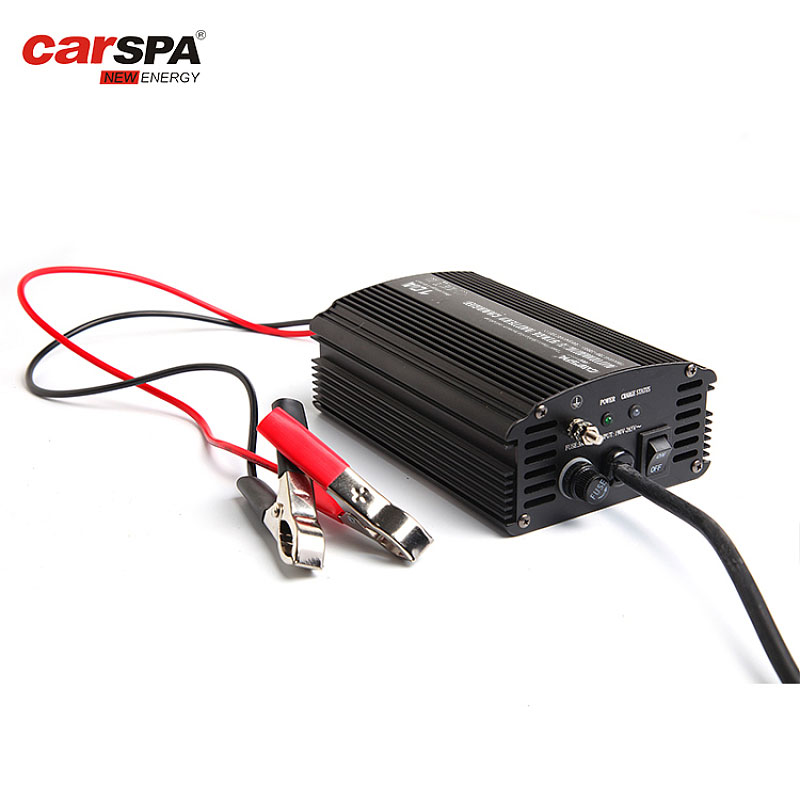
What Type of Battery Charger Is Best for E-Scooters and E-Bikes?
Choosing the right battery charger for electric scooters and e-bikes begins with a proper understanding of battery chemistry, voltage compatibility, and charging logic. Since most e-mobility systems today rely on lithium-ion battery packs—usually rated at 36V, 48V, or 60V—it’s essential to use a charger that precisely matches the rated voltage and follows a reliable charging curve.
Compatibility with Battery Voltage and Capacity
A mismatch between the charger and battery voltage can lead to poor performance or even damage. For example, using a 48V charger on a 36V battery may trigger overcharging, resulting in cell swelling or safety hazards. Conversely, under-voltage charging leads to incomplete cycles and reduced range. Look for chargers with fixed voltage outputs that match your specific battery rating (e.g., 42V for 36V Li-ion, 54.6V for 48V Li-ion).
Also, consider the amp rating of the battery charger. A 2A charger may suffice for casual home use, but commercial operators or heavy users often prefer 4A–6A models for faster turnaround. Higher current requires better thermal management, so always ensure proper ventilation or passive cooling when selecting a higher-amp charger.
Smart Charging vs. Traditional Models
Traditional chargers supply a constant voltage and current without adjusting for battery health or environmental conditions. In contrast, smart battery chargers monitor internal battery resistance, temperature, and charge cycles to dynamically adjust the current. This reduces the risk of overcharging and improves safety—especially when charging is unattended.
Some chargers also offer auto-stop, LED indicators, and error detection systems to notify users of charge status or battery anomalies. These features are particularly useful for businesses managing multiple vehicles, as they streamline operation and reduce human error.
Universal Input Support
For global compatibility, modern battery chargers typically support a universal AC input range from 100V to 240V at 50/60Hz. This allows easy deployment across different regions without the need for step-up transformers or adapter switches, making it a practical solution for international operations or export-oriented products.
A high-quality battery charger tailored to your scooter or e-bike system doesn't just power your ride—it protects your battery investment, improves lifecycle efficiency, and enhances overall user experience.
Why Does Charging Speed Matter in Commercial E-Mobility Use?
In high-utilization scenarios—such as last-mile delivery services, shared scooter platforms, or urban rental fleets—charging speed becomes a direct driver of operational efficiency. The faster a vehicle returns to full capacity, the sooner it can be redeployed. This makes the selection of a high-performance battery charger a strategic investment, not just a technical requirement.
Reducing Downtime for Fleet Vehicles
In a shared mobility context, vehicles often run multiple cycles per day. If each charge session takes 6–8 hours, fewer vehicles are available for peak periods, impacting revenue and service availability. By choosing a fast-charging battery charger—such as a 54.6V 5A unit for a 48V battery—operators can slash charging time by nearly half. This means more active hours per day for each scooter or e-bike.
In logistics and food delivery, where battery range is consumed quickly, the ability to charge mid-shift or during short breaks is essential. A high-current charger allows for partial top-ups (e.g., from 30% to 80% in under an hour), supporting flexible operation throughout the day.
Intelligent Power Management and Efficiency
Speed alone isn’t enough—charging must also be efficient and intelligent. Advanced battery chargers use multi-stage charging algorithms, such as Constant Current (CC) and Constant Voltage (CV) profiles, to ensure both rapid energy transfer and safe final voltage regulation. These smart features reduce energy loss and prevent overheating, which is especially important in warm climates or indoor charging bays.
Some commercial models also support parallel charging, allowing multiple batteries to be charged simultaneously from one station. This dramatically increases throughput in fleet depots, where dozens of batteries may need charging overnight or during rotational shifts.
Avoiding Battery Degradation from Overcharging
It’s important to note that not all fast charging solutions are equal. Cheap, non-regulated battery chargers may deliver excess current, shortening battery life and increasing thermal risk. A high-quality charger balances charging speed with battery health, often including adjustable current settings, passive cooling design, and programmable charge curves.
Ultimately, charging speed is not just a convenience—it’s a core element of system uptime, logistics planning, and operational cost control in any e-mobility deployment.
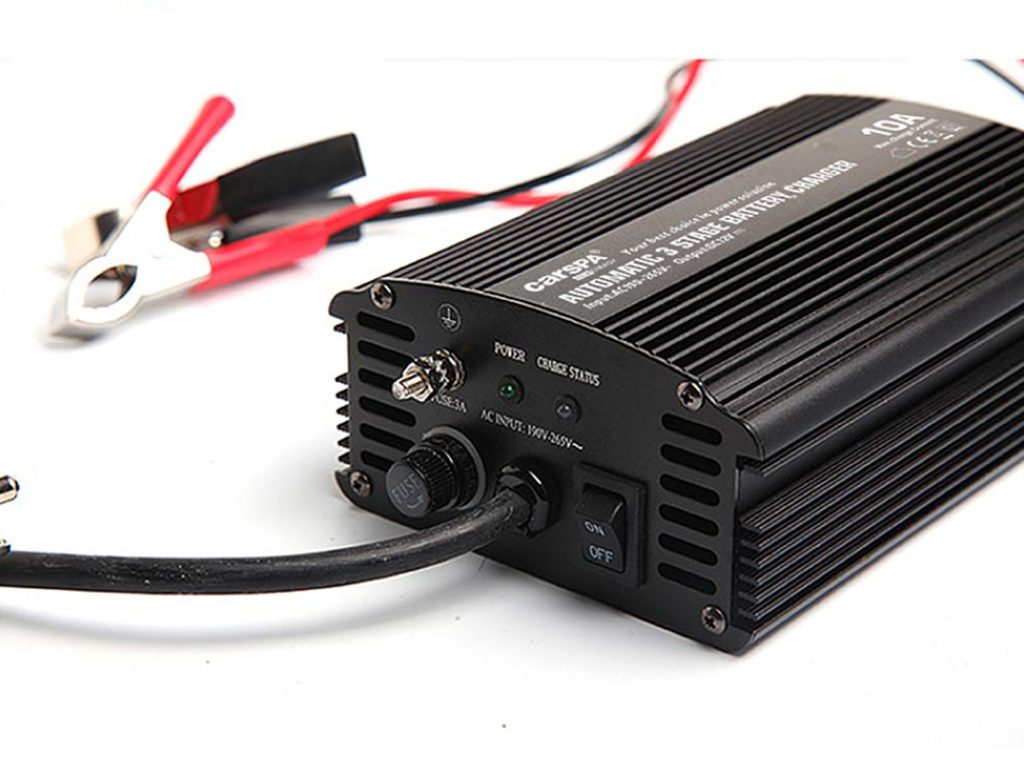
What Safety Features Should You Look for in a Battery Charger?
When dealing with high-density lithium battery systems—as commonly found in e-scooters and e-bikes—safety is paramount. A faulty battery charger can cause overheating, short circuits, or even fire hazards. That’s why robust protection features and certified components are essential, especially for commercial or frequent-use environments.
Overcharge, Overvoltage, and Overcurrent Protection
The most basic layer of protection starts with overvoltage and overcurrent control. A quality battery charger must automatically shut off or switch to trickle charging when the battery reaches full capacity. This protects individual battery cells from swelling, voltage imbalance, or thermal runaway.
Modern chargers typically integrate multi-stage charging—usually a three-phase process of constant current (CC), constant voltage (CV), and float or cutoff. These phases prevent excessive current flow into a fully charged battery, dramatically reducing the risk of overcharging.
Additionally, some chargers detect battery faults or reverse polarity and refuse to initiate charging if connections are incorrect, avoiding potential damage to both charger and battery.
Temperature and Short-Circuit Safeguards
Chargers with built-in thermal sensors or intelligent microcontrollers can monitor internal temperature in real time. If the charger overheats due to high ambient temperature or continuous use, it can slow down or halt charging automatically.
Short-circuit protection is equally important. Accidental contact between terminals, damaged cables, or dust buildup can cause sparks or component failure. A well-designed battery charger includes fuse protection and instant cutoff mechanisms in the event of a short.
Some models even offer conformal coating or sealed enclosures to protect against dust, moisture, and conductive debris—ideal for outdoor or semi-industrial use.
Regulatory Certifications and Industrial Build Quality
Safety also involves compliance. Look for CE, RoHS, or UL certified battery chargers, which indicate that the device has passed rigorous electrical safety, electromagnetic compatibility, and environmental testing.
The physical design of the charger matters too. Aluminum alloy housings, fire-resistant plastic, and IP-rated protection enhance durability and reduce the chance of overheating or water ingress. These features are particularly critical in commercial charging stations or environments where chargers may be used continuously and by multiple users.
By investing in a well-protected, safety-certified battery charger, operators gain not only peace of mind but also lower maintenance costs, longer battery life, and reduced liability risks.
How Can Smart Charging Technology Extend Battery Lifespan?
Battery replacement is one of the most significant ongoing costs in any e-scooter or e-bike operation. That’s why maximizing battery health through intelligent charging is a top priority—and your battery charger plays a central role. Smart charging technology doesn't just deliver electricity; it manages the battery’s entire charging cycle in a way that preserves performance, extends life, and minimizes risk.
Adaptive Charging Algorithms
Traditional chargers deliver fixed current and voltage, regardless of battery condition. In contrast, smart battery chargers use adaptive charging algorithms that adjust in real-time based on the battery’s internal resistance, temperature, and state-of-charge.
For lithium-ion batteries, this usually means a three- or four-stage process: pre-charge, constant current, constant voltage, and float/cutoff. This staged approach ensures smooth energy input during each phase, protecting the battery from thermal stress and voltage spikes. Many smart chargers also allow custom voltage and current presets, enabling you to tailor charging curves to specific battery chemistries or use cases.
Intelligent Battery Diagnostics
Some advanced battery chargers include built-in diagnostics that assess battery condition before initiating charge. If a cell group is degraded or unbalanced, the charger can reduce current or even halt the process altogether. This prevents further damage and alerts technicians to potential maintenance needs.
Chargers with display panels or app connectivity often provide detailed readouts on voltage, capacity, charge cycles, and error codes. This real-time visibility enables proactive maintenance scheduling, helping businesses reduce downtime and avoid unexpected battery failures in the field.
Integration with Fleet Management Systems
Smart chargers are increasingly integrated with IoT platforms via Bluetooth, Wi-Fi, CAN bus, or RS485. This allows for centralized control, remote firmware updates, and cloud-based performance monitoring—ideal for businesses managing dozens or hundreds of units across multiple locations.
Fleet operators can track charging patterns, identify abnormal battery behavior, and even remotely disable chargers in unsafe conditions. Over time, this data helps refine usage habits, extend overall fleet lifespan, and optimize energy consumption.
By using a smart battery charger, you're not just extending the battery’s lifespan—you’re building a more reliable, efficient, and cost-effective charging ecosystem.
What Are the Ideal Scenarios for Using Commercial-Grade Battery Chargers?
While standard chargers may suffice for casual personal use, commercial-grade battery chargers are essential for businesses that depend on reliable, scalable, and safe power solutions. These advanced chargers are purpose-built for high-frequency operation, multi-device compatibility, and long-term durability—making them indispensable across a range of professional applications.
In shared mobility services such as scooter or e-bike rentals, vehicles return to central depots for daily charging. Operators require rack-mounted or wall-mounted battery chargers that can handle multiple batteries simultaneously, reduce charging time, and minimize labor. Many commercial chargers support parallel charging or feature modular bays for quick swapping.
Smart chargers also streamline workflow through automated charging cycles, color-coded LED indicators, and remote alerts—enabling staff to monitor charge status at a glance and avoid battery misuse or overcharging. These systems can be scaled across fleets of hundreds of vehicles without compromising safety or efficiency.
Delivery Fleets and Logistics Operators
Electric two-wheelers are now integral to last-mile delivery, especially in food, parcel, and grocery logistics. These vehicles are often in use for long hours with limited downtime between shifts. A high-efficiency battery charger enables rapid charging during short breaks or mid-route stops, ensuring vehicles stay in service throughout the day.
Some commercial chargers are compact and portable, allowing field technicians or drivers to carry backup units and charge at customer locations, warehouses, or roadside outlets. This flexibility improves uptime and reduces dependency on centralized facilities.
Industrial and Semi-Outdoor Environments
In more rugged conditions—such as construction sites, campus transport systems, or tourism services—chargers must withstand exposure to dust, humidity, and vibration. Commercial-grade battery chargers often feature IP65-rated casings, shock-resistant design, and built-in cooling mechanisms, ensuring long-term reliability even in challenging settings.
Additionally, chargers with universal AC input (100V–240V) and DC output versatility can support diverse battery platforms, making them ideal for operations spanning multiple countries or equipment types.
Ultimately, a commercial-grade battery charger isn’t just a utility—it’s an enabler of productivity, scalability, and operational safety in high-demand environments.
Conclusion

Why a High-Quality Battery Charger Matters More Than Ever
As electric scooters and e-bikes continue to shape the future of urban transportation and last-mile logistics, the role of a reliable battery charger has never been more critical. From fast, intelligent charging to rugged safety features and commercial-grade durability, choosing the right charger directly impacts battery lifespan, operational uptime, and total cost of ownership.
For businesses managing fleets or scaling shared mobility systems, investing in advanced charging infrastructure is not a luxury—it’s a strategic necessity. A premium battery charger helps ensure safer operation, lower maintenance costs, and consistent performance under demanding conditions.
Whether you're operating a rental hub, delivery fleet, or semi-industrial transport service, the right charger doesn't just power your vehicles—it powers your business success.
To explore a full range of smart, efficient, and safety-certified battery chargers tailored for e-mobility applications, consider trusted solutions from CARSPA, a brand recognized for quality and innovation in power electronics.


