
How Many Types of Home Energy Storage Systems Are There and How Do They Support Different Energy Needs?
Introduction
Home energy storage has evolved from a niche backup option into a flexible power solution that supports a wide range of modern energy demands. As electricity usage patterns become more complex and energy sources more diversified, a single, one-size-fits-all storage system is no longer sufficient. Different households and facilities face very different challenges—ranging from basic backup requirements to long-term load expansion and solar integration.
This shift has led to the development of multiple types of home energy storage systems, each designed to address specific usage scenarios and capacity needs. Rather than focusing solely on total battery capacity, system design now emphasizes scalability, installation flexibility, and how effectively stored energy can be deployed across daily and seasonal demand cycles.
Understanding how many types of home energy storage systems are available—and how each type supports different energy needs—is becoming a key step in building reliable, future-ready energy setups. From compact systems designed for essential loads to modular solutions that grow alongside increasing consumption, the right storage configuration plays a critical role in energy independence, efficiency, and long-term system planning.
What Are the Main Types of Home Energy Storage Systems Used Today?
Home energy storage systems are commonly categorized based on how they are installed, expanded, and integrated into daily power usage. This classification is not driven by marketing labels, but by practical considerations such as available space, load scale, and long-term energy planning.
Wall-Mounted Energy Storage Systems
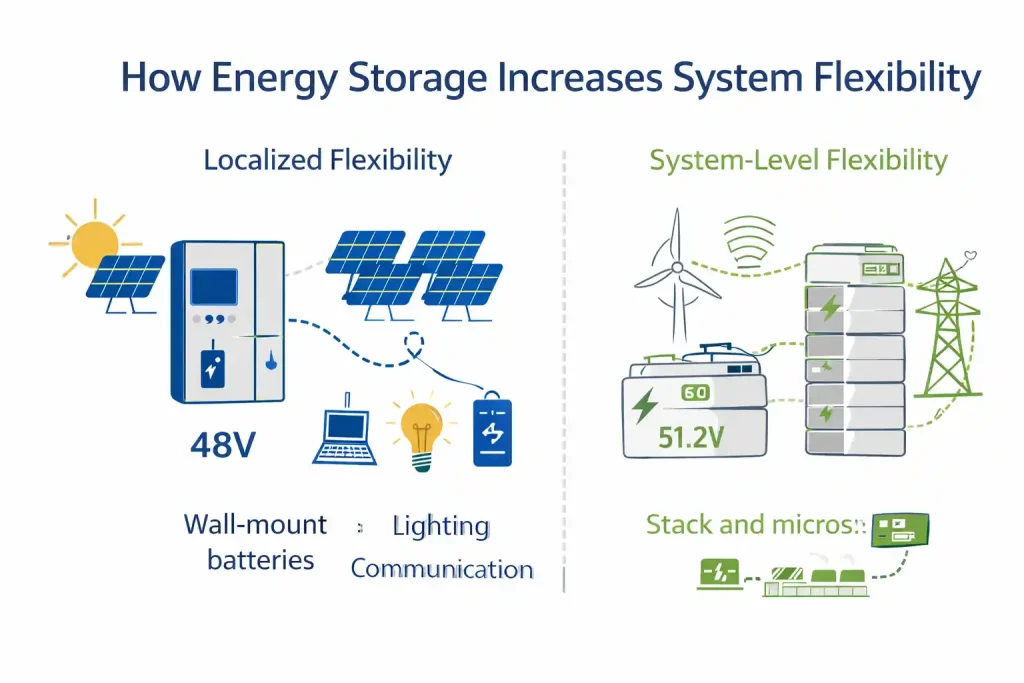
Wall-mounted systems are typically designed for compact installations where space efficiency and simplicity are priorities. These systems are often installed close to the point of use, making them well suited for supplying essential household circuits or supporting solar self-consumption.
Their integrated design allows for quick deployment, minimal structural impact, and straightforward system integration. For users with stable energy needs, wall-mounted storage provides a balanced solution that focuses on reliability rather than expansion.
Stackable and Modular Energy Storage Systems
Stackable systems take a different approach by emphasizing scalability. Instead of fixing capacity at installation, these systems are built around modular battery units that can be added over time. This structure allows energy storage capacity to grow alongside changes in consumption, equipment upgrades, or expanded solar generation.
Modular systems are often used where long-term energy planning is required, as they reduce the need for system replacement when demand increases. By separating capacity expansion from system redesign, stackable storage offers a flexible path from moderate usage to higher-load applications.
Hybrid Configurations for Evolving Energy Needs
In some installations, a combination of compact and expandable storage designs is used to address both immediate and future requirements. These hybrid configurations allow essential loads to be supported by a dedicated system while reserving scalable capacity for peak demand periods or future expansion.
This approach reflects a broader trend in energy system design: prioritizing adaptability over fixed capacity. As energy usage patterns continue to evolve, storage systems that can adjust without major structural changes are increasingly favored.
How Do Entry-Level Home Energy Storage Systems Support Basic Power Needs?
Entry-level home energy storage systems are designed to address the most common and essential energy requirements without introducing unnecessary complexity. Rather than aiming to cover every possible load, these systems focus on stabilizing daily electricity usage and ensuring continuity during short-term disruptions.

Supporting Essential Loads with Reliable Backup
For many users, the primary role of energy storage is to maintain power for critical circuits when grid supply becomes unstable or unavailable. Entry-level systems are typically configured to support lighting, communication devices, control systems, and other low-to-moderate power loads that must remain operational.
By prioritizing essential consumption, these systems help avoid oversizing while still delivering dependable backup performance.
Enhancing Solar Self-Consumption
When paired with rooftop solar generation, entry-level storage systems play an important role in reducing energy waste. Excess solar energy produced during daylight hours can be stored and released later when demand increases.
This time-shifting capability improves overall energy utilization and reduces reliance on grid power during peak periods, even when total storage capacity is limited.
Compact Installation and Space Efficiency
One of the defining advantages of entry-level systems is their compact form factor. Wall-mounted designs allow storage units to be installed in utility rooms, garages, or technical spaces without occupying valuable floor area.
This installation flexibility makes them particularly suitable for environments where space constraints are a key consideration, while still maintaining easy access for monitoring and maintenance.
Predictable Performance for Stable Energy Demand
Entry-level storage systems are best suited for applications with relatively stable and predictable energy usage. Their fixed-capacity design simplifies system planning and reduces operational complexity.
For users whose power needs are unlikely to change significantly in the near term, this type of system provides a clear balance between functionality, efficiency, and long-term reliability.
How Do Scalable Energy Storage Systems Enable Capacity Expansion Over Time?
As energy usage increases or becomes more diversified, fixed-capacity storage systems can quickly reach their limits. Scalable home energy storage systems are designed to address this challenge by allowing capacity to expand without redesigning the entire energy infrastructure.
Modular Expansion Without System Replacement
The defining feature of scalable energy storage systems is their modular structure. Instead of installing a single large battery from the start, capacity can be increased by adding additional battery modules as demand grows.
This approach eliminates the need for system replacement when energy requirements change, reducing both cost and downtime over the long term.
Supporting Higher and More Dynamic Loads
Scalable systems are particularly well suited for environments where energy demand fluctuates throughout the day or evolves over time. As new electrical equipment is added or usage patterns shift, additional storage modules can be integrated to maintain stable power delivery.
This flexibility ensures that the energy storage system continues to match actual load conditions rather than becoming a limiting factor.
Long Cycle Life for Frequent Charge and Discharge
Expansion-oriented storage systems are often designed to handle frequent charging and discharging cycles. This makes them suitable for applications where stored energy is used daily rather than only during outages.
A long cycle life ensures consistent performance even under regular operation, supporting both energy optimization and long-term reliability.
Flexible Installation for Future-Oriented Planning
Unlike compact, wall-mounted systems, scalable storage solutions typically use floor-mounted or stacked configurations. This layout allows capacity to grow vertically while maintaining a compact footprint.
By planning for expansion at the system level, scalable energy storage enables users to align storage capacity with long-term energy strategies rather than short-term constraints.
Home Energy Storage System Types vs. Energy Demand
| System Type | Typical Energy Demand Level | Primary Purpose | Suitable Application Scenarios | Long-Term Planning Fit |
| Entry-Level Home Energy Storage | Basic, stable demand | Ensure power continuity for essential loads | Lighting, communication devices, control systems, low-power household loads | Suitable for short-term planning or environments with limited demand growth |
| Wall-Mounted Energy Storage Systems | Low to medium demand | Compact installation and quick deployment | Space-limited areas, basic solar-integrated systems | Suitable when energy demand boundaries are clearly defined |
| Scalable / Stackable Energy Storage Systems | Medium to high demand | Enable gradual capacity expansion | Applications with growing load requirements or additional equipment | Highly suitable for long-term and phased energy planning |
| Modular Expansion-Based Storage Systems | Dynamically changing demand | Flexible expansion and system adaptability | Environments with fluctuating loads and evolving energy usage | Ideal for long-term planning with uncertainty |
| Hybrid Energy Storage Configurations | Mixed and evolving demand | Balance immediate backup and future scalability | Scenarios combining essential loads with expanding power needs | Well suited for integrated short- and long-term energy strategies |
How Should Home Energy Storage Types Be Matched to Long-Term Energy Planning?
Selecting a home energy storage system is not only about current electricity consumption, but also about anticipating how energy needs may evolve over time. Matching storage types to long-term planning helps ensure that the system remains effective, efficient, and adaptable throughout its service life.
Aligning System Type with Usage Stability
For environments with stable and predictable energy demand, entry-level storage systems provide a straightforward and reliable solution. Their fixed-capacity design simplifies planning and minimizes system complexity.
When future expansion is unlikely, choosing a compact system focused on essential loads can deliver consistent performance without unnecessary investment.
Planning for Growth and Changing Load Profiles
In contrast, applications with expanding energy requirements benefit from scalable storage solutions. Modular systems allow capacity to increase alongside growing consumption, additional equipment, or higher solar output.
By planning for expansion at the outset, these systems avoid the operational and financial disruptions associated with replacing undersized storage installations.
Balancing Space, Budget, and Flexibility
Physical space, installation conditions, and budget constraints all influence system selection. Wall-mounted designs offer space efficiency and ease of installation, while stacked configurations prioritize flexibility and long-term scalability.
Evaluating these factors together helps ensure that the chosen system supports both immediate needs and future adjustments.
Avoiding Oversizing and Underconfiguration
Effective energy storage planning strikes a balance between oversizing and underconfiguration. Oversized systems may lead to underutilized capacity, while undersized systems can restrict performance and expansion.
Choosing the right storage type based on realistic energy planning allows for gradual scaling and more efficient energy management over time.

Conclusion
Home energy storage systems are no longer defined by capacity alone. Different system types exist to support different stages of energy demand—from basic backup and solar optimization to scalable solutions that grow with evolving power requirements.
Understanding how these storage types function and how they align with long-term energy planning enables more resilient, efficient, and future-ready energy systems.
CARSPA offers a range of home energy storage solutions designed to support both entry-level and scalable energy needs, helping build flexible energy systems that adapt as power demands evolve.


