Where Does Energy Storage Create the Most Value in Real-World Outdoor Power Applications?
Introduction
In outdoor power applications, electrical demand rarely follows a predictable pattern. Equipment may be deployed in remote locations, temporary work sites, or mobile environments where grid access is limited, unstable, or completely unavailable. At the same time, modern outdoor systems are expected to operate reliably over long periods, often supporting sensitive electronics, motor-driven loads, or mission-critical devices. This combination of uncertain power sources and rising performance expectations has made energy management a central challenge rather than a secondary concern.
Energy Storage plays a crucial role in addressing this challenge. Unlike traditional power setups that depend solely on real-time generation, energy storage systems introduce a controllable energy buffer between power supply and load demand. This buffer allows outdoor power systems to absorb fluctuations, store excess energy when conditions are favorable, and release it precisely when required. As a result, power delivery becomes more stable, predictable, and adaptable—even in environments where external conditions cannot be controlled.

Another defining characteristic of outdoor applications is the need for flexibility. Systems are often scaled, relocated, or expanded as operational requirements change. Energy Storage supports this flexibility by decoupling energy availability from immediate generation capacity. Whether paired with renewable sources or used as an independent power reserve, storage systems enable outdoor installations to maintain continuous operation without oversizing generation equipment or relying on constant human intervention.
As outdoor power applications continue to evolve, the value of Energy Storage is no longer limited to backup functionality. It has become a core component that influences system reliability, deployment strategy, and long-term operating efficiency. Understanding where and how energy storage creates the most value in real-world outdoor environments is essential for designing power systems that perform consistently under practical conditions.
Where Does Energy Storage Deliver the Highest Practical Value in Outdoor Scenarios?
The practical value of Energy Storage in outdoor power applications becomes most apparent in environments where energy availability and power demand are misaligned. Unlike controlled indoor installations, outdoor systems are frequently exposed to variable energy sources, changing load profiles, and limited access to maintenance. In such conditions, the ability to store, regulate, and dispatch energy at the right moment directly determines whether a system can operate reliably or merely function intermittently.

Long operating hours without continuous human supervision
One of the most common characteristics of outdoor power applications is extended operation with minimal on-site supervision. Equipment may be installed in remote areas, temporary locations, or dispersed sites where frequent manual intervention is impractical. Energy Storage enables these systems to continue operating smoothly even when energy input fluctuates or temporarily disappears. By supplying stored energy during low-generation periods, storage systems reduce reliance on constant monitoring and manual restarts, supporting stable operation over long timeframes.
Managing unpredictable load behavior in real environments
Outdoor power systems rarely serve a single, steady load. Motors, control units, communication devices, and auxiliary equipment may start and stop at irregular intervals, creating sudden changes in power demand. Without Energy Storage, these fluctuations can lead to voltage drops, inefficient generator operation, or forced shutdowns. Energy Storage absorbs these short-term load variations, acting as a buffer that protects both the power source and the connected equipment from stress caused by rapid demand changes.
Enabling continuous power where generation alone is insufficient
In many outdoor scenarios, energy generation does not align perfectly with consumption. Renewable sources, in particular, are influenced by environmental conditions and time of day. Energy Storage bridges this gap by decoupling energy generation from energy use. Excess power produced during favorable conditions can be stored and later released when generation decreases, allowing outdoor systems to maintain continuity without oversizing generation capacity or adding complex backup solutions.
Supporting modular and temporary deployments
Outdoor power installations are often deployed in phases or adjusted as operational needs evolve. Energy Storage provides a scalable foundation for such deployments by allowing capacity to be added incrementally. Systems can begin with a baseline storage configuration and expand as power demand grows, without redesigning the entire energy architecture. This modular approach is especially valuable in temporary or mobile applications, where flexibility and speed of deployment are as important as long-term reliability.
Reducing operational risk in exposed environments
Environmental exposure introduces additional risk to outdoor power systems. Temperature variation, dust, and physical accessibility constraints can all affect system performance. Energy Storage contributes to risk reduction by stabilizing power delivery and minimizing abrupt electrical stress on components. A more stable electrical environment not only improves immediate reliability but also extends the service life of connected equipment, reducing long-term maintenance requirements.
How Do Different Energy Storage Configurations Support Scalable Outdoor Power Needs?
As outdoor power applications evolve, energy demand rarely remains fixed. Systems may begin with a limited number of loads and gradually expand, or they may be deployed in phases as project requirements change. In this context, Energy Storage must do more than provide capacity—it must support scalability, adaptability, and practical installation constraints. Different storage configurations address these needs in distinct ways, allowing outdoor power systems to grow without compromising reliability or efficiency.
Compact wall-mounted configurations for space-sensitive deployments
In outdoor installations where space is limited or where equipment must be integrated into existing structures, wall-mounted energy storage configurations offer a practical solution. These systems provide a balance between usable capacity and installation efficiency, making them suitable for applications that require dependable power without extensive structural modification. By keeping the storage unit accessible yet unobtrusive, wall-mounted configurations simplify system layout while maintaining stable power support for essential loads.
From a system perspective, this configuration supports straightforward integration with renewable inputs and downstream power electronics. It allows installers to deploy energy storage quickly and maintain a clean, organized power architecture—an important consideration in outdoor environments where cluttered layouts can increase exposure to environmental stress and complicate maintenance.
Stackable configurations for growing power requirements
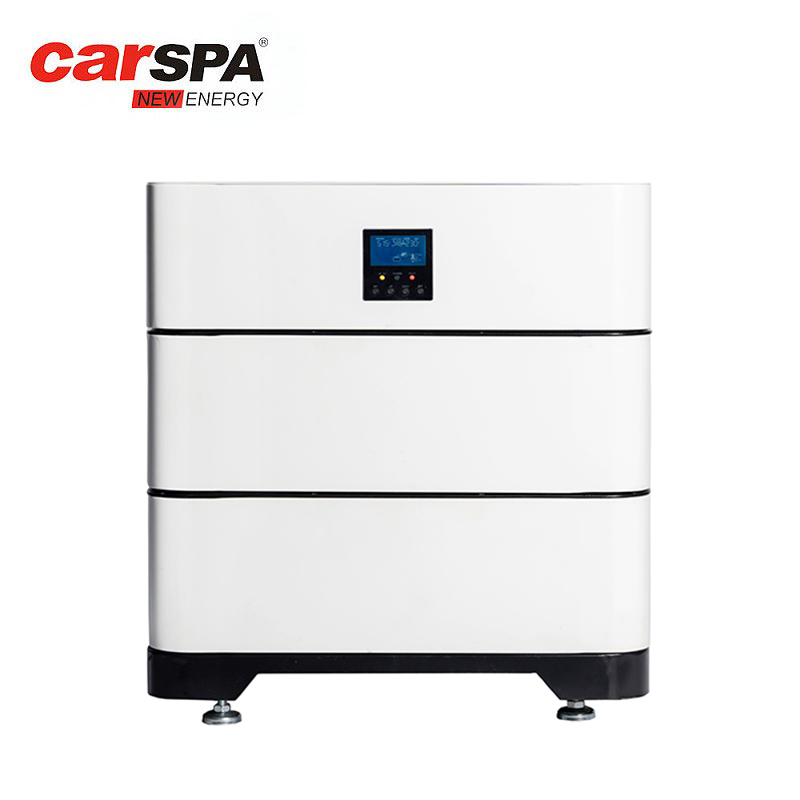
When outdoor power demand increases over time, stackable energy storage configurations provide a clear path for expansion. Rather than replacing an entire system, additional storage modules can be added to increase total capacity and available energy. This layered approach enables gradual scaling while preserving system consistency, reducing downtime during upgrades, and minimizing disruption to ongoing operations.
Stackable systems are particularly valuable in outdoor applications where long-term energy demand is uncertain at the planning stage. By starting with a base configuration and expanding as usage patterns become clearer, operators can avoid overinvestment while still ensuring that future power needs can be met reliably.
Supporting flexible deployment strategies
Outdoor power systems often need to adapt to changing deployment conditions. Energy Storage configurations that support both fixed and semi-mobile installations allow systems to be reconfigured or relocated with minimal effort. Modular designs make it possible to align storage capacity with current operational priorities, whether the system is deployed temporarily or intended for long-term use.
This flexibility extends beyond physical installation. Scalable storage configurations also support changes in energy sources, load profiles, and control strategies, allowing outdoor power systems to evolve without fundamental redesign.
Aligning storage configuration with system resilience
Choosing the appropriate Energy Storage configuration is not solely about capacity. It also affects how resilient the system remains under real-world conditions. Well-matched configurations help distribute electrical stress, improve thermal behavior, and maintain consistent performance across varying environmental conditions. By selecting configurations that align with actual usage patterns, outdoor power systems achieve a higher level of operational stability and long-term reliability.
What Should Be Considered When Selecting Energy Storage for Outdoor Power Systems?
Selecting Energy Storage for outdoor power systems requires a broader perspective than simply matching capacity to load size. Outdoor environments introduce variability, accessibility constraints, and long operating cycles that place different demands on storage performance and system design. A well-chosen energy storage solution should support not only immediate power needs but also long-term reliability, adaptability, and ease of integration within the overall power architecture.
Battery technology and long-term performance stability
Battery chemistry plays a critical role in determining how an energy storage system behaves over extended periods. In outdoor applications where frequent charge and discharge cycles are common, stability and consistency matter more than peak specifications. Technologies designed for high cycle life and predictable degradation profiles help maintain usable capacity over time, reducing the risk of premature performance loss and unplanned system adjustments.
Compatibility with renewable and hybrid power sources
Outdoor power systems are often paired with renewable energy inputs or hybrid power arrangements. Energy Storage should integrate smoothly with these sources, supporting efficient energy capture and controlled energy release. Compatibility at the system level allows storage to respond effectively to variable generation conditions, ensuring that energy is neither wasted during peak production nor unavailable during low-input periods.
System scalability and future expansion
Initial power requirements rarely represent the final operating condition of an outdoor installation. Selecting Energy Storage with modular or expandable characteristics allows systems to grow without significant redesign. This forward-looking approach helps align capital investment with actual usage patterns, enabling gradual scaling as operational demands evolve.
Installation practicality and maintenance accessibility
Outdoor environments impose practical constraints on installation and maintenance. Energy Storage systems that are easy to install, access, and service reduce long-term operational burden. Clear configuration options and straightforward system layouts contribute to safer maintenance procedures and faster response times when adjustments or inspections are required.
Balancing reliability with operational efficiency
Ultimately, Energy Storage selection is about achieving a balance between reliability and efficiency. A system that delivers stable power under real-world conditions while minimizing unnecessary complexity supports smoother operation and lower lifecycle costs. By focusing on practical performance rather than theoretical maximums, outdoor power systems can achieve dependable results across a wide range of operating scenarios.
Why Is Energy Storage Becoming Essential in Outdoor Power Applications?
Outdoor power applications present a unique combination of challenges that differ fundamentally from fixed, grid-connected environments. Power availability is often inconsistent, operating conditions are less predictable, and access for monitoring or maintenance may be limited. Despite these constraints, outdoor systems are increasingly expected to deliver stable and continuous performance, supporting equipment that is sensitive to power quality and operational interruptions.
Energy Storage has become essential in this context because it addresses the mismatch between how energy is generated and how it is actually consumed in outdoor environments. Power demand does not always align with energy availability, especially when systems rely on variable sources or operate across extended time periods. Without storage, outdoor power setups are forced to respond reactively to these imbalances, leading to inefficiencies, interruptions, or excessive system oversizing.
Another defining factor is the need for operational independence. Outdoor installations often function without constant human oversight, making real-time intervention impractical. Energy Storage introduces a level of autonomy by allowing systems to store energy when conditions are favorable and deploy it automatically when required. This capability transforms power systems from being condition-dependent to being demand-driven, significantly improving operational predictability.
In addition, outdoor environments amplify the consequences of instability. Voltage fluctuations, sudden load changes, or brief power losses that might be manageable indoors can quickly escalate into operational risks when equipment is exposed, remote, or difficult to access. Energy Storage mitigates these risks by stabilizing power delivery and creating a controlled electrical environment, even when external conditions fluctuate.
For these reasons, Energy Storage is no longer an optional enhancement in outdoor power applications. It has become a foundational component that shapes system reliability, deployment strategy, and long-term performance—setting the stage for how outdoor power systems are designed, scaled, and operated.
How Does Energy Storage Improve Power Stability in Off-Grid and Mobile Environments?
In off-grid and mobile environments, power stability cannot be taken for granted. Energy sources may fluctuate due to environmental conditions, system movement, or intermittent availability, while connected loads often demand consistent voltage and reliable operation. Under these circumstances, maintaining stable power delivery becomes one of the most critical challenges for outdoor power systems.
Energy Storage improves power stability by acting as an intermediary between energy generation and consumption. Rather than forcing loads to follow the immediate behavior of the power source, storage systems regulate energy flow, smoothing out variations before they reach downstream equipment. This buffering effect helps maintain consistent voltage and frequency levels, even when energy input changes rapidly.
Absorbing short-term fluctuations and transient events
Mobile and off-grid systems are particularly vulnerable to short-term disturbances such as sudden load starts, brief energy interruptions, or transient spikes. Without Energy Storage, these events can lead to system resets, protective shutdowns, or gradual stress on electrical components. Storage systems absorb these disturbances by supplying or absorbing energy instantaneously, reducing the impact of transients and protecting sensitive equipment from instability.
Maintaining continuity during energy gaps
In many outdoor environments, there are unavoidable gaps between energy availability and power demand. Energy Storage bridges these gaps by providing continuous power when generation drops or pauses. This capability is essential for maintaining uninterrupted operation in systems that cannot tolerate frequent restarts or manual resets, supporting smoother and more predictable performance over time.
Supporting consistent power quality across variable conditions
Power quality issues often become more pronounced in off-grid and mobile applications due to the lack of a stable reference source. Energy Storage helps maintain a more controlled electrical environment by stabilizing output characteristics and reducing the influence of upstream variability. As a result, connected equipment experiences fewer voltage swings and reduced electrical stress, contributing to improved operational reliability.
Enabling coordinated system control
Energy Storage also plays a key role in enabling coordinated control strategies within outdoor power systems. By providing a controllable energy reserve, storage allows system controllers to manage power flow more effectively, prioritize critical loads, and optimize overall system behavior. This coordination supports smoother transitions between operating modes and enhances system resilience under changing conditions.
Conclusion
Outdoor power applications place unique demands on energy systems, where reliability, flexibility, and long-term stability often matter more than peak output alone. As power environments become more dynamic and less predictable, Energy Storage has emerged as a central element that allows systems to operate consistently under real-world conditions. By bridging the gap between energy availability and actual demand, storage systems transform how outdoor power solutions are designed and deployed.
Across different outdoor scenarios, the value of Energy Storage lies in its ability to stabilize power delivery, support scalable system growth, and reduce operational risk in environments where intervention is limited. Whether used to smooth short-term fluctuations, maintain continuity during energy gaps, or enable modular expansion, storage systems provide a level of control that generation alone cannot achieve.
Selecting the right Energy Storage configuration is therefore not only a technical decision but a strategic one. When storage is aligned with system requirements and future development plans, outdoor power systems gain greater resilience, improved efficiency, and more predictable long-term performance.
With a focus on practical deployment and system-level reliability, CARSPA provides Energy Storage solutions designed to support diverse outdoor power applications, offering flexible configurations that integrate smoothly into modern energy architectures while meeting the demands of real-world operation.