How Does a Solar Charge Controller Ensure Stable, Efficient, and Reliable Outdoor Power Systems? 5 Questions Answered
Introduction
Outdoor power systems are becoming increasingly dependent on solar energy, whether for camping setups, remote surveillance units, mobile workstations, or small off-grid installations. In these environments, sunlight is often the only available energy source, and every watt harvested needs to be managed with precision. This is where a solar charge controller becomes the core component that determines how efficiently a system stores and delivers power throughout changing outdoor conditions.
Unlike controlled indoor environments, outdoor applications face fluctuating temperatures, inconsistent sunlight, unexpected shading, and varying battery loads. These factors can quickly reduce power reliability if not properly regulated. A well-designed solar charge controller not only prevents battery damage from overcharging or deep discharging but also ensures that energy captured from solar panels is used as efficiently as possible.

As users deploy more sensitive electronics, portable lighting systems, communication tools, and monitoring devices in the field, expectations for stable, long-term outdoor power continue to rise. A modern solar charge controller provides the protection, intelligence, and adaptability needed to keep these systems running smoothly—even in remote or harsh locations.
Why Is a Solar Charge Controller Essential for Stable Outdoor Power Supply?
A stable outdoor power system relies on more than just sunlight and a battery. The solar charge controller acts as the regulating center that ensures every component performs efficiently without being damaged by environmental fluctuations. In outdoor applications—where weather, temperature, and load demands constantly change—the controller becomes indispensable for maintaining predictable and safe electrical output.
Preventing Overcharging and Ensuring Safe Power Flow
Outdoor setups often experience long hours of intense sunlight, especially in open fields, coastal areas, and desert-like environments. Without proper regulation, batteries may overcharge, leading to overheating, reduced capacity, or even failure. The solar charge controller restricts incoming voltage and current to safe levels, ensuring consistent and stable charging throughout the day.
Stabilizing Power in Fluctuating Sunlight Conditions
Cloud cover, moving shadows, or sudden weather changes can alter solar panel output instantly. A high-quality controller smooths these variations, protecting connected devices from voltage spikes while ensuring uninterrupted power delivery. This stability is critical for systems such as outdoor lighting, mobile power stations, communication terminals, and remote monitoring units.
Protecting Sensitive Outdoor Electronics from Damage
Modern outdoor applications increasingly rely on sensitive equipment—LED lighting, sensors, cameras, routers, GPS trackers, and portable tools. These devices require clean and stable power. The controller’s built-in protections—overcurrent, short-circuit, reverse polarity, overload—keep the entire system safe and extend the lifespan of every connected load.
Improving Power Efficiency Across the Entire Solar System
By optimizing how much energy flows from the solar panel to the battery, the controller helps capture more usable power throughout the day. Even small efficiency improvements matter in the field, where solar availability is limited and every watt counts. This enhances performance for long-duration outdoor work, camping operations, or remote deployments.
How Does a Solar Charge Controller Improve Battery Lifespan in Outdoor Applications?
Batteries are the heart of any outdoor solar power system, but they are also the most vulnerable component. Temperature swings, irregular charging, and unpredictable load demands can significantly shorten battery life if not properly managed. A solar charge controller acts as the system’s intelligent battery guardian, ensuring long-term stability and healthier charging cycles.

Delivering Accurate Multi-Stage Charging for Better Battery Health
Modern controllers use multi-stage charging—bulk, absorption, and float—to match the natural charging behavior of the battery.
Bulk mode quickly restores energy during peak sunlight.
Absorption mode ensures the battery reaches full capacity without stress.
Float mode maintains charge at a safe level during low-demand periods.
This controlled process prevents overcharging, reduces thermal buildup, and keeps chemical reactions within safe limits.
Preventing Deep Discharge to Avoid Permanent Battery Damage
Outdoor devices often operate overnight or during cloudy weather, increasing the risk of batteries discharging too deeply. Excessive discharge weakens internal plates, reduces cycle life, and accelerates capacity loss. A solar charge controller includes low-voltage disconnect mechanisms to stop the battery from reaching harmful levels, protecting it from irreversible wear.
Maintaining Battery Performance Across Temperature Extremes
Outdoor environments may expose batteries to heat, cold, and rapid temperature swings. A temperature-compensation feature in many controllers adjusts charging voltage automatically to protect battery chemistry.
In high temperatures, voltage is reduced to prevent overheating.
In low temperatures, voltage is increased to ensure proper charging.
This dynamic adjustment is crucial for installations in remote, elevated, or unshaded outdoor areas.
Supporting Multiple Battery Types for Broader Outdoor Use Cases
Whether the system uses AGM, GEL, LiFePO4, or other lithium batteries, the solar charge controller allows customized charging profiles. Correct parameter settings ensure:
optimal voltage levels
extended cycle life
reduced risk of swelling or thermal stress
This adaptability enables outdoor power solutions to match specific operational needs without compromising reliability.
Reducing Long-Term Maintenance Costs in Outdoor Systems
By ensuring batteries operate within healthy voltage and temperature ranges, the controller minimizes premature replacements and maintenance interventions. For remote outdoor setups where access is difficult or costly, extending battery lifespan is a major operational advantage.
What Features Matter Most When Choosing a Solar Charge Controller for Outdoor Use?
Choosing the right solar charge controller is crucial for ensuring dependable outdoor power. Different environments—such as camping sites, off-grid cabins, surveillance poles, or mobile work units—place different demands on the system. Selecting the appropriate controller features helps ensure efficiency, durability, and long-term reliability in the field.
MPPT or PWM: Which Technology Fits Your Outdoor Application?
The first major consideration is the controller type.
MPPT controllers extract maximum energy from solar panels, especially during cloudy weather, low temperatures, or long cable runs. They are ideal for demanding outdoor setups requiring consistent performance.
PWM controllers offer simpler, cost-effective regulation for smaller systems that operate under stable sunlight conditions.
Understanding system size, panel configuration, and installation environment helps determine which technology delivers the best results.
Weather Resistance and Structural Durability
Outdoor devices must endure rain, dust, vibration, and UV exposure. A reliable controller should offer:
rugged housing materials
moisture and dust protection
corrosion-resistant terminals
secure internal components to handle movement or shock
These qualities help maintain stable operation even during harsh weather events.
Intelligent Monitoring and Real-Time Display Functions
Clear system visibility is essential in remote outdoor environments. High-quality controllers include:
LED or LCD screens
fault indicators
voltage, current, and battery health monitoring
Some advanced models support Bluetooth or app-based control, allowing users to check performance without opening the equipment box—especially useful for outdoor surveillance, lighting, or mobile power units.
Compatibility with Different Solar Panels and Battery Types
Outdoor systems may use various panel sizes, voltages, and battery chemistries. A versatile controller ensures:
automatic system recognition
adjustable charging parameters
smooth integration with existing equipment
This flexibility allows outdoor users to scale power capacity or upgrade components without replacing the entire controller.
Built-In Safety Protections for Unpredictable Conditions
Strong protection features are essential for outdoor reliability. A professional controller includes:
over-voltage and over-current protection
reverse polarity protection
short-circuit and overload prevention
temperature compensation
These functions keep the system safe from variable sunlight, unexpected load spikes, or wiring errors that are more common in outdoor deployments.
Efficient Heat Dissipation for Long-Term Stability
Outdoor units often operate under direct sunlight, causing internal temperatures to rise. Heat-optimized designs—such as aluminum housings, ventilation channels, or passive cooling systems—prevent thermal throttling and extend device lifespan.
How Can a Solar Charge Controller Optimize Energy Usage in Remote Outdoor Environments?
Remote outdoor locations—such as off-grid camps, border monitoring sites, forest stations, and temporary field operations—often rely entirely on solar energy. In these settings, maximizing every unit of captured power becomes essential. A well-engineered solar charge controller plays a central role in ensuring that energy is used efficiently, stored effectively, and delivered predictably under constantly changing environmental conditions.
Maximizing Solar Harvest Through Intelligent Power Tracking
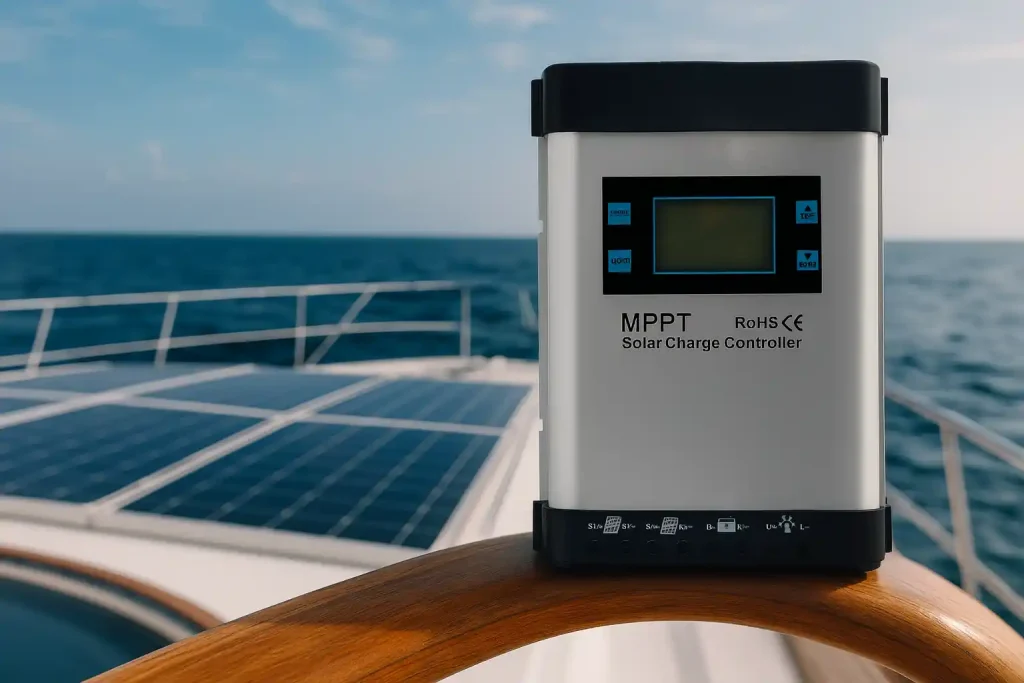
In challenging outdoor environments where sunlight fluctuates due to clouds, terrain, or shading, an MPPT solar charge controller adjusts operating points in real time to capture the maximum possible energy. This ensures:
higher charging efficiency during weak sunlight
better output on cold mornings or hot afternoons
optimized performance for large or long-distance solar arrays
This capability allows off-grid users to maintain dependable power even during non-ideal sunlight conditions.
Balancing Energy Supply and Load Demand Automatically
Outdoor systems often include mixed loads such as lighting, cameras, fans, sensors, and communication modules. Demand varies by time of day, weather, and user activity. The controller helps coordinate:
prioritizing essential loads
preventing overload conditions
allocating available power based on battery state
This dynamic management improves system stability and ensures that mission-critical devices remain powered.
Enhancing Efficiency with Smart Night and Day Modes
Solar charge controllers can activate different logic depending on light conditions:
Day mode:prioritizes charging and manages high-load equipment.
Night mode: reduces unnecessary consumption, triggers lighting systems, and ensures smooth battery discharge.
These automated behaviors prevent energy waste and extend operating hours for remote setups.
Improving Runtime for Outdoor Monitoring and Communication Systems
Remote surveillance poles, weather stations, wireless repeaters, and IoT devices require consistent power. The controller stabilizes voltage output, compensates for sudden power draws, and ensures uninterrupted operation. This is especially useful where maintenance access is limited and reliability is critical.
Reducing Generator Dependency in Off-Grid Operations
With an efficient solar charge controller maximizing solar input, systems rely less on fuel-powered generators. This leads to:
lower fuel expenses
reduced noise pollution
improved sustainability in protected outdoor environments
For long-term deployments, this reduction in generator usage significantly lowers operational complexity.
Supporting Portable and Mobile Outdoor Power Solutions
For camping, expeditions, and mobile field units, portability matters. Compact controllers with high-efficiency algorithms allow smaller solar panels to deliver sufficient power. This helps maintain operations for:
portable refrigerators
radios or GPS units
lighting systems
laptops and tools
Even lightweight systems benefit from optimized energy capture and controlled power distribution.
What Makes a Professional-Grade Solar Charge Controller More Reliable for Long-Term Outdoor Deployment?
Long-term outdoor installations—such as remote power stations, environmental monitoring sites, field communication hubs, and off-grid cabins—require equipment that performs reliably year-round. A professional-grade solar charge controller provides the stability, durability, and intelligence needed to ensure continuous operation despite environmental challenges.
Robust Construction Designed for Harsh Outdoor Conditions
Professional controllers use stronger materials and reinforced internal structures to withstand long-term exposure to the elements. These designs help resist:
intense UV radiation
dust and moisture
vibrations from equipment or wind
corrosion in coastal or humid locations
Such durability ensures the controller remains functional even when maintenance access is limited.
Advanced Thermal Management for Hot and Cold Environments
Outdoor temperatures can vary dramatically between day and night or across seasons. A high-quality controller features:
efficient heat dissipation through metal housings
optimized ventilation paths
electronic components selected for high-temperature tolerance
Stable thermal performance prevents overheating, reduces power loss, and extends the lifespan of both controller and connected batteries.
High-Level Electrical Protection for Sensitive Outdoor Loads
Long-term outdoor systems cannot afford voltage irregularities or electrical faults. Professional controllers include comprehensive protections:
over-current and over-voltage protection
reverse polarity safeguards
battery temperature monitoring
load protection mechanisms
These layers of defense prevent unexpected system downtime and protect delicate electronics operating in remote locations.
Consistent Performance Under Variable Sunlight and Loading Conditions
Remote applications often experience inconsistent sunlight due to terrain, seasonal changes, or unexpected weather. A professional controller responds dynamically, using advanced algorithms to regulate input and output power. This ensures:
smooth operation even during rapid sunlight transitions
stable voltage for sensitive devices
optimized battery charging throughout the day
The result is enhanced system reliability independent of environmental variability.
Intelligent System Integration and Monitoring Capabilities
Many professional-grade controllers offer communication interfaces for remote supervision. This is especially valuable for installations in hard-to-reach areas. Monitoring features may include:
real-time voltage/current tracking
historical data logs
wireless or app-based access
Such visibility helps operators diagnose issues early and ensure long-term performance without frequent site visits.
Scalable and Future-Proof System Architecture
Outdoor deployments often expand over time—adding panels, batteries, or new devices. High-end controllers support scalable system designs, allowing upgrades without needing to replace the core controller. This adaptability reduces future investment costs and ensures compatibility with evolving outdoor power requirements.
Conclusion
Outdoor power systems depend on more than just solar panels and batteries—the real stability comes from the intelligence and protection provided by the solar charge controller. From managing fluctuating sunlight and regulating charging behavior to safeguarding sensitive electronics and maximizing long-term efficiency, the controller plays a central role in every outdoor application. As users continue to adopt solar solutions in remote, mobile, and off-grid environments, the need for durable, feature-rich, and precisely engineered controllers only becomes more important.
Selecting the right controller ensures smoother operation, longer battery lifespan, and dependable performance regardless of weather or location. For outdoor power setups that require consistent reliability, well-designed solutions—such as those offered by CARSPA—provide the strength and stability needed to support long-term field deployment.