
How Solar Charge Controllers Improve PV System Stability, Battery Health, and Long-Term Efficiency?5 Critical Questions Answered
Introduction
A solar charge controller plays a crucial role in the reliability and long-term performance of any photovoltaic (PV) system. As solar installations continue to expand—from small off-grid setups to large distributed energy networks—the need for stable battery charging, precise power regulation, and robust system protection has become increasingly important. Without a well-designed controller, panels may fail to deliver optimal energy output, batteries may suffer from premature aging, and the entire power system may face unnecessary downtime or safety risks.
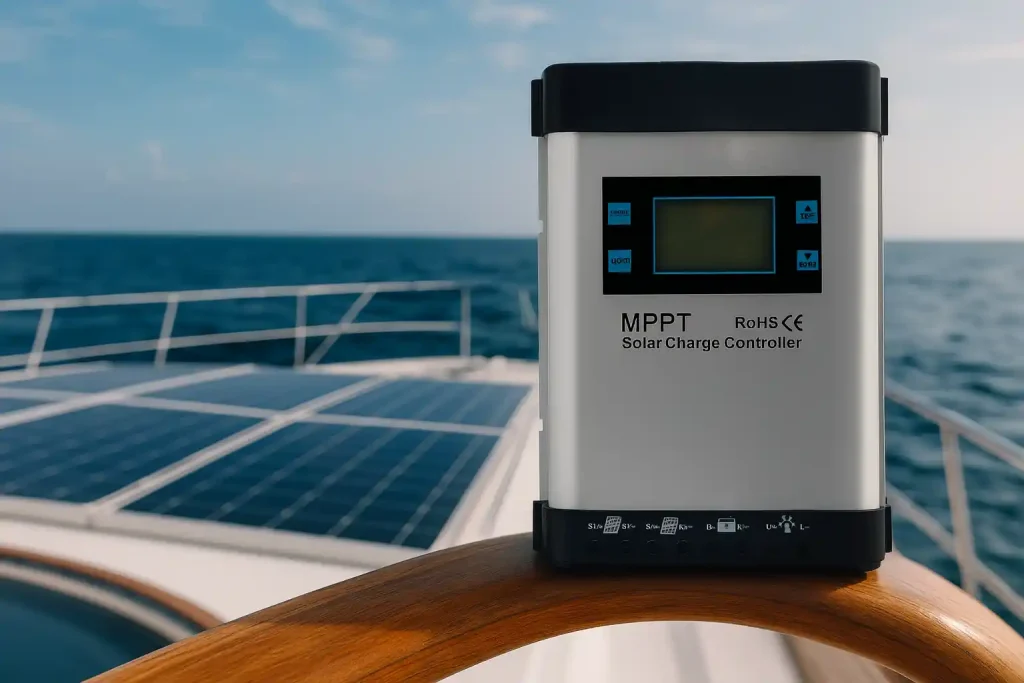
Modern solar charge controllers are engineered to regulate the flow of energy between solar panels, battery banks, and connected loads. By intelligently managing voltage and current, they prevent overcharging, deep discharging, and reverse currents that can damage equipment or reduce system efficiency. In advanced PV systems, charge controllers also contribute to load management, system monitoring, and energy optimization—helping operators achieve consistent performance even under fluctuating weather and system-demand conditions.
As renewable energy adoption accelerates, understanding the role of a solar charge controller becomes essential for building PV systems that are efficient, safe, and reliable over the long term. The following sections explore key considerations, technologies, and features that shape the effectiveness of modern solar charge controllers in real-world solar applications.

Why Is a Solar Charge Controller Essential for a Stable and Efficient PV System?
A solar charge controller is not simply an accessory in a PV system—it is the central component that ensures energy is delivered safely and efficiently from panels to batteries and downstream loads. Without proper regulation, solar power can fluctuate dramatically throughout the day, causing inconsistencies that can compromise both performance and equipment lifespan.
Maintaining Stable Charging Voltage and Current
Solar panels naturally produce variable output depending on irradiance, temperature, and shading conditions. A charge controller balances these fluctuations and ensures the battery bank receives a steady, controlled charge. This prevents issues such as voltage spikes or undercharging, both of which may lead to reduced power availability or long-term damage to the battery system.
Preventing Overcharging and Battery Degradation
Overcharging is one of the most common reasons batteries fail prematurely in solar installations. A solar charge controller automatically reduces or stops charging when the battery reaches its safe threshold. This protects battery plates, prevents overheating, and maintains the designed cycle life—an essential factor for systems that operate continuously throughout the year.
Ensuring Reliable Power Delivery to Loads
In many PV systems, loads depend on consistent DC output. Charge controllers include load terminals and smart logic that stabilize power delivery even during cloudy periods or peak consumption times. This regulated output helps keep sensitive electronic equipment, pumps, lights, sensors, and communication modules operating without interruption.
Protecting the System From Reverse Current Flow
At night or during low-light conditions, batteries can discharge back into solar panels. A solar charge controller incorporates reverse current protection to stop this backflow, preventing unnecessary energy loss and eliminating a failure mode that can damage both batteries and panel junction boxes.
By maintaining balance and control across the entire energy chain, a solar charge controller becomes essential for ensuring that a PV system operates at its highest possible efficiency and reliability.
How Do Different Types of Solar Charge Controllers Affect PV System Performance?
Not all solar charge controllers operate the same way, and choosing the right type has a direct impact on power conversion efficiency, battery compatibility, and overall system output. The two most common technologies—PWM and MPPT—serve different roles depending on system size and performance expectations.
PWM Controllers: Simple, Reliable, and Cost-Effective
Pulse Width Modulation (PWM) controllers are widely used in small to medium PV systems. They regulate the charging process by rapidly switching the connection between the solar panel and the battery.
Direct battery connection: PWM essentially forces the panel to operate at the battery voltage, which can limit power output when panel voltage is higher.
Stable performance in low-demand systems: For basic lighting, communication units, or small off-grid setups, PWM provides a dependable and economical solution.
Lower conversion efficiency: In larger systems or cold climates—where panel voltage is often significantly above battery voltage—PWM may result in noticeable energy loss.
MPPT Controllers: Maximizing Energy Harvest
Maximum Power Point Tracking (MPPT) technology has become the standard for modern PV installations due to its significant efficiency advantages.
Tracks the optimal power point: MPPT constantly adjusts its input to draw maximum available power from the solar panels based on temperature, sunlight, and panel characteristics.
Higher efficiency (15%–30% more output than PWM): This makes MPPT particularly beneficial in large systems, variable climates, and installations with long cable runs.
Supports higher-voltage PV arrays: MPPT allows panels wired in series to operate efficiently, reducing cable loss and enabling more flexible system design.
Impact on System Scalability and Battery Types
Different controller technologies also influence how easily a PV system can be expanded or paired with different batteries:
PWM systems tend to fit small, fixed-capacity battery systems.
MPPT systems support scalable arrays, lithium batteries, and high-capacity storage banks commonly used in industrial or remote installations.
Choosing the Right Technology Based on Application Needs
The ideal controller type depends on factors such as available sunlight, required daily load, distance between panels and batteries, and long-term energy goals.
PWM: simpler, lower-cost, suitable for basic off-grid tasks.
MPPT: higher performance, ideal for professional and large-scale PV systems.
Understanding these differences helps ensure the PV system delivers consistent, high-quality energy output while minimizing long-term operational costs.
What Key Features Should You Evaluate When Choosing a Solar Charge Controller?
Selecting the right solar charge controller requires more than checking voltage and current ratings. Modern PV systems demand components that ensure high efficiency, strong protection, and long-term reliability. Evaluating the following features helps ensure the controller can withstand real-world operating conditions and support stable system performance.
Accurate Voltage and Current Ratings for System Matching
The controller must match the solar array voltage, battery voltage, and overall load requirements.
Input voltage range determines how panels can be wired (series or parallel).
Charging current capacity affects how quickly the battery can be charged during peak sunlight hours.
System voltage support (12V/24V/48V) ensures compatibility across different installation sizes.
Choosing a controller with an appropriate safety margin helps avoid overheating or current limiting during high-production periods.
Advanced Charging Algorithms for Battery Health
A high-quality controller uses multi-stage charging methods to optimize battery lifespan and performance.
Common stages include:
Bulk charging for fast, high-current input
Absorption charging for stabilizing voltage near full capacity
Float charging to maintain battery health without overcharging
Some controllers provide temperature compensation, adjusting charging voltage based on battery temperature to prevent damage in cold or hot environments.
Built-In Electronic Protections for System Safety
Protection features are essential for preventing failures and ensuring uninterrupted power delivery.
Typical protections include:
Overvoltage protection
Overcurrent and short-circuit protection
Reverse polarity protection
Battery over-discharge prevention
Reverse-current blocking at night
These safeguards help reduce maintenance costs and extend the lifespan of panels, batteries, and connected devices.
Monitoring, Display, and Smart Communication Options
Modern PV systems increasingly rely on real-time monitoring to optimize performance. Many controllers now include:
LCD or LED status screens
Fault indicators and alarms
Remote monitoring via RS485, Modbus, or Bluetooth
Mobile app integration for data logging
Such features make it easier to track charging behavior, detect abnormal conditions, and adjust system settings without on-site intervention.
Durability and Environmental Adaptability
Solar installations often operate in harsh outdoor environments. A dependable solar charge controller should offer:
High-quality heat dissipation
Rugged housing with UV-resistant materials
Protection ratings such as IP32–IP65
Stable operation in wide temperature ranges
Evaluating these characteristics ensures the controller can perform reliably in remote, coastal, desert, or high-humidity regions.
By understanding and comparing these key features, system designers and operators can select a solar charge controller that maximizes energy efficiency, protects vital components, and supports long-term PV system stability.

How Can a Solar Charge Controller Extend Battery Life and Improve System Safety?
The battery bank is one of the most valuable components in any PV system, and its performance directly impacts daily energy availability. A solar charge controller plays a vital role in protecting the battery from harmful charging behaviors while maintaining stable system operation. By implementing intelligent control strategies, the controller significantly boosts both battery longevity and overall safety.
Preventing Overcharging and Thermal Stress
One of the biggest threats to battery health is sustained overcharging. Excessive voltage causes heat buildup, electrolyte loss, and internal plate damage—leading to reduced capacity and early failure.
A high-quality controller prevents this by:
Monitoring battery voltage in real time
Reducing charge current when voltage approaches the safe limit
Transitioning to float mode to maintain a stable resting charge
This controlled process keeps the battery within its ideal operating range even during intense sunlight conditions.
Avoiding Deep Discharge and Power Instability
Frequent deep discharging shortens the usable life of both lead-acid and lithium batteries. A solar charge controller helps prevent this by:
Automatically disconnecting loads when battery voltage drops too low
Providing adjustable low-voltage disconnect(LVD)settings
Stabilizing output to power sensitive DC equipment
By controlling discharge depth, the controller ensures stable access to stored energy and reduces the risk of irreversible battery damage.
Temperature Compensation for Accurate Charging
Batteries charge differently under varying temperatures. Without compensation, high temperatures may cause overcharging, while low temperatures may prevent full charging.
Advanced controllers offer:
Automatic voltage adjustment based on battery temperature
External temperature sensors for precise monitoring
Safe charge profiles optimized for different chemistries
This feature is especially important in outdoor, off-grid, or industrial environments where temperature fluctuations are significant.
Short-Circuit and Reverse Polarity Protection
System safety is a top priority, particularly in installations with multiple panels, long cable runs, or high-capacity batteries.
The controller safeguards the system through:
Reverse polarity protection to prevent wiring mistakes
Short-circuit protection to avoid catastrophic failures
Surge protection for sudden voltage spikes
These safety layers ensure uninterrupted operation and reduce fire, equipment failure, or downtime risks.
Optimizing Battery Charging for Different Chemistries
Today’s PV systems use various battery types—AGM, GEL, flooded lead-acid, and multiple lithium variants.
A flexible controller improves system performance with:
Adjustable charging parameters
Preset battery profiles for common chemistries
Compatibility with lithium BMS communication (in advanced models)
This ensures each battery type receives the correct charge voltage, current, and cutoff parameters.
Through these combined functions, the solar charge controller becomes the guardian of the battery bank and the stabilizing core of the entire PV system—reducing maintenance costs, preventing operational failures, and ensuring long-lasting energy storage reliability.
Where Are Solar Charge Controllers Commonly Used in Modern PV Applications?
Solar charge controllers support a wide range of PV installations, ensuring reliable energy storage and stable system operation across various environments. Their versatility makes them essential in both small off-grid setups and large-scale distributed energy systems.
Residential Off-Grid and Hybrid Solar Systems
Homeowners rely on charge controllers to regulate the power flowing from rooftop panels into battery banks.
Common applications include:
Remote cabins or rural houses without grid access
Hybrid systems supporting essential appliances during outages
Small energy storage systems that power lighting, communication devices, and surveillance units
Controllers help households maintain stable power even during fluctuating weather or energy demand.
Commercial and Industrial PV Installations
In larger facilities, solar charge controllers manage significant battery capacity and ensure uninterrupted power for mission-critical equipment.
Typical uses include:
Industrial automation systems
Warehouses and distribution centers
Water pumping and irrigation control systems
Renewable-powered machinery and monitoring stations
Advanced MPPT controllers are often chosen here due to their high efficiency and communication capabilities.
Telecommunication, Security, and Remote Monitoring Stations
Many remote infrastructures depend entirely on solar energy to stay operational.
Solar charge controllers maintain battery stability for:
Telecom repeaters and relay towers
CCTV and public safety systems
Environmental monitoring sensors
Weather stations and traffic management devices
These applications require highly reliable charging and real-time system monitoring.
Agricultural and Irrigation Systems
Solar-powered agricultural equipment is increasingly popular due to its low operating cost and independence from grid electricity.
Charge controllers support:
Solar water pumps
Drip irrigation control systems
Agricultural lighting and ventilation
Powered sensors for soil, humidity, and crop monitoring
Stable energy access reduces production risks and enhances overall farm efficiency.
Mobile, Marine, and RV Applications
Solar charge controllers are also widely used in mobile energy systems where space and efficiency are critical.
Common scenarios include:
RV solar power systems
Boats and marine navigation setups
Off-road vehicles and emergency-response units
Portable energy stations used for field work
These systems benefit greatly from MPPT controllers that can harvest maximum energy even under partial shading or changing panel angles.
Rural Electrification and Humanitarian Projects
In regions without stable grid access, solar charge controllers ensure dependable, cost-effective energy for essential services.
Applications include:
Rural microgrids
Off-grid schools and clinics
Community lighting and water purification stations
Here, durability and ease of maintenance are key performance factors.
Across all these applications, the solar charge controller functions as the backbone of energy regulation—optimizing charging, protecting batteries, and enabling consistent, long-term operation of PV systems in diverse real-world environments.
Conclusion
A solar charge controller is far more than a basic system accessory—it is the core component that stabilizes power flow, protects energy storage, and ensures long-term efficiency in modern PV systems. By regulating voltage, managing charging stages, and safeguarding the battery against harmful operating conditions, it enables solar installations to deliver consistent, reliable energy even when environmental factors fluctuate. Whether used in residential setups, industrial facilities, telecommunication sites, agricultural infrastructure, or mobile power systems, the controller plays a central role in maintaining system health and maximizing energy harvest.
As global demand for clean, resilient power continues to rise, selecting a high-quality solar charge controller becomes essential for achieving long-term performance and minimizing maintenance costs. For operators, system designers, and energy integrators seeking dependable solutions, exploring professional-grade products such as those from CARSPA can help ensure a stable and efficient PV system built to last.


