What Are the Main Types of Solar Charge Controllers and How Do They Differ?
Introduction
Why Understanding Solar Charge Controllers Matters
In a solar power system, every component plays a vital role, but none is more crucial to efficiency and system longevity than the solar charge controller. Acting as the intelligent bridge between the solar panels and the battery bank, the charge controller regulates the flow of electricity, ensuring that energy is stored safely and effectively. Without it, batteries could easily overcharge, discharge too deeply, or suffer from shortened lifespans due to unstable voltage conditions.
As solar energy becomes a dominant force in both residential and industrial applications, understanding how charge controllers function—and which type best fits your setup—has become increasingly important. A well-matched solar charge controller not only maximizes energy conversion but also stabilizes system performance, especially under variable sunlight conditions.

There are two primary types of solar charge controllers used in modern systems: PWM (Pulse Width Modulation) and MPPT (Maximum Power Point Tracking). While both serve the same core purpose—managing the charging and discharging process—they differ significantly in working principles, efficiency levels, cost, and ideal applications.
This article explores these two technologies in depth, explaining how they work, where they excel, and how you can choose the right one to achieve optimal performance and return on investment for your solar system.
What Is a Solar Charge Controller and How Does It Work?
A solar charge controller is the intelligent regulator at the heart of every solar power system. Its primary role is to control the voltage and current coming from solar panels to the batteries, preventing overcharging, over-discharging, or reverse current flow that could damage the system.
When sunlight hits the solar panels, electricity is generated as direct current (DC). However, the voltage output from solar panels often fluctuates based on light intensity and temperature. Without a controller, these fluctuations could overwhelm the battery, shortening its lifespan or even causing system failure. The charge controller continuously monitors this flow and ensures that energy is stored safely at the correct rate.

Core Working Principle
The controller functions as a gatekeeper. When the battery voltage is low, it allows more current to flow in for charging. As the battery approaches full capacity, it gradually reduces or stops the current to avoid overcharging. During nighttime or low-light periods, it also blocks the reverse flow of electricity from the battery back to the panels, maintaining system safety.
Key Performance Functions
A modern solar charge controller offers more than basic regulation.
Voltage Regulation: Maintains a stable charging voltage suitable for the battery's chemistry (e.g., 12V, 24V, or 48V systems).
Battery Protection: Prevents damage caused by overcharging or excessive discharge.
Load Control: Some controllers directly power DC loads, ensuring stable energy supply even when sunlight is inconsistent.
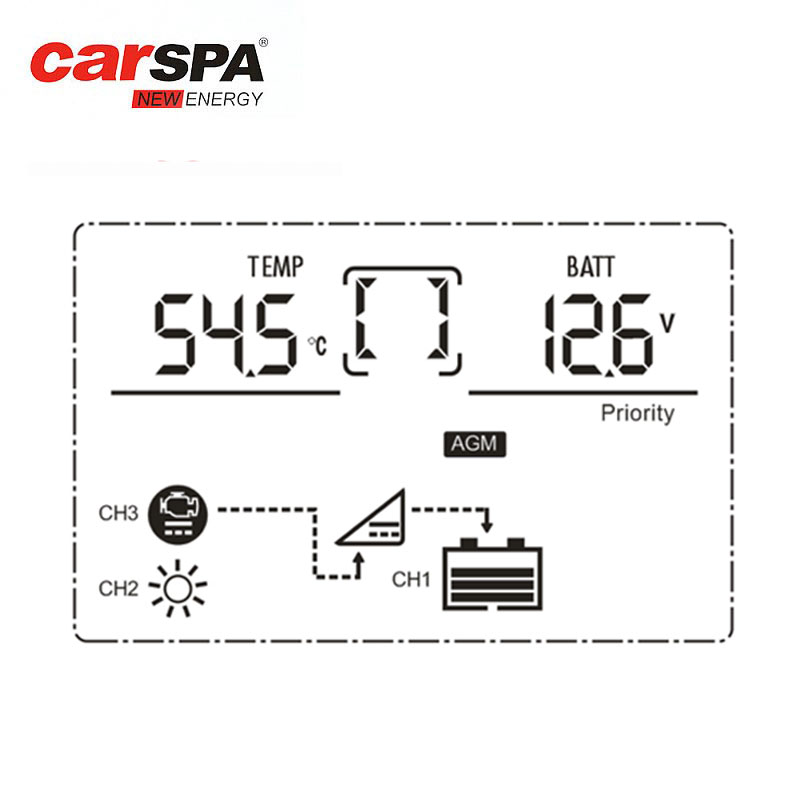
Monitoring and Communication: Advanced models provide LCD displays or remote monitoring functions, enabling users to track performance in real time.
By combining these features, a solar charge controller ensures that the energy harvested from the sun is optimized, stored efficiently, and used safely, forming the backbone of any reliable solar system.
What Are the Main Types of Solar Charge Controllers?
While every solar charge controller shares the same fundamental purpose—to regulate power flow from panels to batteries—their working principles and efficiency levels vary greatly. Understanding these differences helps ensure that your solar system runs efficiently and that your investment in batteries and panels delivers the highest possible return.
In today's market, there are two dominant types of solar charge controllers: PWM (Pulse Width Modulation) and MPPT (Maximum Power Point Tracking). Some newer models even integrate both technologies or add hybrid functionalities. Let's explore each in detail to see how they work and where they perform best.
PWM (Pulse Width Modulation) Controllers: Reliable and Cost-Effective
PWM controllers are the traditional and most commonly used type in small-scale solar systems. They work by rapidly switching the connection between the solar panels and the battery on and off, maintaining the battery voltage at a safe charging level.
How they work:
When the battery voltage is below a preset threshold, the controller allows full current to flow in.
As the battery approaches full charge, the controller shortens the “on” pulse width, gradually reducing current flow.
This modulation process maintains a steady voltage and protects the battery from overcharging.
Advantages:
Simple design and affordable cost
High reliability with fewer electronic components
Ideal for low-power or off-grid systems (e.g., solar lighting, small cabins, and portable solar kits)
Limitations:
Lower efficiency (typically 75–85%)
Requires panel voltage to match battery voltage
Less effective in variable temperature or partial shading conditions
PWM technology is a practical and economical choice when budget constraints or system size make simplicity more valuable than peak efficiency.
MPPT (Maximum Power Point Tracking) Controllers: Intelligent and Highly Efficient
MPPT controllers represent the modern evolution of solar power regulation. They use advanced digital algorithms to continuously track the maximum power point (MPP) of the solar array—the precise voltage and current combination that delivers the most energy at any given moment.
How they work:
The MPPT controller measures the output of the solar array and dynamically adjusts input parameters to extract maximum energy.
It converts excess voltage into additional charging current, ensuring that no potential solar power is wasted.
This makes MPPT controllers particularly efficient in colder or cloudy environments, where panel voltage fluctuates widely.
Advantages:
Conversion efficiency up to 98%
Optimized performance under all sunlight and temperature conditions
Supports higher-voltage solar arrays and long cable runs
Ideal for residential, commercial, and hybrid solar installations
Limitations:
Higher cost due to complex electronics
Slightly more heat generation, requiring good ventilation
May be overqualified for very small or low-budget systems
MPPT technology maximizes solar investment by significantly boosting total energy harvest—especially important for larger systems or areas with variable weather.
Hybrid or Multi-Mode Controllers: The Smart Middle Ground
Some advanced controllers integrate both PWM and MPPT algorithms, switching modes based on system conditions. Others combine charge control with inverter or monitoring functions, making them suitable for integrated solar power stations.
These hybrid designs aim to balance cost, flexibility, and efficiency, catering to modern applications where system demands vary daily.
Whether you choose PWM, MPPT, or a hybrid system depends on the scale, environment, and performance goals of your solar setup. The next section dives deeper into how each type actually operates within a solar system—and why those differences matter.
How Does a PWM Solar Charge Controller Operate in a Solar System?
A PWM (Pulse Width Modulation) solar charge controller is one of the most reliable and time-tested solutions for managing energy flow in small to medium-sized solar systems. Its operation is based on a simple yet effective technique—modulating the width of electrical pulses sent to the battery. This allows precise control of the charging current, maintaining the battery voltage within safe limits while minimizing energy loss.
Understanding the PWM Working Principle
In essence, a PWM controller connects the solar panel directly to the battery through a series of rapid on/off switching cycles.
When the battery voltage is low, the controller keeps the connection on for longer periods, allowing more current to flow and recharge the battery quickly.
As the battery approaches full capacity, the controller shortens the pulse width—hence the term “pulse width modulation”—reducing current flow until the battery is fully charged.
Once the battery reaches its preset voltage limit, the controller enters a float mode, supplying only a small maintenance current to keep the battery full without overcharging it.
This process provides smooth voltage regulation and helps prolong the lifespan of the battery.

Key Advantages of PWM Controllers
Despite their simplicity, PWM charge controllers remain a preferred choice for many solar applications.
Cost-Effective: Their low manufacturing cost makes them ideal for small-scale or budget-conscious systems.
Proven Reliability: Fewer components mean fewer points of failure, which is beneficial for remote or off-grid use.
Ease of Installation: They can be easily set up with basic wiring and minimal configuration.
Durability: Robust construction allows them to function effectively in demanding environments such as outdoor lighting or rural installations.
These advantages make PWM controllers particularly popular for standalone solar setups like solar streetlights, RV systems, and small off-grid cabins.
Limitations to Consider
However, PWM controllers are not without trade-offs.
Lower Efficiency: Since they cannot adjust voltage dynamically, they typically operate at 75–85% efficiency.
Voltage Compatibility: The panel voltage must closely match the battery voltage (e.g., 12V panels for 12V batteries), which limits system flexibility.
Performance Under Low Light: In cloudy or cold conditions, PWM controllers cannot harvest the extra voltage available from the panels, resulting in reduced energy yield.
These limitations make PWM controllers best suited for smaller systems with predictable sunlight and modest energy demands.
When to Use a PWM Controller
A PWM solar charge controller is an excellent choice when:
The solar array voltage matches the battery voltage.
The installation is in a sunny region with consistent irradiance.
Cost efficiency is a key factor.
The application involves smaller power loads or simple off-grid systems.
When properly matched to system requirements, PWM controllers deliver stable, low-maintenance, and dependable performance—ensuring long-term reliability without unnecessary complexity.
How Does an MPPT Solar Charge Controller Improve Energy Harvesting?
An MPPT (Maximum Power Point Tracking) solar charge controller represents a major leap forward in solar technology. Designed to extract the maximum possible energy from solar panels, it intelligently adapts to changing environmental conditions such as temperature, shading, and sunlight intensity. This makes it especially effective for modern residential, commercial, and hybrid energy systems that demand higher performance and efficiency.
The Core Principle: Tracking the Maximum Power Point
Every solar panel has a specific voltage and current combination where it delivers its maximum power output — known as the Maximum Power Point (MPP). The challenge is that this point shifts constantly throughout the day as sunlight and temperature vary.
An MPPT controller continuously monitors the solar array's output and uses advanced algorithms to identify this optimal point in real time. It then adjusts the input voltage and current so that the panels always operate near their peak efficiency.
When sunlight is strong, the controller lowers the voltage and increases the current to charge the battery faster.
When sunlight is weak or the temperature drops (which raises panel voltage), it compensates by adjusting parameters to maintain optimal power flow.
This dynamic adjustment process allows the system to capture up to 30% more energy compared to PWM controllers—especially in variable weather or when long cable distances cause voltage drops.
How MPPT Controllers Optimize Conversion Efficiency
Unlike PWM models, MPPT controllers decouple the solar panel voltage from the battery voltage. This means high-voltage panels (e.g., 48V or 72V) can charge lower-voltage battery banks (e.g., 12V or 24V) without energy loss.
Here's what happens inside:
The controller measures the power output (voltage × current) from the solar array.
It continuously adjusts the load on the panels to maintain operation at the MPP.
Excess voltage is converted into additional charging current, rather than being wasted as heat.
This voltage-to-current conversion process is what gives MPPT controllers their superior efficiency—often achieving rates between 95% and 98%, depending on system design and ambient conditions.
Key Advantages of MPPT Controllers
Higher Energy Yield: Optimized charging ensures maximum power utilization throughout the day.
Flexible System Design: Supports higher-voltage solar arrays and longer cable runs with minimal loss.
Better Performance in Cold or Cloudy Conditions: Takes advantage of higher panel voltage during low temperatures or partial shading.
Adaptive Charging for Battery Health: Many MPPT units include multi-stage charging profiles that extend battery lifespan.
Smart Monitoring and Integration: Equipped with LCD displays, Bluetooth or RS485 communication, and remote monitoring options.
These benefits make MPPT controllers ideal for residential rooftops, agricultural installations, telecommunication towers, and off-grid industrial systems.
Potential Limitations
Despite their impressive performance, MPPT controllers come with some considerations:
Higher Cost: Their sophisticated components and technology increase upfront investment.
More Heat Generation: High-efficiency power conversion produces heat, requiring proper ventilation or heat sinks.
Complex Setup: Installation and configuration can be slightly more technical than PWM controllers.
However, for medium to large solar power systems, the energy savings and efficiency gains typically offset the additional cost within the first year of operation.
When Is MPPT the Right Choice?
Choose an MPPT solar charge controller when your system involves:
Large-scale or high-voltage solar panels
Long cable runs or variable sunlight conditions
High energy demands with deep-cycle battery banks
Projects where maximizing solar ROI is critical
In these scenarios, MPPT controllers ensure that your solar array delivers its maximum potential output every single day, making them the preferred choice for modern, performance-driven energy systems.
How Do PWM and MPPT Controllers Compare in Performance and Cost?
Selecting between a PWM and an MPPT solar charge controller is not just a technical decision — it directly impacts your solar system's efficiency, reliability, and return on investment. Although both regulate the flow of energy between panels and batteries, their performance characteristics, adaptability, and cost structures differ significantly. Understanding these distinctions helps you make a choice that aligns with your energy goals and budget.
Efficiency and Energy Output
| Feature | PWM Controller | MPPT Controller |
| Energy Conversion Efficiency | 75–85% | 95–98% |
| Voltage Flexibility | Requires matching panel & battery voltage | Can handle higher PV voltages |
| Power Loss in Cables | Higher | Minimal due to higher system voltage |
| Performance in Cloudy/Cold Weather | Moderate | Excellent – can capture extra voltage |
PWM controllers operate by directly connecting solar panels to the battery. This simplicity limits voltage conversion, resulting in less efficient energy harvesting — especially when sunlight conditions fluctuate.
MPPT controllers, by contrast, continuously track the optimal voltage and current, ensuring the panels operate at their maximum output level, even in partial shading or temperature changes.
System Size and Application Suitability
| Application | Recommended Controller | Reason |
| Small off-grid systems (lights, RVs) | PWM | Cost-effective, simple setup |
| Residential rooftop systems | MPPT | Maximizes solar yield, supports multiple panels |
| Commercial or industrial systems | MPPT | High voltage flexibility, advanced control |
| Rural or remote solar lighting | PWM | Reliable and maintenance-free |
PWM controllers shine in smaller setups where simplicity and reliability are prioritized over efficiency.
In contrast, MPPT controllers dominate larger or professional installations where every watt counts and where environmental factors vary throughout the day.
Cost and Return on Investment
| Factor | PWM | MPPT |
| Initial Cost | Lower | Higher |
| Energy Harvest | Moderate | Significantly higher |
| Maintenance | Minimal | Requires monitoring ventilation |
| ROI Period | Longer | Faster – typically within 1 year |
While a PWM controller has a lower upfront cost, it may result in energy losses over time, reducing the overall system's profitability.
MPPT controllers, though more expensive, provide higher efficiency that often compensates for the cost difference through faster payback and long-term energy savings.
Scalability and Future Upgrades
If your solar project may expand in the future, scalability becomes critical. MPPT controllers offer:
Support for higher-voltage solar arrays, allowing system expansion without rewiring.
Compatibility with advanced batteries such as lithium-ion or LiFePO₄.
Integration with monitoring systems and hybrid inverters for smart energy management.
PWM controllers, being simpler, are better for fixed, small-scale systems that don't require such flexibility.
Environmental and Durability Considerations
Both types are available with rugged enclosures rated IP65 or above, protecting against dust and moisture.
PWM controllers often excel in hot or remote locations due to their minimal electronics and durability.
MPPT controllers perform best when properly ventilated and maintained, ensuring stable performance even under heavy power loads.
In Summary
If your priority is low initial investment and you are running a small, stable system, PWM remains an excellent, durable choice.
If your goal is maximum energy utilization, high system voltage, or future scalability, MPPT controllers are far superior in both performance and long-term value.
How to Choose the Right Solar Charge Controller for Your Application?
Selecting the right solar charge controller is more than just choosing between PWM and MPPT — it's about ensuring your solar system operates efficiently, safely, and reliably under real-world conditions. The ideal controller depends on factors such as system scale, voltage configuration, environmental conditions, and the type of batteries used. A careful evaluation of these criteria ensures long-term performance and a better return on investment.
1. Match the Controller to Your System Voltage and Current
The first step is to verify that the controller supports your system voltage (12V, 24V, 48V, etc.) and has enough current capacity to handle the solar array's output.
Voltage Compatibility: Most charge controllers automatically detect system voltage, but confirm whether your system is fixed or auto-selectable.
Current Rating: Choose a controller with at least 25–30% higher rated current than your panel output to accommodate power surges and ensure safe operation.
Example: For a 12V battery system powered by 300W of solar panels, the current is approximately 25A. A 30A controller would be appropriate to handle peak conditions safely.
2. Consider the Scale and Complexity of the System
Different system sizes demand different controller technologies:
Small Off-Grid Systems (Lighting, RVs, Boats): PWM controllers are economical and sufficient.
Medium Residential Systems: MPPT controllers offer higher efficiency and support multiple panels in series.
Large Industrial or Agricultural Systems: MPPT controllers with smart communication and remote monitoring ensure reliable long-term operation.
As system capacity increases, MPPT controllers provide better scalability and higher return on energy yield.
3. Evaluate Environmental Conditions
Your controller's performance depends heavily on its installation environment:
Temperature Range: Choose controllers with temperature compensation and operating ranges suited for outdoor or high-heat conditions.
Protection Level: For outdoor or dusty areas, ensure an IP65 or higher enclosure rating.
Ventilation: MPPT controllers require adequate airflow for heat dissipation, while PWM units are more tolerant of harsh environments.
If your site experiences wide temperature swings or fluctuating sunlight, MPPT controllers adapt better to variable energy inputs.
4. Battery Type and Charging Profile
Not all batteries charge the same way, so ensure the controller supports your battery type:
Lead-Acid (Flooded, AGM, Gel): Common and cost-effective; both PWM and MPPT controllers support these.
Lithium-Ion or LiFePO₄: Require precise multi-stage charging profiles—best handled by advanced MPPT controllers.
Some controllers also offer user-programmable settings for customized charging curves, extending battery lifespan and optimizing performance.
5. Look for Smart Features and Monitoring Options
Modern charge controllers go beyond basic voltage regulation. They integrate intelligent features to enhance convenience and control:
LCD Display: Shows real-time voltage, current, and battery status.
Data Logging & Bluetooth/Wi-Fi Connectivity: Enables monitoring via mobile apps or PC interfaces.
Remote Communication (RS485, Modbus, CAN): Useful for hybrid systems or industrial monitoring.
Multiple Load Terminals & Protection: Includes overcurrent, reverse polarity, and short-circuit protection.
These smart capabilities allow users to optimize energy management and detect faults early, ensuring stable long-term operation.
6. Balance Cost, Efficiency, and Longevity
While cost is always a consideration, it should be weighed against the system's purpose and expected performance:
PWM controllers have a lower upfront cost but are limited in scalability.
MPPT controllers, although pricier, offer greater efficiency, adaptability, and faster ROI.
If your project is short-term or budget-limited, PWM may suffice. For permanent or high-performance installations, MPPT is the superior investment.
7. Verify Brand Reliability and After-Sales Support
The solar charge controller operates continuously and is critical to system health. Choosing a trusted manufacturer ensures better build quality, safety certifications, and reliable service support.
Look for controllers tested to international standards (such as CE, RoHS, or IEC), with a proven track record in various climates.
✅ Final Decision Tip
In short:
For simple, low-power setups → Choose PWM.
For higher efficiency, flexibility, or long-term projects → Choose MPPT.
Always prioritize quality, compatibility, and protection features over the lowest price.
A properly selected charge controller doesn't just manage energy — it defines the overall efficiency and reliability of your entire solar system. The right decision ensures optimal energy harvest, longer battery life, and minimal maintenance costs, even under challenging operating conditions.
Conclusion
Enhancing Solar System Performance with Reliable Controllers
In any solar power setup, the solar charge controller serves as the intelligent link that ensures energy is harvested, regulated, and stored safely. Whether using a PWM or MPPT model, the controller determines how effectively your solar panels convert sunlight into usable, long-lasting power.
For smaller and budget-friendly systems, PWM controllers remain a simple and dependable option — durable, easy to install, and perfectly suited for stable environments with consistent sunlight. However, as solar systems grow in scale or sophistication, MPPT controllers stand out as the superior choice. Their ability to track real-time power points, adapt to environmental changes, and deliver up to 30% higher efficiency makes them indispensable for modern solar energy management.
Ultimately, choosing the right controller is about aligning system capacity, budget, and performance goals. A properly selected and installed controller will protect your batteries, stabilize power delivery, and maximize your investment in renewable energy for years to come.
For those seeking reliable, high-efficiency solutions, CARSPA offers a full range of PWM and MPPT solar charge controllers designed to meet the demands of residential, commercial, and off-grid solar systems worldwide — ensuring stable performance, advanced protection, and enduring value.