How Can a Solar Charge Controller Optimize Energy Efficiency for Outdoor Equipment and Mobile Power Setups?
Introduction
In outdoor and mobile power environments, energy consistency is everything. From field communication systems and mobile command units to RV power stations, surveillance towers, and off-grid scientific equipment, reliable solar performance determines operational uptime. Yet sunlight is unpredictable, and battery resources are limited—making energy efficiency a critical advantage in challenging real-world environments.

A solar charge controller plays the central role in transforming unstable solar input into dependable, optimized power. It intelligently manages energy flow, maximizes solar harvest under variable lighting conditions, protects battery health, and ensures essential equipment receives stable power even when resources are stretched.
In mobile and off-grid environments where maintenance can be difficult and downtime is costly, enhancing system efficiency isn't just a performance benefit—it's a mission-critical necessity. The following sections explore how a solar charge controller boosts outdoor energy efficiency and keeps field-deployed power systems running reliably, day after day.
Maximizing Power Harvest in Dynamic Outdoor Environments
Outdoor solar environments rarely provide ideal conditions. Sunlight angles shift throughout the day, unexpected shade may occur from trees or equipment, and mobile applications—such as RVs, boats, or portable field kits—face constant environmental changes. Without optimized energy capture, significant power potential is wasted, especially during early-morning, late-afternoon, and partially cloudy periods.
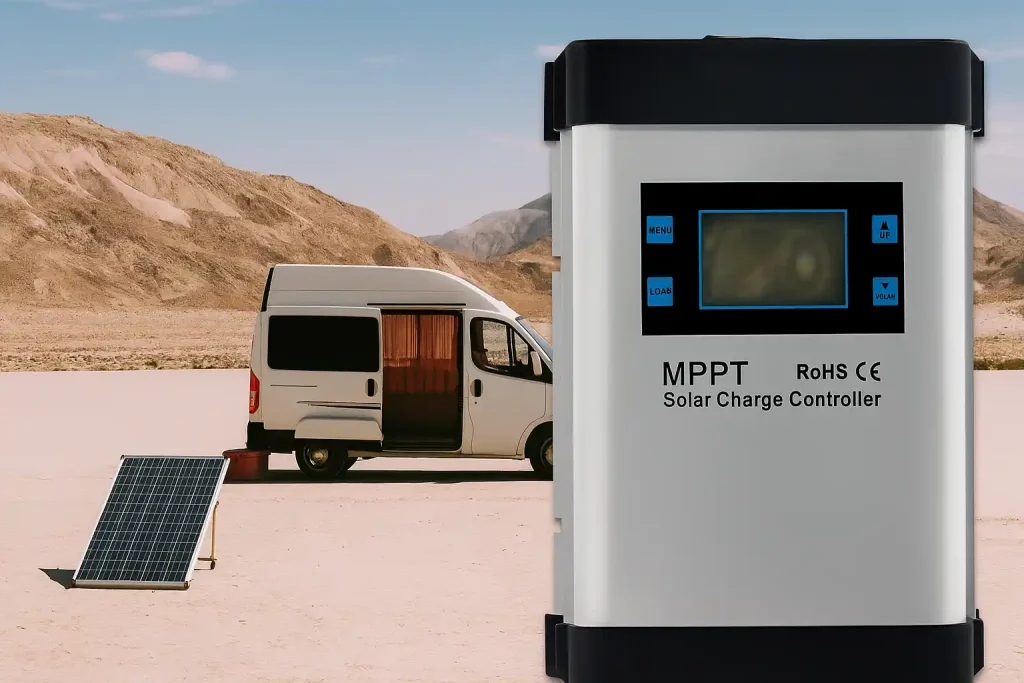
A solar charge controller plays a pivotal role by continuously tracking real-time solar output and adjusting the charging profile to match the most efficient power point available. This ensures that the system extracts the maximum possible energy even when sunlight is variable and panel orientation changes due to movement or terrain.
Key benefits in real outdoor scenarios:
Higher efficiency during low-light conditions: improving usable power at dawn, dusk, and cloudy intervals
Consistent output while moving: maintaining energy flow on RVs, boats, and mobile workstations when angle shifts occur
Reduced sensitivity to temperature swings: preventing power drop when solar panel voltage fluctuates in heat or cold
Minimized energy waste under shading: improving power delivery when only a portion of the panel receives sunlight
n practical terms, this allows sensors, communications devices, navigation systems, refrigeration units, field laptops, and lighting equipment to operate with greater stability throughout the entire day—not only at peak noon sun. For off-grid outdoor operations where every watt matters, maximizing harvest efficiency directly extends runtime, reduces reliance on backup batteries, and increases autonomy in remote environments.

Enhancing Battery Utilization and Extending System Lifespan
Efficient energy storage is just as important as efficient energy capture, especially in remote or mobile setups where battery replacement and manual charging are impractical. Outdoor deployments frequently rely on batteries as the primary energy reserve—whether powering communication radios at a mountain checkpoint, a surveillance device at a construction perimeter, or a portable workstation in a research field base.
A solar charge controller safeguards and optimizes battery performance by applying precise charging profiles tailored to different chemistries—such as AGM, GEL, flooded lead-acid, or LiFePO₄. Instead of pushing power blindly into the battery, it uses multi-stage algorithms that balance speed, capacity recovery, and long-term durability.
How it protects and maximizes battery capacity:
Bulk charging supplies initial high current to quickly restore power after heavy load periods
Absorption charging carefully completes the charge,preventing over-voltage stress
Float charging maintains full capacity without overheating or damaging cells
Equalization mode(lead-acid)prevents sulfation and restores cell balance for long-term storage health
Low-temperature and over-temperature protection prevents lithium battery damage in extreme climates
This intelligent regulation extends usable battery life and prevents premature degradation—a critical advantage for equipment operating at remote sites, where a single battery failure could halt operations.
For example, a tower-mounted environmental monitoring station deployed in desert terrain may experience wide day-night temperature swings. Without smart charging control, its battery might overcharge in the daytime heat or lose capacity during cold nights. A high-quality solar charge controller mitigates these risks, allowing the system to run for months or years with minimal human intervention.
By ensuring every cycle is managed responsibly, the controller maximizes storage efficiency, reduces energy waste, and prolongs runtime in demanding outdoor conditions.
Prioritizing Critical Loads and Managing Power Distribution Wisely
In outdoor and mobile scenarios, power demand can shift rapidly, and available energy is not always guaranteed. A solar charge controller functions not only as a charging device, but also as an intelligent energy distribution manager that allocates power based on system priorities. This capability is essential for equipment that must remain operational even under limited solar input or during extended periods of cloud cover.
When energy availability drops, the controller ensures vital devices remain powered first, while less critical loads are reduced or disconnected to protect battery reserves. This automation prevents unexpected system shutdowns and increases operational resilience in remote environments.
Practical load-management functions include:
Low-voltage disconnect(LVD)to protect batteries from deep discharge
Programmable priority output to keep essential systems active first
Automatic load reconnection when sufficient solar energy returns
Night-mode or timed output for outdoor lighting and field monitoring
Fail-safe behavior for safety-critical devices such as radios or navigation systems
This smart distribution approach is especially valuable in:
Mobile communication bases and field command vehicles
Ensures radio and satellite equipment remain powered even when auxiliary electronics pause
Remote environmental stations&security towers
Maintains camera and sensor power while turning off non-essential accessories
Outdoor research or expedition equipment
Keeps life-support and GPS systems active over entertainment or cabin loads
RV and van-life energy systems
Prioritizes refrigeration, lighting, and ventilation when sunlight is scarce
By intelligently regulating power output, the solar charge controller ensures that a temporary reduction in sunlight does not compromise mission-critical functions. This capability is particularly important for outdoor operators who travel through varied terrain or deploy monitoring equipment in areas prone to weather fluctuations.
In demanding field environments, smart load control can be the difference between continuous operation and costly downtime.
Improving Outdoor Reliability Through Environmental Protection and Autonomous Control
Outdoor and mobile power systems often operate in harsh and unpredictable environments. Whether mounted on a vehicle roof traveling through desert heat, installed on a coastal outpost facing salty moisture, or powering equipment in a high-altitude research station exposed to freezing temperatures, durability and autonomous operation are essential for long-term reliability.
A solar charge controller helps ensure stable energy performance by incorporating rugged construction and environmental protection designed specifically for field deployment. It does more than control power—it shields the energy system against external stressors and keeps equipment running smoothly without constant human intervention.
Key capabilities that enhance field reliability:
Wide operating temperature range to withstand desert heat and cold-mountain climates
Temperature-compensated charging to avoid battery damage and maintain capacity in extreme environments
Dust-proof and moisture-resistant design for camping, marine, coastal, and industrial outdoor settings
Corrosion-resistant terminals and electronics for long-term humidity or salt-air exposure
Over-temperature and overload protection to prevent failures under heavy system load
Lightning and surge protection ideal for mountain towers and open-terrain setups
These design considerations minimize performance drops due to environmental pressure and safeguard the power system from real-world hazards. In many cases, a robust solar charge controller can operate continuously for months or even years without user intervention.
Why autonomous performance matters outdoors:
Access to the equipment site may be limited
Weather can interrupt maintenance schedules
System downtime disrupts safety,communication,or monitoring tasks
Manual charging or generator backup is not always practical
Whether maintaining power for perimeter security lights on a construction site or supporting long-term wildlife-tracking installations in remote forests, a solar charge controller's autonomous control logic and environmental durability enable reliable, uninterrupted operation in conditions where manual oversight is impossible.
Advanced Monitoring and Data Insight for Long-Term Outdoor Operation
For many outdoor and mobile power applications, on-site supervision is impossible or extremely costly. Equipment may be deployed for weeks on a mountainside to support a weather station, or installed on a mobile unit operating across vast routes. In these conditions, knowing real-time system performance—and being able to diagnose issues remotely—significantly improves operational reliability.
Modern solar charge controllers increasingly support smart monitoring interfaces, allowing users to access system data without physically interacting with the equipment. Remote visibility helps optimize energy usage, anticipate performance drops, and take action before failures occur.
Key monitoring and communication features include:
Bluetooth or Wi-Fi app connectivity for portable power systems like RVs and mobile workstations
RS485/CAN Bus integration for more advanced mobile platforms and industrial field kits
Cloud-connected monitoring for surveillance towers or remote sensor networks
Historical data logging to identify power generation patterns or battery degradation
Real-time alert notifications for voltage drops, overloads, temperature warnings, or battery protection events
With these capabilities,users can track:
Charging and load status
State of charge and battery health
Power generation across the day
System temperature behavior
Fault or maintenance indicators
When paired with energy analytics, the controller becomes not only a power component but also a diagnostic tool—allowing outdoor operators to manage resources proactively, rather than reacting to failures.
Why this matters in field conditions:
Prevents unexpected outages during critical operations
Reduces costly manual service visits
Increases energy efficiency by tuning configurations based on data
Ensures readiness for emergency deployments or remote missions
From backcountry communication trailers to autonomous border monitoring stations, visibility and intelligence offer a major advantage in keeping off-grid power systems dependable and self-sustaining.
Conclusion
A solar charge controller plays far more than a supporting role in outdoor and mobile energy systems. It is the central intelligence that maximizes solar harvest, protects batteries, manages load priorities, withstands harsh environments, and provides real-time system awareness. In field conditions where stability and efficiency directly affect mission success, a high-performance controller ensures sustainable operation, extended autonomy, and consistent power availability.
Whether supporting expedition equipment, powering outdoor security networks, or enabling RV and mobile work units, choosing a professionally engineered solar charge controller delivers long-term value and dependable energy performance. High-quality outdoor power control solutions are available from CARSPA.