How Do Smart Battery Monitors Enable Remote Control and IoT Power Management in Modern RVs?
Introduction
In today's rapidly advancing RV and mobile living industry, power autonomy and system intelligence are no longer optional — they are becoming core requirements. Modern RV users expect stable energy supply not only for essential appliances, but also for heating and cooling systems, communication electronics, refrigeration, lighting, and increasingly, high-demand devices and entertainment equipment. As power systems grow more sophisticated, so does the need for real-time insight into battery performance, charging status, consumption behavior, and overall system health.
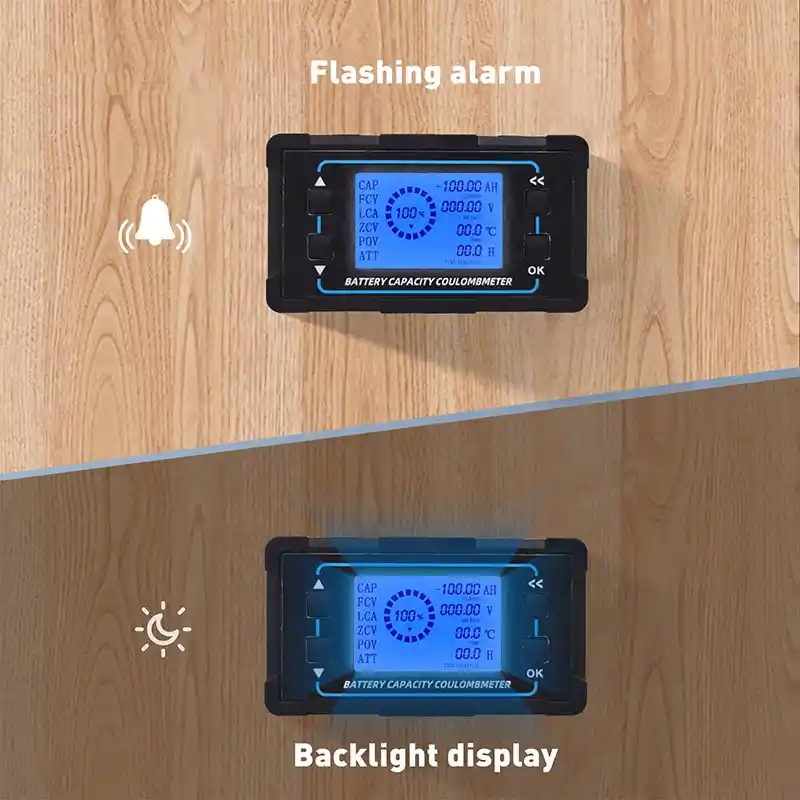
This shift has driven the rise of smart battery monitoring systems, designed to operate as the intelligence layer in modern RV electrical networks. A battery monitor is far more than a digital voltmeter; it works as an integrated data hub, measuring voltage, current, state of charge (SOC), state of health (SOH), temperature, power consumption, and charging efficiency. When paired with mobile applications, cloud dashboards, and IoT communication modules, it becomes a powerful tool that enables users to visualize system behavior, make data-driven energy decisions, and maintain reliable off-grid performance from anywhere.
At the same time, the adoption of RV inverters, solar charge controllers, LiFePO₄ battery banks, and hybrid charging systems (shore power, alternator, generator + solar) has accelerated. As these components interconnect into a complete energy network, monitoring becomes critical — improper charging, unnoticed battery deterioration, or sudden high-load surges can lead to downtime, costly component damage, and reduced battery lifespan. Smart monitoring tools not only prevent these issues but also optimize power usage, automate charging logic, and alert users to risks before they escalate.
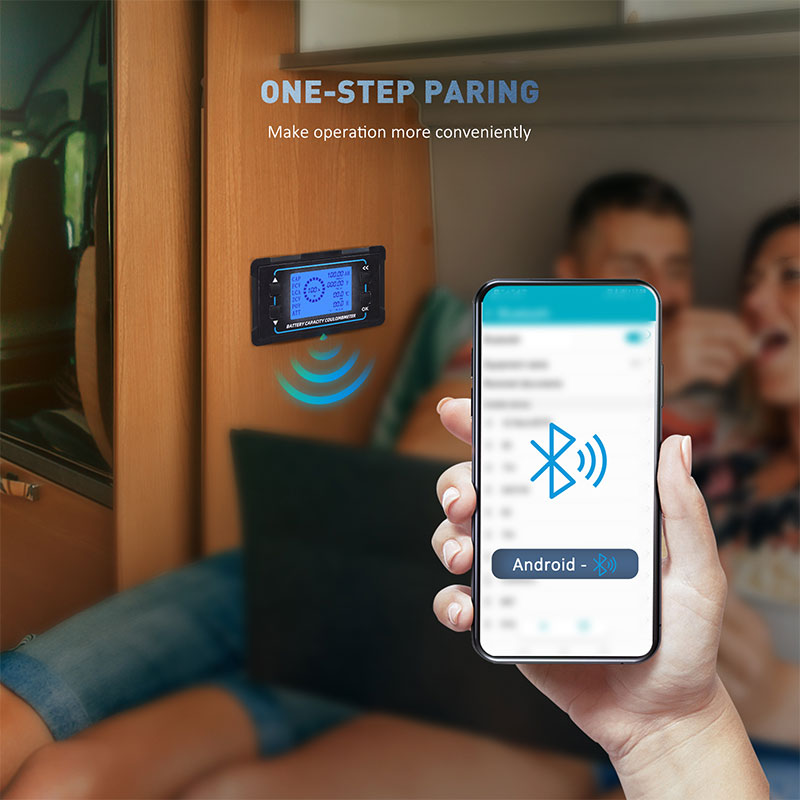
Whether supporting long-distance overland travel, remote camp operations, rental fleet management, or luxury mobile homes with IoT-controlled environments, smart battery monitoring provides the visibility and control required for reliable and efficient RV power systems. As digitalization and mobile connectivity continue to evolve, intelligent battery management will play a central role in shaping the next generation of RV energy architectures.
Why Is Remote Battery Monitoring Becoming Essential in Modern RV Power Systems?
As RV electrical systems evolve from simple battery-and-inverter setups into intelligent, multi-source power ecosystems, visibility and real-time data have become fundamental to reliable operation. Traditional gauges and standalone voltage displays are no longer enough—especially when systems run lithium batteries, smart inverters, solar arrays, DC-DC alternator chargers, and backup generators in parallel.
A modern battery monitor acts as the central intelligence layer, providing complete insight into energy status and ensuring that every component—from the RV inverter to the solar charge controller—operates within optimal parameters.
Power Reliability for Continuous On-Board Loads
In today's RV environments, uninterrupted power is critical for equipment such as:
Communication and navigation systems
Refrigeration and climate control
Water pumps and purification equipment
Lighting and safety electronics
On-board industrial or commercial appliances (work vans, service vehicles)
A remote monitoring system allows operators to verify battery status and charging performance even when not physically near the vehicle—helping fleets, rental operators, and off-grid users ensure readiness at all times.
Supporting Lithium and Advanced Energy Storage Systems
Lithium batteries deliver higher performance, but they also require precise energy insight:
State of charge (SOC) accuracy matters more than voltage reading
Temperature monitoring protects battery chemistry
Discharge profiles impact lifespan and warranty compliance
Remote battery monitoring ensures these parameters remain visible and controlled, whether the vehicle is parked at a depot, operating at a job site, or traveling across regions.
Preventing Power Interruptions and Costly Downtime
Unplanned battery depletion or underperformance doesn't just inconvenience RV users—it disrupts schedules, damages batteries, and increases operating cost. Remote monitoring enables:
Early detection of low-power conditions
Alerts for potential system faults
Better planning of charging cycles
Avoidance of emergency generator runs or roadside service calls
Instead of reacting to power problems, operators can anticipate them, protect assets, and maximise uptime.
Data-Driven Power Management for Expanding Applications
RVs are increasingly used for more than leisure: mobile offices, service vehicles, emergency support units, and field research stations all depend on stable electrical systems. Remote visibility gives operators the ability to:
Track battery health across multiple vehicles
Standardize maintenance cycles
Improve energy planning for long-distance or remote deployments
Reduce the risk of unexpected system failures during mission-critical operations
For many fleet and commercial users, this is not about convenience—it's about operational continuity and asset protection.
How Do Smart Battery Monitors Work with IoT RV Power Platforms?
Smart battery monitors are no longer isolated measurement devices. In modern RV energy architectures, they serve as data gateways that integrate battery information, inverter behavior, charging logic, and environmental conditions into a single connected ecosystem. This enables continuous visibility and proactive energy decisions—regardless of operator location.
Real-Time Battery Status as the Core Data Layer
A professional-grade battery monitor collects more than basic voltage readings. Key parameters include:
Voltage & Current (A/V) – real measurement, not approximated
State of Charge (SOC) – accurate remaining capacity
State of Health (SOH) – long-term battery condition
Power Flow (W / kWh) – consumption and charging rates
Internal Temperature – battery safety and performance context
By consolidating these metrics, the system provides a complete picture of battery behavior instead of relying on approximate dashboard indicators. This data becomes the foundation for automated power decisions across the vehicle.
Seamless Interaction with RV Inverters and Charging Systems
A smart battery monitor works alongside:
RV inverters / inverter-chargers
MPPT solar controllers
DC-DC alternator chargers
Lithium battery BMS
Generator auto-start modules
Shore power input systems
Through data sharing and logic synchronization, the monitor helps ensure:
Inverters avoid low-voltage shutdown events
Chargers maintain optimal charge current and voltage
Lithium packs operate within voltage and temperature windows
Generators start only when required (energy-efficient priority logic)
Solar input is fully utilized under available conditions
Instead of independent devices, the RV electrical system becomes a coordinated, intelligent power network.
Wireless and Remote Connectivity
IoT-enabled battery monitors support multiple communication channels, such as:
Bluetooth local access for installers and technicians
WiFi connectivity for campgrounds and mobile hotspots
4G/LTE modules for fleet or remote-region control
Cloud dashboards & mobile apps for remote visibility
This means users and managers can check system status:
While driving
From a control office
Before sending vehicles out
During long-term storage
Across multiple geographic locations
The ability to see battery condition without physical access significantly reduces risk and improves planning.
Data Alerts and Predictive Diagnostics
IoT monitors go beyond passive data—they provide actionable intelligence:
Under-voltage / low SOC warnings
High-temperature alerts
Charging anomalies and imbalance detection
Fault detection for loads or charging devices
Long-term usage analytics for lifecycle planning
This transforms battery maintenance from manual and reactive to automatic and predictive—critical for high-utilization RV fleets, mobile service units, and remote expedition vehicles.
What Are the Key Benefits of IoT-Enabled Battery Monitoring for RV Owners and Fleet Operators?
Smart battery monitoring does more than provide real-time numbers — it supports a more predictable, scalable, and professionally managed power system. For individual RV owners, this means greater confidence and easier off-grid operation. For commercial and industrial users, it translates into operational efficiency, asset protection, and lower lifecycle cost.
1. Prevent Power Loss and Protect Critical Loads
In RV and mobile environments, power interruptions are more than an inconvenience. They can affect:
Food refrigeration and climate control
Communications and navigation equipment
Tools and onboard electronics for work vehicles
Medical devices or monitoring sensors in specialty vehicles
Security and surveillance equipment
IoT-enabled monitoring ensures early alerts and proactive responses, reducing the likelihood of unexpected shut-downs and safeguarding critical systems.
2. Reduce Battery Wear and Extend System Lifecycle
Battery failure is one of the most expensive power system issues. Smart monitoring helps avoid:
Deep discharge events
Chronic under-charging
Thermal stress
Charge imbalance across battery packs
Over-use during low generation periods
With precise SOC and SOH insights, operators can apply informed charging schedules, balancing solar input, alternator charging, and inverter-charger usage to maximize battery longevity.
3. Improve Energy Efficiency and System Utilization
A connected monitoring solution allows energy consumption to match real demand across:
Day vs. night operating patterns
Stationary vs. driving energy modes
High-load vs. idle scenarios
Mixed solar + generator + shore power cycles
With visibility and analytics, fleets can reduce generator hours, maximize solar output, and ensure that the RV inverter runs efficiently within ideal voltage parameters — lowering fuel cost and improving asset ROI.
4. Enable Fleet-Level Control and Standardized Management
For commercial RV operators, rental fleets, and mobile service units, IoT battery monitoring enables:
Remote multi-vehicle monitoring on one dashboard
Scheduled energy maintenance instead of reactive support
Usage reporting for each unit
Faster troubleshooting and fewer service calls
Better planning for seasonal or geographic deployment
This unlocks fleet-grade energy management, helping technical managers deploy resources with confidence and scale operations without losing visibility.
5. Enhance Customer Experience and Brand Reliability
Whether supporting adventure travelers, field crews, hospitality units, or mobile service fleets, reliable power performance builds trust. Smart monitoring contributes to:
Fewer power complaints from end users
Professional post-sales energy support
Confidence in long-term operational reliability
Differentiation versus traditional systems without telemetry
In a market increasingly driven by smart, connected systems, IoT battery monitoring has become a competitive advantage — not just a feature.

How Can a Smart Battery Monitor Improve RV Inverter and Solar System Efficiency?
In a modern RV electrical environment, the battery is not only an energy reservoir — it functions as the central buffer for an interconnected power system that includes the inverter, solar controller, alternator charging, and auxiliary AC/DC power sources. As these components interact, the efficiency and stability of the entire system depend on accurate battery insight and responsive control. A smart battery monitor becomes the intelligence bridge that helps optimize power flow, prevent operational inefficiencies, and maintain consistent performance across every energy pathway.
Maximizing RV Inverter Performance Through Stable Power Inputs
An RV inverter — particularly high-power pure sine units designed for appliances, HVAC systems, or field equipment — relies on stable voltage and predictable battery behavior to operate at peak efficiency. Without sufficient voltage visibility and charge forecasting, common issues can occur:
Premature low-voltage shutdown
Inverter overload events due to unmanaged load spikes
Reduced inverter efficiency at lower input voltages
Noise or instability in sensitive electronics powered through the inverter
Harmonic distortions and power ripple under battery stress
A smart battery monitor helps mitigate these risks by tracking discharge curves, identifying high-demand cycles, and alerting operators before voltage dips affect inverter performance. This ensures that high-current loads (microwave ovens, AC compressors, power tools, induction cookers, etc.) receive stable power — improving appliance reliability and protecting inverter hardware.
Optimizing Solar Harvesting and Charge Efficiency
Solar is becoming the primary energy source for many mobile power systems, especially for long-term boondocking, overlanding, remote research missions, and off-grid commercial RV applications. For solar generation to operate efficiently, accurate battery monitoring is essential for:
Evaluating solar charge input in real time
Determining optimal battery charging cycles
Maintaining lithium battery charge curves correctly
Avoiding situations where solar power is wasted due to improper SOC thresholds
Logging solar output efficiency day-to-day and seasonally
When the battery monitor relays precise SOC data to operators or control systems, charging converters and MPPT controllers can work more intelligently — ensuring batteries are neither chronically undercharged nor forced into over-voltage protection events. This contributes to significantly longer battery cycle life and improved solar utilization.
Managing Mixed Charging Sources with Data-Driven Control
Many RVs today run hybrid power systems that may include:
Solar panels with MPPT regulation
Shore power through inverter-chargers
DC-DC alternator charging from the engine
Backup gasoline/diesel generator inputs
Auxiliary power packs or external battery modules
In hybrid conditions, power behavior can become complex. For example:
Alternators may run inefficiently if lithium batteries reach high SOC too quickly
Solar input can be wasted if you cannot determine whether to prioritize charging or direct load usage
Generators may start unnecessarily if the battery state is misread
Shore power charging cycles can over-maintain batteries, reducing lifespan
Accurate SOC and battery state reporting ensures charging sources collaborate rather than compete. Fleets and professional operators can set logic priorities, e.g.:
Solar charging first
Generator only above certain load conditions
Alternator boost charging only on travel days
Shore power float charging overnight only when necessary
This moves the RV electrical system from manual reaction to automated intelligent power orchestration.
Supporting Lithium Battery Safety and BMS Coordination
Lithium iron phosphate (LiFePO₄) power systems are now mainstream in commercial RV builds due to superior cycle life, weight-to-capacity ratio, and high discharge capability. However, these systems depend on precise monitoring and thermal safeguards.
Smart monitoring helps ensure:
Battery charging stays within recommended current/voltage curves
Temperature thresholds are monitored to avoid cold-charging or thermal stress
BMS cutoff events are predicted rather than experienced suddenly
Pack balancing and charge stage transitions are observed
This protects high-value lithium banks, reduces replacement cost, and supports regulatory and warranty compliance — particularly for B2B fleets.
Turning Power Data Into Operational Confidence
Ultimately, the value of a smart battery monitor is not simply reading numbers — it's transforming electrical behavior into predictable, efficient, and controlled power performance. Operators gain:
Stable power for inverters during peak demand cycles
Higher solar yield and optimized charging behavior
Extended battery life and lower long-term cost
Reduced generator run time and fuel consumption
Fewer unexpected shutdowns and less emergency maintenance
For RV manufacturers, commercial fleets, rental providers, and specialty vehicle integrators, this means greater customer satisfaction, lower warranty claims, and more efficient service operations. For mobile professionals and expedition users, it means confidence and energy independence in every environment.
What Should You Consider When Choosing a Smart Battery Monitor for IoT RV Applications?
Selecting a battery monitor for a modern RV power platform is not simply a matter of reading voltage or adding a display. For professional RV builders, system integrators, rental fleets, and off-grid vehicle operators, the right monitoring system must meet electrical, reliability, safety, and communication requirements — all while supporting long-term fleet scalability and maintenance strategies. A well-designed monitoring tool becomes a critical asset in maximizing battery ROI and maintaining operational uptime across diverse field environments.
Compatibility With Battery Chemistry and System Architecture
Different RV configurations demand different monitoring capabilities. When evaluating options, consider:
Battery types supported: AGM, GEL, Flooded, LiFePO₄, LTO
Voltage ranges: 12V / 24V / 48V systems
Current measurement capacity to accommodate peak inverter draw
Multi-bank monitoring ability for vehicles with auxiliary or tool power packs
In lithium-based systems, accuracy and communication between the monitor and BMS are essential. True SOC tracking — not voltage approximations — ensures proper charging cycles and protects investment in high-value battery banks.
Measurement Precision and Data Quality
Professional-grade monitors use precision shunts and calibrated sensors to capture:
True real-time current flow (A)
Charge/discharge efficiency
Instantaneous and accumulated energy usage (Wh/ kWh)
Temperature effects and load behavior
Cheap consumer-level displays may show approximate values, but B2B RV applications require stable, repeatable, and high-resolution measurements to support operational decisions and warranty compliance.
Communication and IoT Capabilities
Connectivity determines how easily an RV power system can scale into a smart energy platform. Key capabilities include:
Bluetooth for installers and in-field access
WiFi for connected campground or depot monitoring
4G/LTE modules for remote fleet visibility
Cloud dashboards & OTA updates for continuously improving performance
API or protocol support to integrate with inverter, BMS, MPPT, or telematics systems
For serious operators, a battery monitor becomes part of a broader telematics-enabled fleet ecosystem, not an isolated display.
Integration With Inverter and Charging Equipment
Because the battery monitor influences system behavior, compatibility and communication are crucial. Assess:
Can data inform inverter-charger priority settings?
Can it coordinate with alternator DC-DC chargers?
Does it detect solar input fluctuation and adjust charging logic?
Can it send shutdown or generator-start signals on low SOC?
Is it future-proof for upgrades in battery size or inverter capacity?
A truly integrated monitor enables the system to think and react, not simply report.
Installation Practicality and Serviceability
B2B deployments require efficient installation and long-term support. Important considerations:
Shunt accessibility and cable routing space
Waterproofing and environmental durability ratings
Plug-and-play wiring harnesses where possible
Clear labeling and installer guidance
Modular service parts for field replacement
Good design reduces installation hours, prevents future service hurdles, and protects against reliability issues.
Software Stability and User Experience
Hardware matters — but intelligent power systems succeed or fail through software experience. Confirm:
Stable app performance across devices
Clear battery state indicators
Alert and reporting functions for preventative maintenance
Ability to manage multiple vehicles or assets
Cloud platform reliability and security design
A strong software foundation ensures the system supports operators in real-world situations rather than creating complexity.
Regulatory Confidence and Safety Reliability
For commercial RV platforms and fleet units, consider:
Certification and compliance (CE, FCC, RoHS, ISO processes)
Electrical safety and surge protection design
Firmware security and OTA update safeguards
Operating temperature range for diverse climates
Vendor technical support and long-term supply stability
These factors reduce risk and ensure long-term viability — essential for B2B customers making capital equipment decisions.
From a Basic Display to a Strategic Energy Decision Platform
A smart battery monitor is not just a diagnostic accessory — it is a core control and intelligence component in the modern RV energy stack. The right choice delivers:
Predictable power
Lower TCO (Total Cost of Ownership)
Reduced maintenance and downtime
Better energy utilization
Extended battery and inverter life
Scalable fleet and IoT capabilities
In a market moving toward digitalization and remote fleet management, the monitor is the foundation of connected power reliability.
Conclusion
As RV power systems move toward intelligent, connected architectures, smart battery monitoring is transitioning from a convenience feature into an operational necessity. Real-time energy visibility, IoT integration, and predictive diagnostic capability give operators the tools to reduce downtime, extend battery lifespan, and ensure stable inverter and solar system performance — whether for a single luxury RV or an entire commercial fleet.
By providing accurate SOC/SOH data, hybrid charging coordination, remote telematics access, and actionable alerts, a professional-grade battery monitor strengthens the reliability of every onboard component. It allows solar, alternator, and shore-power energy sources to work in harmony, ensures RV inverters operate at peak efficiency under varying load conditions, and gives service teams confidence in power readiness long before the vehicle is deployed in the field.
For manufacturers, integrators, rental operators, and off-grid solution providers, adopting smart energy visibility is not simply a technology upgrade — it is a strategic decision to protect assets, control lifecycle costs, and deliver consistent power performance in increasingly demanding environments.
To support this transition, CARSPA provides advanced RV inverter and off-grid power solutions designed to integrate seamlessly with modern battery monitoring systems. With a focus on reliability, smart control options, and compatibility with lithium and hybrid charging platforms, CARSPA works alongside industry partners to build efficient, safe, and connected mobile energy systems ready for the future of RV mobility and remote power applications.