How a 1000W Inverter Works with Solar Charge Controllers and Batteries for Reliable Off-Grid Power
Introduction
Why Combine a 1000W Inverter with Solar Charge Controllers and Battery Systems?
In today's world of renewable energy and mobile living, building an independent and stable power supply has become increasingly important. Whether it's an off-grid cabin, a recreational vehicle, a marine vessel, or a small communication station, users demand uninterrupted and efficient power without relying on unstable grid connections. This is where a 1000W inverter, when combined with a solar charge controller, battery charger, and battery monitor, forms the backbone of a reliable off-grid energy system.

A 1000W inverter serves as the heart of the system, converting the DC power stored in batteries into AC power suitable for common appliances and tools. However, to keep this system efficient and long-lasting, other components play critical roles:
The solar charge controller manages incoming solar energy, preventing overcharging and ensuring the battery receives optimal power.
The battery charger provides consistent charging from grid or generator sources when solar energy is insufficient.
The battery monitor acts as the “intelligent dashboard,” displaying voltage, current, and capacity information that helps users manage and protect their batteries.
Together, these four components create a closed energy loop — harvesting, storing, converting, and monitoring power efficiently. By ensuring every stage of the energy flow is balanced and protected, they not only maximize energy utilization but also extend the system's overall lifespan. This integrated approach is especially valuable in today's sustainable power applications, where reliability, safety, and energy efficiency are top priorities.
How Does a 1000W Inverter Convert and Stabilize Power in Off-Grid Applications?
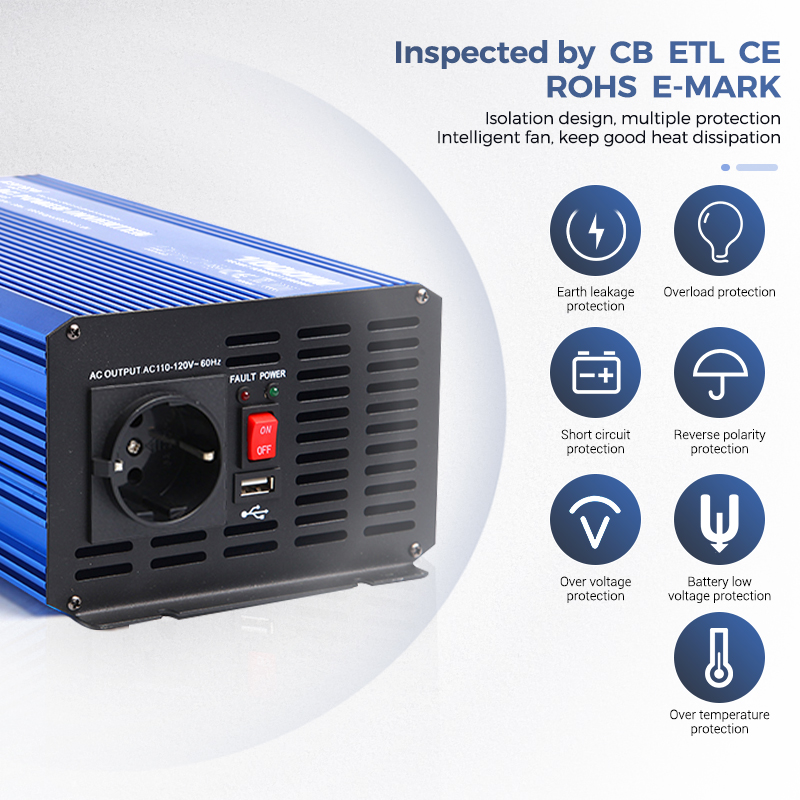
A 1000W inverter is the central hub that brings stored energy to life. It transforms the DC (direct current) from batteries into AC (alternating current) — the standard form of electricity used by most home and industrial equipment. But this conversion is not just a matter of switching current types; it's about delivering stable, efficient, and safe power suitable for sensitive and high-performance devices.
DC to AC Conversion and Power Delivery
The power inverter's primary function is to produce clean and stable AC power that can run lights, fans, laptops, or even compact refrigeration systems. In a 1000W system, power output is ideal for small-to-medium setups such as RVs, boats, or backup systems. It ensures that appliances receive consistent voltage and frequency, even when battery levels fluctuate.
Pure Sine Wave vs. Modified Sine Wave
Modern 1000W inverters typically use pure sine wave output, which mimics the quality of grid electricity. This is essential for powering devices with motors, compressors, or sensitive electronics, as it reduces noise, heat, and potential malfunctions. In contrast, modified sine wave inverters are more economical but may not perform well with precision equipment — a key factor to consider when building an off-grid system.
Protection and Reliability Features
Safety is a top priority in inverter design. A robust 1000W inverter includes multiple protection mechanisms:
Overload and short-circuit protection to prevent equipment damage.
Low-voltage shutdown to protect batteries from deep discharge.
Over-temperature sensors to avoid overheating under continuous load.
These features collectively ensure long-term stability and user safety in dynamic environments.
Efficiency and Thermal Management
Efficiency determines how much energy is wasted during conversion. High-quality inverters achieve conversion efficiencies above 90%, reducing energy loss and heat buildup. Many models incorporate intelligent cooling fans or aluminum alloy housings to dissipate heat effectively, ensuring consistent performance even in hot climates.
In essence, the power inverter is the “power translator” — converting, protecting, and stabilizing energy to keep every connected load running seamlessly. But to achieve continuous and balanced operation, it needs a steady and well-regulated energy supply — a task handled by the solar charge controller.
Why Is a Solar Charge Controller Essential for Managing Energy Flow?
A solar charge controller acts as the intelligent gatekeeper between solar panels and the battery bank. Without it, fluctuations in solar input could easily overcharge or damage batteries — leading to reduced capacity and shorter lifespan. In a 1000W inverter system, the solar charge controller ensures that every watt of sunlight is efficiently captured, converted, and stored for later use, forming the foundation of a sustainable and balanced energy cycle.
Regulating Solar Input for Battery Protection
Solar panels can generate varying voltage and current depending on sunlight intensity, angle, and temperature. A charge controller stabilizes this input, ensuring that batteries receive only the safe, optimal level of energy. By constantly adjusting charging parameters, it prevents overcharging, deep discharge, and reverse current flow at night, thus extending the lifespan of batteries and maintaining system efficiency.
MPPT vs. PWM — Choosing the Right Technology
There are two main types of controllers: PWM (Pulse Width Modulation) and MPPT (Maximum Power Point Tracking).
PWM controllers are cost-effective and suitable for smaller setups, maintaining a steady voltage connection between panels and batteries.
MPPT controllers, however, deliver up to 30% higher efficiency by dynamically tracking the panel's optimal power point, especially in low-light or cold conditions.
For a 1000W inverter setup, where energy utilization and battery longevity are priorities, MPPT controllers are the preferred choice — maximizing solar harvest and minimizing waste.
System Matching and Load Coordination
The charge controller must be carefully matched with both the power inverter and the battery bank. Selecting the right voltage rating (12V, 24V, or 48V) and current capacity ensures smooth energy flow without bottlenecks or overheating. In well-designed systems, the controller also communicates with the inverter to maintain consistent output — adjusting charging or discharging rates based on load demand and available solar energy.
Protection Logic and Monitoring Functions
Beyond regulation, modern solar charge controllers integrate advanced safety and monitoring features. These include:
Reverse polarity and short-circuit protection,
Temperature compensation for precise charging,
Real-time data display for voltage, current, and battery status.
Some models even include communication ports for remote monitoring, enabling users to analyze performance data and optimize system operation.
By ensuring stable and intelligent power flow, the solar charge controller becomes the bridge that connects solar generation and energy storage, guaranteeing that every component — from panels to inverter — works in harmony. Yet, even the most optimized solar input sometimes needs backup support, and that's where the battery charger and battery monitor come into play.
How Do Battery Chargers and Monitors Ensure System Reliability and Longevity?
In an off-grid or hybrid power system, batteries are the energy reservoir — storing electricity from solar panels or the grid and releasing it when needed. But without proper charging and monitoring, even high-quality batteries can degrade quickly. That's why a battery charger and a battery monitor are indispensable partners to the 1000W inverter and solar charge controller, ensuring the system runs efficiently, safely, and sustainably over time.
Intelligent Multi-Stage Battery Charging
Unlike traditional chargers that provide a constant voltage, intelligent battery chargers use a multi-stage charging algorithm to maximize performance and lifespan.
Bulk Stage: The charger delivers maximum current to quickly restore most of the battery's capacity.
Absorption Stage: The voltage is maintained at a fixed level to top up the remaining charge carefully.
Float Stage: Once fully charged, the charger maintains a small trickle current to keep the battery at 100% without overcharging.
This precise management prevents sulfation, overheating, and capacity loss, making it especially important in solar-based systems where power input can fluctuate throughout the day.
In many setups, CARSPA's advanced battery chargers include temperature compensation and auto-switching between AC and DC sources — ensuring batteries stay charged whether solar energy is available or not.
Battery Monitoring for Real-Time Insights
A battery monitor acts as the “control panel” of the power system. It continuously measures parameters such as voltage, current, state of charge (SOC), power consumption, and remaining capacity. This information is essential for preventing deep discharge — one of the main causes of premature battery failure.
Modern monitors also store historical data, helping users detect performance trends, track daily energy usage, and identify issues before they escalate. For example, sudden voltage drops or inconsistent current flow might indicate a failing cell or wiring problem. Some high-end models even support Bluetooth or RS485 communication, allowing data to be viewed remotely on mobile devices or central dashboards.
Data Feedback and Preventive Maintenance
One of the biggest advantages of integrating a smart monitoring system is data-driven maintenance. Continuous data feedback allows predictive actions — such as adjusting charging cycles, balancing loads, or scheduling battery replacements before failure occurs. This not only reduces downtime but also helps maintain overall system efficiency.
Moreover, combining the monitor's data with the inverter and controller's input allows the system to self-optimize — automatically regulating charge and discharge cycles based on real-time performance and environmental conditions.
Efficiency and Lifespan Optimization
Well-managed charging and monitoring can increase a battery's usable life by up to 30–50%, depending on chemistry and usage patterns. Properly monitored batteries deliver consistent voltage and stable output to the 1000W inverter, resulting in fewer interruptions, smoother operation, and reduced maintenance costs.
Together, the battery charger and battery monitor form the intelligent health system of the power setup — ensuring that stored energy remains reliable, safe, and ready for use whenever it's needed. But even with the best components, true reliability depends on how effectively the system is integrated and configured as a whole.
What Are the Key Integration Tips for a Stable and Efficient 1000W Off-Grid Power Setup?
A well-performing off-grid energy system depends not only on high-quality components — like the 1000W inverter, solar charge controller, battery charger, and battery monitor — but also on how these parts are integrated. Proper design, wiring, and protection can dramatically improve safety, efficiency, and reliability, ensuring that the system operates seamlessly in real-world environments.
System Wiring and Electrical Protection
The foundation of any reliable system is safe, efficient wiring. Every connection between panels, batteries, controllers, and the inverter must be properly rated and protected.
Wire Sizing: Undersized cables cause voltage drops and power losses. Always calculate wire diameter based on current load and total distance.
Fuse and Breaker Protection: Each major circuit should include fuses or DC circuit breakers to prevent damage from short circuits or overloads.
Grounding: Proper grounding minimizes the risk of electric shock and interference, particularly in systems exposed to humidity or vibration (like RVs or boats).
Isolation Switches: Installing disconnect switches for the battery and solar inputs allows safe maintenance and emergency shutdowns.
These protection measures not only safeguard equipment but also reduce system downtime caused by electrical faults.
Load Distribution and Energy Management
A 1000W inverter can power a range of devices — lights, small appliances, tools, or communication equipment — but effective load management ensures the most critical functions always stay powered.
Priority Loads: Identify essential loads (e.g., lighting, communication) and connect them to dedicated circuits.
Smart Power Allocation: Avoid running multiple high-power appliances simultaneously to prevent inverter overload.
Energy Efficiency Practices: Using LED lighting, low-power fans, and efficient devices can extend battery runtime and system longevity.
An integrated setup may also include programmable load outputs from the solar charge controller, automatically cutting off non-essential loads during low battery conditions — maintaining system stability even in challenging weather.
Monitoring, Data Integration, and Optimization
The most advanced off-grid systems are those that think for themselves. By connecting the battery monitor, charge controller, and inverter via communication interfaces, users can create a smart, data-synchronized network.
The inverter reports power demand in real time.
The controller adjusts solar input and charging parameters accordingly.
The monitor tracks overall energy balance and issues alerts if anomalies occur.
This interconnected intelligence enables dynamic energy optimization, balancing input and output automatically to prevent over-discharge and maximize solar utilization. It also simplifies troubleshooting, as performance data is consolidated in one view.
Example of a Typical 1000W Solar Power Setup
A compact off-grid system might include:
2 × 300W solar panels
1 × MPPT charge controller (30A)
1 × 1000W pure sine wave inverter
1 × 12V 200Ah deep-cycle battery
1 × battery charger for backup AC input
1 × digital battery monitor for real-time tracking
Such a system can easily power essential loads in a cabin, vehicle, or workshop. With proper wiring, fuses, and monitoring, it provides continuous, clean energy — even in remote environments with unstable or no grid access.
Maintenance and Long-Term Stability
Routine maintenance is the final step in ensuring long-term reliability. Check terminal tightness, clean solar panels regularly, and monitor temperature levels inside enclosures. Firmware updates for smart controllers and monitors can also enhance system accuracy and protection logic over time.
When designed and maintained correctly, a 1000W inverter system becomes a self-sustaining, intelligent power network, capable of delivering years of efficient, safe, and independent operation.

Conclusion
Building a Reliable Solar Power Ecosystem with CARSPA
The pursuit of energy independence and sustainability has made compact, intelligent power systems more essential than ever. A well-integrated combination of a 1000W inverter, solar charge controller, battery charger, and battery monitor represents not just a collection of components — but a coordinated energy ecosystem designed to deliver stable, safe, and efficient power wherever it's needed.
Synergy Between Conversion, Storage, and Control
At the heart of every successful off-grid setup lies synergy.
The 1000W inverter acts as the power converter, turning stored DC energy into usable AC electricity.
The solar charge controller ensures clean and optimized charging, protecting the battery from irregular solar input.
The battery charger provides backup support when solar energy is insufficient, maintaining battery readiness.
The battery monitor serves as the system's intelligence center, tracking performance, alerting users to issues, and ensuring that every watt is used wisely.
This closed-loop integration ensures that energy is harvested, stored, converted, and managed with precision, resulting in maximum uptime and long-term reliability.
From Off-Grid Cabins to Mobile Power Solutions
The modular nature of a 1000W inverter system makes it adaptable across multiple scenarios — from remote homes and RVs to marine systems and portable workstations. By scaling battery capacity or adding more solar panels, users can easily expand their systems without redesigning the entire setup. This flexibility, combined with intelligent control, makes such systems the ideal choice for regions with unstable grid access or sustainability goals.
Efficiency, Safety, and Future Readiness
The integration of advanced technologies like MPPT control, digital monitoring, and smart thermal management reflects the evolution of solar and battery systems toward automation and self-optimization. These features not only improve energy efficiency but also provide proactive protection — extending the lifespan of every connected component. As renewable energy continues to advance, systems that incorporate monitoring and adaptive intelligence will define the next generation of reliable off-grid solutions.
Empowering Energy Independence with CARSPA
Building a dependable solar power system requires both technical precision and high-quality components. With years of expertise in renewable energy electronics, CARSPA delivers comprehensive solutions — including 1000W inverters, solar charge controllers, battery chargers, and battery monitors — engineered for durability, safety, and performance.
From small-scale mobile setups to long-term residential or commercial systems, CARSPA products empower users to achieve true energy autonomy — efficiently, intelligently, and sustainably.