Why Is a Solar Charge Controller Essential for Reliable Outdoor Photovoltaic Systems?
Introduction
In outdoor photovoltaic systems, the solar charge controller plays a central role in ensuring efficiency, stability, and long-term reliability. A solar charge controller is not just a connection between solar panels and batteries; it is the intelligent manager that regulates charging, prevents overcharging, and protects against deep discharging. For outdoor applications—whether in remote monitoring stations, agricultural irrigation systems, or mobile power solutions—the controller ensures that the entire solar setup runs smoothly under changing environmental conditions.
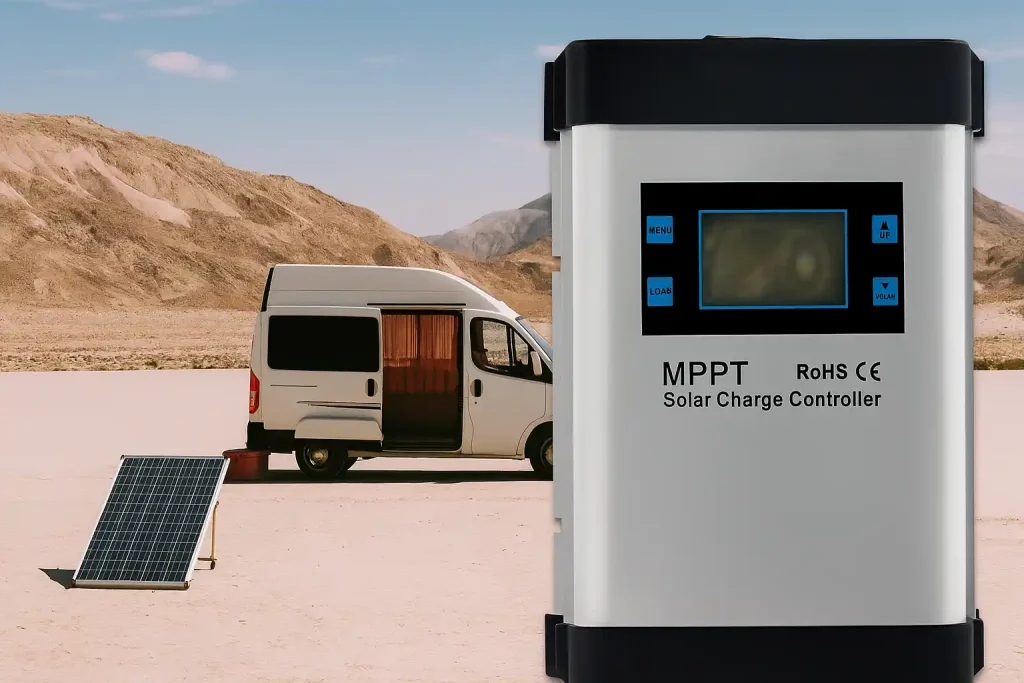
Unlike traditional power regulation devices, a modern solar charge controller adapts to variable sunlight intensity, fluctuating temperatures, and different battery chemistries. It manages energy conversion in real time, balancing the needs of storage and consumption. This function is especially important in outdoor environments where power demand is continuous, but sunlight supply is inconsistent.
As outdoor projects expand in scale and complexity, the demand for robust, high-efficiency solar charge controllers continues to grow. They not only help extend battery lifespan and maximize energy harvest but also provide safety features critical for reliable operation. By acting as the brain of the photovoltaic system, a solar charge controller turns solar energy into a sustainable and dependable source of power for diverse outdoor scenarios.
What Is a Solar Charge Controller and Why Is It Vital for Outdoor Photovoltaic Systems?
A solar charge controller is the heart of any photovoltaic system that relies on batteries for energy storage. Its primary task is to regulate the flow of energy between solar panels, batteries, and connected loads. Without a charge controller, the system risks overcharging during peak sunlight or discharging too deeply at night—both of which shorten battery lifespan and reduce system reliability.

Protecting Batteries from Damage
One of the most important functions of a solar charge controller is battery protection. Outdoor projects often use expensive deep-cycle batteries that must operate consistently under harsh conditions. The controller monitors charging voltage and current, ensuring that the battery never receives more energy than it can safely store. Similarly, it prevents deep discharges that could cause permanent capacity loss.
Ensuring Stable Outdoor Operations
Outdoor photovoltaic systems face a wide range of challenges—temperature fluctuations, unpredictable sunlight, and irregular energy demand. A solar charge controller acts as a stabilizer, adjusting energy flow according to system requirements. This means that during cloudy days, it optimizes charging efficiency, while during sunny peaks, it prevents overheating and excessive current.
Extending System Lifespan and Efficiency
By balancing input and output, the solar charge controller enhances the overall efficiency of the photovoltaic system. It ensures maximum power harvesting from the panels and distributes it effectively to the battery and load. This optimization directly translates into longer system lifespan and reduced maintenance costs, which are critical for outdoor installations where servicing may be difficult or costly.
How Does a Solar Charge Controller Improve Efficiency and Protect Outdoor Solar Installations?
A solar charge controller is not only a regulator but also an efficiency booster for outdoor photovoltaic systems. By intelligently managing the flow of power, it ensures that every unit of energy generated from the solar panels is utilized effectively. In remote or outdoor applications, where reliability is a must, this role becomes even more critical.
Maximizing Energy Harvest
Modern charge controllers, particularly MPPT (Maximum Power Point Tracking) types, are designed to track the optimal voltage and current point of solar panels. This allows the system to draw the maximum possible energy even when sunlight intensity is low or inconsistent. Compared with older PWM controllers, MPPT controllers can increase efficiency by 20–30%, making them especially valuable in outdoor projects where energy availability fluctuates.
Protecting Against Harsh Outdoor Conditions
Outdoor solar systems are often exposed to heat, dust, humidity, and mechanical stress. A charge controller offers protection features such as overload prevention, short-circuit protection, reverse polarity safeguards, and temperature compensation. These features reduce the risk of equipment failure and ensure stable operation, even in demanding climates.
Enhancing Battery Health and Safety
Battery banks are a significant investment in photovoltaic setups. A charge controller not only manages charging and discharging but also applies multi-stage charging algorithms—bulk, absorption, and float—to extend battery lifespan. This precise control reduces sulfation, overheating, and other common battery issues, ultimately lowering replacement and maintenance costs.
Supporting Continuous Outdoor Power Supply
Outdoor applications such as agricultural irrigation pumps, surveillance systems, or mobile lighting require uninterrupted energy. By smoothing fluctuations in input and output, the charge controller provides a steady energy supply, ensuring these critical systems operate without downtime.
What Types of Solar Charge Controllers Are Commonly Used in Photovoltaic Applications?
Solar charge controllers come in different types, each suited to specific outdoor applications and photovoltaic system designs. Understanding the differences is essential for selecting the right device for long-term, efficient, and safe performance.
PWM (Pulse Width Modulation) Controllers
PWM controllers are the basic and cost-effective option. They regulate charging by gradually reducing the amount of power flowing into the battery as it approaches full capacity. While simple and reliable, PWM controllers work best in small-scale systems where panel voltage closely matches the battery voltage. For outdoor projects such as small lighting systems or standalone monitoring devices, PWM controllers can still provide dependable service at a lower cost.
MPPT (Maximum Power Point Tracking) Controllers
MPPT controllers represent the advanced and more efficient solution. They constantly monitor solar panel output and adjust the operating point to harvest maximum energy, even under changing sunlight conditions. In larger outdoor photovoltaic systems—such as irrigation pumps, off-grid cabins, or telecommunications sites—MPPT controllers are the preferred choice. Their efficiency boost of up to 30% compared with PWM makes them ideal for environments where sunlight availability is variable and energy demand is high.
Hybrid Controllers with Advanced Features
Some modern solar charge controllers integrate hybrid functions, such as remote monitoring, data logging, load management, and even system diagnostics. These smart controllers are designed for outdoor projects that require not only reliability but also real-time control and visibility. For businesses managing multiple outdoor installations, hybrid controllers simplify maintenance and ensure that problems can be detected before they cause system downtime.
Matching Controllers to Applications
Choosing between PWM and MPPT often comes down to system size, budget, and environmental conditions. For small-scale or budget-sensitive outdoor projects, PWM is a practical solution. For professional, large-scale, or critical outdoor photovoltaic systems, MPPT controllers are the clear choice due to their higher efficiency and adaptability.
Why Are Solar Charge Controllers Essential for Reliable Outdoor Energy Storage and Utilization?
For any outdoor photovoltaic system, storing and utilizing energy efficiently is just as important as generating it. The solar charge controller is the device that ensures energy storage is safe, balanced, and reliable, making it indispensable for outdoor projects of all sizes.
Optimizing Battery Charging Cycles
A solar charge controller applies multi-stage charging—bulk, absorption, and float modes—to keep batteries in optimal condition. In outdoor environments, where temperature and sunlight vary dramatically, this precise control helps avoid undercharging or overcharging. Proper charging cycles not only extend battery lifespan but also provide stable power availability for outdoor equipment.
Preventing Power Loss and System Downtime
In remote or outdoor areas, uninterrupted power is critical. A charge controller prevents deep discharges, which can leave batteries unable to deliver the necessary current for outdoor devices like irrigation pumps, lighting systems, or surveillance cameras. By maintaining minimum charge levels, it ensures that energy is always available when needed.
Supporting Different Battery Chemistries
Modern charge controllers are designed to work with various battery types, including lead-acid, gel, AGM, and increasingly, lithium-ion. Each chemistry has its own voltage requirements and charging behavior. By automatically adjusting charging profiles, the controller ensures batteries remain safe and efficient in different outdoor photovoltaic setups.
Balancing Energy for Outdoor Loads
Outdoor projects often involve irregular loads—pumps running at certain hours, lights switching on at night, or monitoring systems operating 24/7. A charge controller helps manage this by balancing charging and discharging in real time. This ensures that stored solar energy is distributed efficiently and outdoor systems can perform their tasks reliably.

How to Choose the Right Solar Charge Controller for Outdoor Photovoltaic Projects?
Selecting the right solar charge controller is critical for ensuring that an outdoor photovoltaic system performs efficiently, safely, and reliably over the long term. The right choice depends on system size, battery type, environmental conditions, and application needs.
Assessing System Size and Power Requirements
For small-scale outdoor projects, such as garden lighting or mobile charging setups, a PWM controller may be sufficient. However, for larger systems powering irrigation pumps, telecommunications towers, or off-grid cabins, an MPPT controller is the better option due to its higher efficiency and ability to handle larger solar arrays.
Considering Environmental Conditions
Outdoor systems are exposed to dust, humidity, heat, and voltage fluctuations. A reliable charge controller should include robust protection features such as overload prevention, reverse polarity protection, and temperature compensation. These features ensure stable performance in harsh climates where equipment failure would be costly.
Matching Battery Technology
Different outdoor applications use different battery chemistries. A modern solar charge controller should offer customizable charging profiles to suit lead-acid, gel, AGM, or lithium-ion batteries. This adaptability ensures safe charging and discharging while extending the service life of the battery bank.
Evaluating Smart Features for Outdoor Management
Advanced controllers often come with remote monitoring and data logging capabilities. These functions are particularly valuable for large outdoor installations spread across multiple sites. With real-time insights, operators can track system performance, identify issues early, and reduce the cost of on-site inspections.
Balancing Cost and Long-Term Value
While PWM controllers are more affordable, MPPT and hybrid models provide better efficiency, longer battery lifespan, and reduced downtime. In outdoor photovoltaic projects where reliability is critical, the higher upfront cost of an advanced controller often results in greater long-term savings.
Conclusion
A solar charge controller is the cornerstone of any outdoor photovoltaic system, ensuring that solar energy is harvested efficiently, stored safely, and delivered reliably to critical applications. From protecting batteries and extending their lifespan to optimizing power flow under changing outdoor conditions, the controller plays a decisive role in long-term system performance.
As outdoor solar projects continue to expand in scale and complexity, choosing a durable and efficient controller becomes more important than ever. The right device not only reduces operational risks and maintenance costs but also ensures continuous energy supply for diverse outdoor needs.
With proven expertise in photovoltaic solutions, CARSPA provides reliable solar charge controllers that combine advanced protection, intelligent energy management, and robust outdoor performance—helping projects achieve greater stability and sustainability in real-world environments.