
Why a Battery Monitor Is Crucial for RV and Solar Power Systems?
As mobile energy systems become more common—from off-grid solar cabins to fully equipped RVs—the need for smarter, safer, and more reliable power management tools has grown. At the heart of this transformation is the battery monitor—a device that tells you more than just voltage. It gives you real-time visibility into how much energy you have, how much you’re using, and how much time you have left before you run out.
Whether you’re navigating remote terrain in a campervan or managing solar-powered appliances in an off-grid home, guessing your battery status can lead to unnecessary risks. Over-discharge, loss of backup power, or even premature battery failure are all common issues when users lack proper monitoring tools. A modern battery monitor eliminates the guesswork, allowing users to make informed decisions that protect both their equipment and their energy supply.
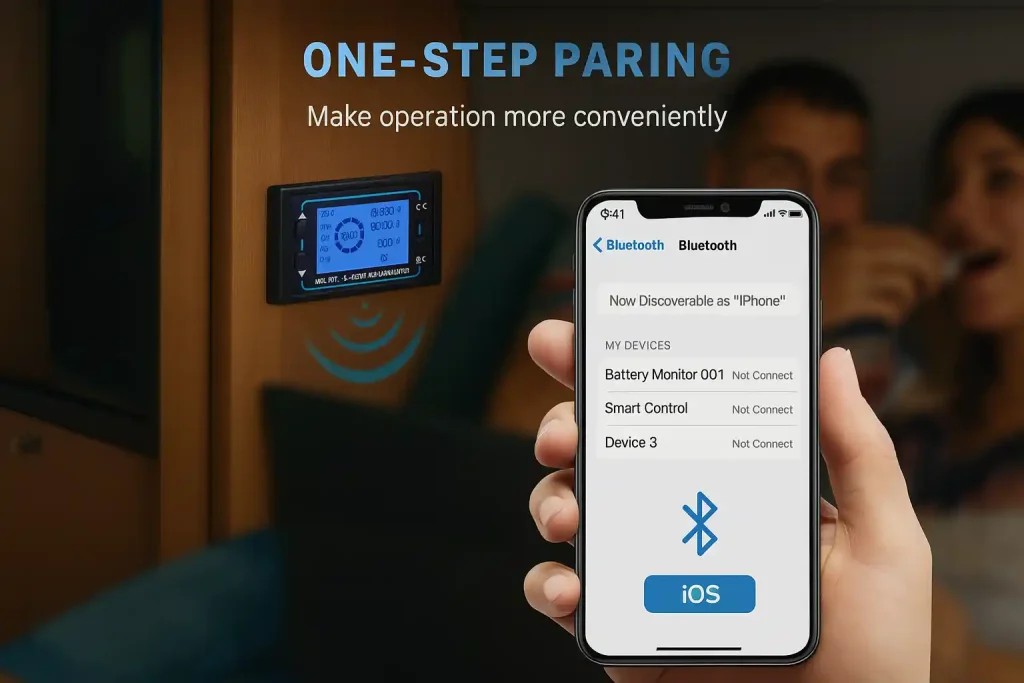
Unlike traditional analog meters or battery indicators that offer vague signals, advanced monitors provide detailed data on voltage, current, amp-hours consumed, charging status, and state of charge (SOC). Many models also include smart features like Bluetooth connectivity, historical data logging, mobile app control, and configurable alerts—ideal for both casual users and professionals.
In this article, we’ll explore the most important questions around battery monitors: what they do, why they’re essential, what features to look for, and how to choose the right one for your system. Whether you're powering a solar installation or living full-time in your RV, understanding how a battery monitor works can be the difference between power security and power failure.

What Does a Battery Monitor Do in an RV or Off-Grid Solar System?
Your Energy Dashboard on the Go
In any RV or off-grid solar setup, the battery monitor serves as a critical diagnostic tool. It provides real-time data on how much energy is available, how fast it’s being consumed, and whether charging systems are working efficiently. While solar panels and batteries are core hardware, the battery monitor acts like a dashboard—giving you immediate visibility into energy performance and health.
What It Measures and Why It Matters
A standard battery monitor tracks essential parameters like voltage, current, power consumption (in amps or watts), and state of charge (SOC). This information is especially vital for RV users or off-grid systems where the power supply is limited and every amp counts. Monitoring amp-hours used, remaining battery capacity, and discharge rates helps prevent full depletion—a leading cause of battery damage.
Advanced Features for Smarter Management
Modern RV battery monitors often go beyond the basics. Many models integrate with shunt-based systems for high-accuracy readings and support lithium-ion, AGM, and lead-acid batteries. Features like historical logging, mobile app connectivity, and customizable alerts allow users to fine-tune energy management. For solar users, a solar battery monitor ensures energy harvested during the day is stored and used efficiently.
Why It’s Indispensable
In remote locations or while traveling, guessing your battery status is not an option. A reliable battery monitor offers transparency and control, helping users avoid costly battery failures and stay powered wherever they go. It’s not just a convenience—it's a critical safeguard for system stability.
Why Is Accurate Battery Monitoring Critical for RV and Solar Applications?
Preventing Unexpected Power Loss
In off-grid solar setups or RV electrical systems, running out of power isn’t just inconvenient—it can be critical. Without an accurate battery monitor, users often rely on vague indicators like LED bars or voltage readings, which offer limited insight. Voltage alone doesn’t reveal true state of charge, especially with lithium batteries. Only a precise monitor that tracks amp-hours in and out can alert users when the system is close to depletion, allowing for timely decisions to conserve or recharge.
Protecting Battery Health and Investment
Deep-cycle batteries, especially lithium or AGM types, are valuable assets in any off-grid or mobile energy system. Improper use—like over-discharge or repeated undercharging—can significantly shorten their lifespan. An accurate battery monitor enables users to stay within the safe operating range by triggering alerts for low state of charge, high discharge rates, or abnormal temperature conditions. This not only prevents damage but also ensures that the energy system performs optimally over time.
Energy Planning for Different Load Scenarios
In an RV or cabin setup, power demands change frequently—from quiet nights with minimal lighting to high-consumption periods using heaters, fridges, or inverters. A good battery monitor helps users plan energy use based on real-time data: how many hours remain at current consumption, which devices draw the most power, and when to recharge. For solar-powered systems, this helps align usage with production—using more during the day and conserving at night.
Better Off-Grid System Integration
For hybrid or smart power systems, accurate monitoring supports integration with solar charge controllers, inverters, or power management modules. Many solar battery monitors can transmit data to centralized displays or mobile apps, supporting load balancing, automation, and energy usage analytics. This level of control is especially useful in long-term off-grid installations or commercial RV setups.
How Do Different Types of Battery Monitors Work?
Basic Voltage Monitors: Simple but Limited
The most entry-level battery monitors rely on voltage readings to estimate battery capacity. These devices are inexpensive and easy to install, but they lack precision—especially with modern lithium batteries, whose voltage remains relatively flat over much of the charge cycle. While suitable for casual users or lead-acid batteries with predictable discharge curves, voltage-only monitors offer a limited picture and are prone to misjudging the real energy status.
Shunt-Based Monitors: The Gold Standard for Accuracy
For users who need detailed insights, shunt-based battery monitors are the preferred choice. These devices use a precision resistor (shunt) to measure the current flowing in and out of the battery bank. By accumulating amp-hours, they can calculate exact state of charge (SOC), battery capacity used, and remaining runtime based on actual loads. Shunt monitors are ideal for RV, campervan, marine, and off-grid solar systems, where accurate energy tracking is vital.
Smart Monitors with Bluetooth and App Integration
Many modern battery monitors now come equipped with Bluetooth connectivity and companion mobile apps. These smart battery monitors not only show real-time data like voltage, current, and SOC, but also allow users to track historical performance, configure alerts, and monitor battery temperature or health via their smartphones. This wireless access is especially valuable in RVs and remote cabins, where displays may be mounted in hard-to-reach places.
Compatibility Across Battery Types
A quality battery monitor should support various battery chemistries, including lithium-ion (LiFePO4), sealed lead-acid (SLA), AGM, and gel batteries. Shunt-based and smart monitors often allow users to set battery-specific parameters, improving the accuracy of SOC calculations and alert thresholds. In solar systems, this ensures the monitor complements the charge controller and inverter without conflict.
Choosing the Right Technology for Your Application
When selecting a battery monitor, consider system size, usage frequency, and whether remote monitoring is required. For example, a basic voltage meter may work for weekend van trips, but full-time RVers or off-grid homes benefit greatly from a shunt-based, app-connected monitor with alarm functionality.
What Features Should You Look for in a Reliable Battery Monitor?
Precision and Real-Time Tracking
At the core of any effective battery monitor is its ability to provide accurate, real-time data. Look for models that offer high-precision readings for voltage, current, and amp-hours—preferably using a shunt-based measurement method. Real-time updates on power consumption and charging status help users avoid critical shutdowns and optimize their energy usage, particularly in solar and RV systems where every watt matters.
State of Charge (SOC) and Remaining Time Estimates
A quality battery monitor should calculate and display the state of charge (SOC) as a percentage, rather than just raw voltage. Some advanced monitors also estimate the remaining runtime based on current draw, giving users practical information such as “3 hours remaining at this load.” This is extremely useful for planning activities like charging appliances, using lighting systems, or operating inverters during off-grid conditions.
Alarms, Thresholds, and Logging
Configurable low-voltage or low-capacity alarms can prevent deep discharges that harm batteries. Similarly, high-temperature alerts are important for lithium battery safety. The best battery monitors also log data over time, allowing users to analyze energy trends, charging cycles, and battery degradation—ideal for long-term energy management and maintenance planning.
Display Interface and Usability
Ease of use is critical. Choose monitors with clear, backlit displays that show multiple parameters at a glance. For RV or solar cabinet installations, remote displays or panel-mount options help with visibility. Some systems offer touchscreen interfaces or multi-screen views to simplify monitoring for non-technical users.
Connectivity: Bluetooth, CAN, RS485, or Wi-Fi
For more complex setups, especially in solar or hybrid systems, communication options matter. Look for models with Bluetooth, RS485, or CAN bus interfaces that can connect to inverters, charge controllers, or external energy monitoring systems. Bluetooth-enabled monitors also allow users to view data via mobile apps, receive push notifications, and remotely configure alarms.
Durability and Installation Flexibility
Finally, a robust battery monitor should be built to last—featuring weather-resistant housings for harsh environments (e.g., marine or outdoor solar systems), and flexible installation options such as surface-mount or DIN-rail compatibility.
Where Are Battery Monitors Commonly Installed and How Easy Are They to Use?

Typical Installation Locations
In RVs, campervans, and off-grid solar cabins, battery monitors are typically installed near the power control center or close to the battery bank. This could be a central electrical panel, a cabinet near the inverter, or even inside a utility compartment where solar components are mounted. For solar-powered cabins or remote telecom towers, monitors are often positioned alongside charge controllers and breakers—providing a single access point for energy system management.
Wiring and Setup Requirements
Most modern battery monitors, especially those using shunt-based systems, require a bit of careful installation. The shunt is placed on the negative line between the battery and load/inverter, ensuring all current passes through for accurate measurement. While some systems are plug-and-play, others may require minor wiring and configuration (such as battery capacity input or chemistry selection). Still, most kits come with clear manuals and wiring diagrams, making installation manageable even for non-engineers.
User-Friendly Interfaces
Today's battery monitors are designed with ease of use in mind. Traditional models feature LCD screens that display key metrics such as voltage, current, and SOC. More advanced versions offer scrolling menus, multi-line displays, or app-controlled dashboards that present detailed statistics in an intuitive format. In RVs, monitors are often mounted in visible areas like the kitchen wall or control console, so users can check power levels with a glance.
Mobile Access and Remote Monitoring
Smart battery monitors with Bluetooth or Wi-Fi make monitoring even easier. With a mobile app, users can review battery performance without opening compartments or squatting by the power bay. Many apps also allow historical data tracking, firmware updates, and custom notifications. For solar professionals or fleet operators, this level of access helps with remote diagnostics and system optimization.
Maintenance and Daily Use
Once installed, most monitors require little ongoing maintenance. Occasional firmware updates, checking shunt connections, or recalibrating after a full battery cycle are typically all that’s needed. Daily use is simple: read the SOC, check load draw, and monitor alerts—ensuring peace of mind whether you’re on the road or off the grid.
Conclusion
Make Informed Energy Decisions with the Right Battery Monitor
In today’s mobile and off-grid energy systems, power awareness isn’t a luxury—it’s a necessity. A high-quality battery monitor bridges the gap between energy production and consumption, allowing users to understand, manage, and protect their battery banks with confidence. From RVs and campervans to remote cabins and solar-powered operations, choosing the right monitoring solution ensures longer battery life, fewer power interruptions, and a better return on your energy investment.
With modern features like real-time amp-hour tracking, app connectivity, customizable alarms, and wide compatibility across battery chemistries, today’s monitors are smarter and more accessible than ever. Whether you're upgrading your RV system or building a standalone solar installation, investing in the right monitoring tool can dramatically enhance efficiency and peace of mind.
For those seeking dependable, feature-rich power monitoring solutions, CARSPA offers a range of professional-grade battery monitors designed for RV, solar, and off-grid applications. Engineered for durability, precision, and usability, CARSPA’s devices help you take full control of your energy—wherever your journey takes you.


