Solar Charge Controller Guide: MPPT vs PWM, Features & Applications (5 Critical Aspects)
As solar energy becomes increasingly adopted across residential, commercial, and industrial sectors, the importance of system stability and battery protection grows equally critical. At the heart of every reliable solar power system is the solar charge controller—a device that ensures efficient energy transfer from panels to batteries while safeguarding against overcharging, short circuits, and voltage fluctuations. Whether powering remote agricultural operations or serving as part of a hybrid backup system, selecting and maintaining the right charge controller is essential for maximizing energy output, extending battery life, and avoiding costly downtime. This guide explores how solar charge controllers work, how to choose the right type, key application areas, and what features to prioritize for long-term reliability.
What Is a Solar Charge Controller and Why Is It Essential?
Ensuring Efficient and Safe Energy Flow
A solar charge controller acts as the gatekeeper between your solar panels and your battery bank. Its primary purpose is to regulate the voltage and current coming from the solar panels, making sure the batteries are charged efficiently and safely. Without it, batteries can easily be overcharged, leading to overheating, reduced capacity, or even permanent damage. In systems where energy storage is critical, this device becomes indispensable for maintaining system stability.
Core Protection Functions
Solar charge controllers protect batteries from multiple risks: overcharging, over-discharging, short circuits, and reverse polarity. Many models feature multi-stage charging, including bulk, absorption, and float stages. This staged approach improves charging accuracy and battery longevity by automatically adjusting the current flow according to battery conditions. Advanced controllers may also feature temperature sensors to prevent overheating during charging and adjust voltage thresholds accordingly.
Critical in All Off-Grid and Hybrid Systems
In off-grid solar systems—used in homes, farms, industrial monitoring stations, or telecommunication equipment—the charge controller is a fundamental component. It ensures energy is stored at the right time and in the right amount. Even in grid-tied hybrid systems, controllers play a key role when incorporating battery backup. Their ability to adapt to different battery types (lead-acid, gel, lithium-ion) and varying voltage levels makes them a flexible, scalable solution for different solar energy setups.

How Do You Choose Between MPPT and PWM Solar Charge Controllers?
What Are the Key Differences in Technology?
Solar charge controllers typically come in two types: PWM (Pulse Width Modulation) and MPPT (Maximum Power Point Tracking). Understanding their operational principles is essential for selecting the right one.
PWM controllers work by gradually reducing the amount of power sent to the batteries as they get closer to a full charge. They are simple, reliable, and cost-effective, but they cannot convert excess panel voltage into usable charging current.
MPPT controllers, by contrast, actively track the optimal voltage-current combination (the “maximum power point”) that solar panels can deliver. They then convert surplus voltage into additional charging current, significantly improving overall system efficiency—especially when solar array voltage is higher than battery voltage.
When Should You Use MPPT Over PWM?
MPPT controllers are ideal for:
Larger solar installations
Cold climates (where panel voltage is naturally higher)
Situations with variable sunlight or partial shading
Systems with mismatched panel and battery voltages (e.g., 48V panels charging 24V or 12V batteries)
MPPT can extract 20% to 30% more energy than PWM controllers under these conditions. That extra efficiency can make a big difference over time, especially in high-demand or critical applications such as agricultural irrigation systems, telecommunications, and off-grid industrial setups.
PWM controllers are best suited for:
Small systems with matched voltages (e.g., 12V panels with 12V batteries)
Warm, consistent climates
Applications with tight budget constraints
Portable or mobile setups where energy demands are low and predictable
How Do Cost and ROI Compare?
At first glance, PWM controllers are significantly cheaper—often 30% to 50% less than their MPPT counterparts. However, this upfront saving may be offset over time by lower charging efficiency, especially if solar energy is limited or panel voltages fluctuate throughout the day.
MPPT controllers justify their higher cost through faster battery charging, better energy harvest, and the ability to support larger arrays with fewer panels. Over a 5- to 10-year system lifespan, the return on investment from higher efficiency often makes MPPT the smarter choice, particularly in regions with lower average sunlight or space constraints for solar panels.
Final Selection Tips
Always base your decision on the specific needs of your system. Consider the following:
What is your battery bank size and voltage?
What is the open-circuit voltage of your solar panels?
Do you expect temperature variations or partial shading?
Is future expansion of your solar system a possibility?
Matching the right solar charge controller to your technical conditions will ensure stable, safe, and efficient energy storage.
Comparison Table: MPPT vs PWM Solar Charge Controllers
| Feature | MPPT (Maximum Power Point Tracking) | PWM (Pulse Width Modulation) |
|---|---|---|
| Efficiency | Up to 98%, adjusts to maximum power point | ~75–85%, fixed panel-to-battery voltage |
| System Size | Ideal for medium to large installations | Best for small, matched-voltage systems |
| Cost | Higher upfront cost, better long-term ROI | Lower initial cost, limited scalability |
| Voltage Flexibility | Supports higher panel voltage vs battery | Requires closely matched panel/battery volts |
| Energy Yield in Cold/Shaded Areas | Performs significantly better | Lower performance under variable conditions |
| Programmable Settings | Advanced, often customizable | Basic or limited settings |
| Best Use Case | Hybrid systems, industrial, telecom, irrigation | Small homes, mobile/RV, low-power needs |
Where Are Solar Charge Controllers Commonly Used?
Off-Grid Residential and Rural Installations
One of the most common uses of a solar charge controller is in off-grid residential systems—typically found in rural areas where connection to the utility grid is unavailable or unreliable. In these setups, the charge controller becomes the heart of the energy storage loop, ensuring that batteries are protected and energy is consistently available for lighting, refrigeration, water pumping, or communication equipment. These systems often use MPPT controllers to maximize energy harvest, especially during peak sunlight hours or in colder climates where voltage differences are more pronounced.
Agricultural and Irrigation Applications
In agriculture, solar-powered water pumps and irrigation solar charge controllers are widely used to reduce dependence on diesel generators or unstable grid supply. Solar charge controllers in these systems must handle variable loads and sometimes integrate with automatic timers or pressure sensors. The reliability of battery charging is crucial for ensuring water delivery during critical hours. In remote or arid regions, where solar is the only viable power source, charge controllers with dust- and moisture-resistant enclosures (e.g., IP65-rated) are especially valuable.
Telecommunications and Industrial Monitoring
Many telecom towers and remote industrial monitoring stations rely on solar systems for backup or even primary power. Here, solar charge controllers must be highly durable and support features such as remote monitoring, alarm triggering, and communication protocols like RS485 or Modbus. Even a short disruption in power can result in data loss or equipment failure, so advanced controllers with real-time diagnostics and data logging capabilities are commonly employed in these sectors.
Marine, Caravan, and Mobile Units
Charge controllers are also found in boats, RVs, caravans, and other mobile systems. In these use cases, the solar setup is often compact, and space is limited. Controllers must be lightweight, vibration-resistant, and easy to mount. Temperature fluctuations and high humidity can be common, so rugged design and built-in protections are critical. PWM controllers are often sufficient here, especially when panel and battery voltages are matched and energy demand is relatively low.
Emergency Backup and Hybrid Energy Systems
In regions prone to blackouts or natural disasters, hybrid solar systems are increasingly used as a backup power source. These systems typically integrate solar with grid or generator input. The charge controller manages both sources, prioritizing solar input while switching seamlessly to grid power when necessary. MPPT controllers are favored in hybrid setups for their flexibility and ability to maximize input from varying solar conditions.
What Features Should You Look for in a High-Quality Solar Charge Controller?
Multi-Stage Charging for Battery Longevity
One of the most critical features in any modern solar charge controller is multi-stage charging. This typically includes three or four stages:
Bulk: Rapidly charges batteries with full current until a specific voltage threshold is reached.
Absorption: Maintains voltage while gradually reducing current to ensure full saturation.
Float: Keeps batteries topped off without overcharging.
Equalization (optional): Occasionally used in lead-acid systems to rebalance cell charge.
These stages prevent battery sulfation and overcharging, greatly extending battery lifespan. For lithium battery systems, some controllers allow customized profiles to match charging curves precisely.
Real-Time Monitoring and Smart Interfaces
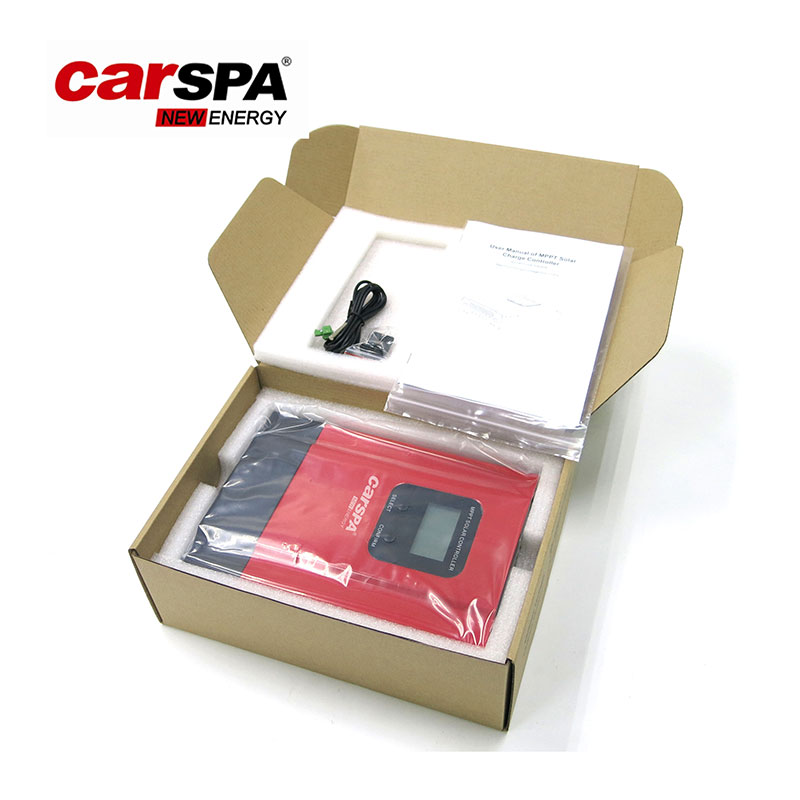
A high-quality solar charge controller should provide real-time system information, such as solar input voltage, battery voltage, current flow, and charging status. Look for units with LCD displays, LED indicators, or Bluetooth/Wi-Fi connectivity for mobile monitoring. Some advanced models offer integration with mobile apps or desktop software, enabling users to monitor data trends, set alarms, or adjust charging parameters remotely.
Remote communication protocols (like RS485, CAN bus, or Modbus) are also valuable in industrial or large-scale setups, allowing integration with data loggers, SCADA systems, or hybrid inverters.
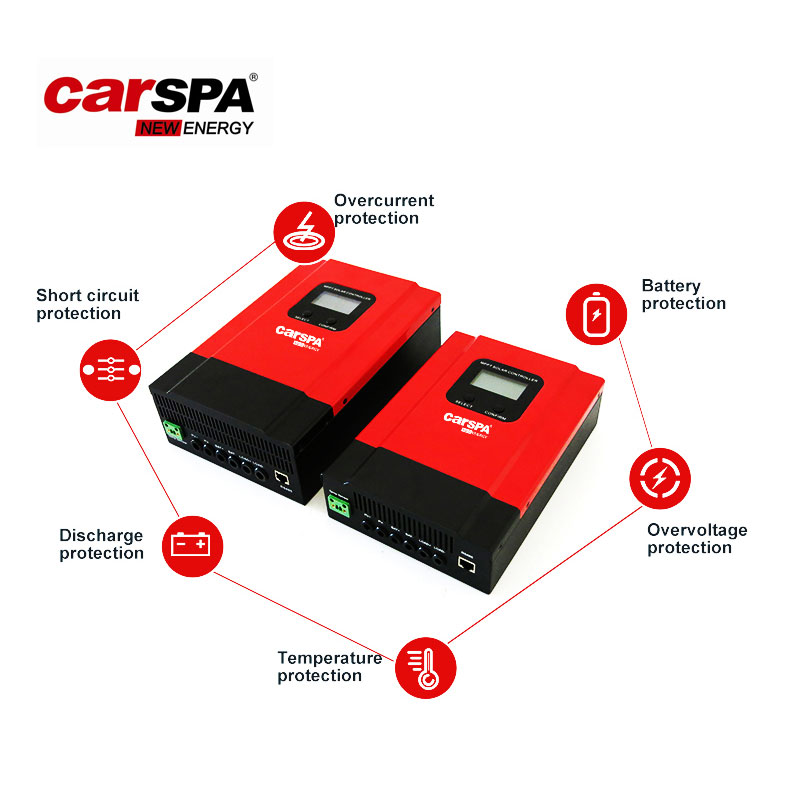
Built-in Protection and Safety Features
Safety is a top priority in solar energy systems. A reliable charge controller should include the following protections:
Overcharge and over-discharge protection
Reverse polarity protection
Short circuit and overload protection
Temperature compensation to adjust charge voltage based on ambient conditions
Controllers with automatic derating—reducing current flow when temperatures rise—are especially useful in hot climates, preventing heat damage and ensuring system stability.
Compatibility and Flexibility
High-end controllers support multiple battery types: sealed lead-acid (SLA), flooded, gel, AGM, and lithium (LiFePO₄, NMC). They also allow users to manually program charging parameters, a must-have for systems using newer or high-performance battery technologies.
Voltage auto-detection is another helpful feature, especially in flexible systems that may switch between 12V, 24V, or 48V configurations. This is especially beneficial for installers or users scaling their solar capacity over time.
Environmental Protection and Durability
For outdoor or harsh environment installations, IP-rated enclosures (such as IP22, IP65, or higher) ensure protection against dust, humidity, and light rain. Controllers with wide operating temperature ranges and fanless cooling designs are better suited for industrial or off-grid use, as they reduce maintenance needs and prevent mechanical failure.
How Do You Ensure Long-Term Reliability of a Solar Charge Controller?
Proper Sizing and System Matching
Ensuring long-term performance begins with selecting the right controller size. A solar charge controller must be correctly rated for both current (amperage) and system voltage. Undersizing the controller can cause it to overheat or fail prematurely, while oversizing increases cost unnecessarily without added benefit.
To determine the correct current rating, multiply the solar array’s short-circuit current (Isc) by a safety factor (typically 1.25 to 1.3). For example, if the array has a short-circuit current of 20A, you should choose a controller rated for at least 25A. Also, confirm the controller supports your system’s voltage (12V, 24V, or 48V), and ensure it matches your battery type.
Professional Installation and Wiring Best Practices
Improper installation is a common cause of failure in solar systems. Use appropriately sized wires to reduce voltage drops and heat buildup. Ensure tight, corrosion-resistant connections, especially in outdoor environments. Keep wire runs short wherever possible and follow polarity and grounding guidelines strictly.
Controllers should be mounted vertically in a well-ventilated, dry area, away from direct sunlight and water exposure. Some solar charge controllers come with built-in heat sinks or fanless designs to handle high temperatures more efficiently.
Routine Inspection and Preventive Maintenance
Over time, dust, moisture, or insects can accumulate inside outdoor enclosures or around wire terminals, potentially causing shorts or degraded performance. Perform the following checks every few months:
Verify voltage and current readings
Check for warning indicators or fault codes
Tighten terminals and clean off debris or corrosion
Inspect temperature sensors or external battery probes for proper contact
Advanced controllers with diagnostic logs can also provide insights into charge cycles, load activity, and energy trends, helping detect hidden inefficiencies early.
Software Updates and Remote Monitoring
For MPPT controllers, firmware updates can fix bugs, improve efficiency, or add compatibility with new battery chemistries. Manufacturers often release updates via USB, SD card, or remote connection. Controllers with cloud platforms or app connectivity allow users to receive real-time notifications, access historical data, and even run self-checks remotely—reducing the need for physical access, especially in remote installations.
Partnering With Reliable Manufacturers
Longevity isn’t only about hardware—it’s also about ongoing support. Choose brands that offer clear documentation, long-term warranty, and responsive customer service. Access to spare parts, manuals, and online troubleshooting resources can be a major advantage during system upgrades or repairs.
Conclusion
A solar charge controller is not just a support component—it’s the intelligent interface that makes solar systems viable, durable, and efficient. From selecting between MPPT and PWM types to evaluating smart monitoring features, protection standards, and installation best practices, each decision plays a role in ensuring stable long-term performance. As off-grid and hybrid solar solutions expand globally, the need for advanced, reliable charge controllers continues to rise. For those seeking dependable performance in diverse conditions, CARSPA offers a full range of PWM and MPPT solar charge controllers designed for professional applications. These controllers are engineered for safety, adaptability, and long-term reliability—making them a solid foundation for any solar power system.