What Types of Solar Charge Controllers Are Commonly Used in Outdoor Applications?
Introduction
In outdoor power systems, where sunlight is the only reliable source of energy, the solar charge controller plays a vital role in ensuring efficiency, stability, and safety. It acts as the “brain” between the solar panel, battery, and load—regulating how much energy is stored and how much is used. Without a proper charge controller, batteries can be overcharged under strong sunlight or excessively discharged at night, leading to performance loss and shortened lifespan.
As outdoor energy applications become more diverse—ranging from remote monitoring systems and camping setups to solar streetlights and communication towers—the choice of charge controller has become increasingly important. Each outdoor project operates under unique environmental conditions such as fluctuating sunlight, temperature extremes, and humidity. Therefore, selecting the right type of solar charge controller directly affects the system’s reliability and long-term cost-effectiveness.

This article explores the main types of solar charge controllers used in outdoor applications, their working principles, and the factors that determine which one best suits specific projects. Understanding these differences will help ensure your solar system operates at peak efficiency—wherever the sun shines.
Why Are Solar Charge Controllers Critical for Outdoor Power Systems?
Outdoor solar setups—such as lighting systems, surveillance stations, RVs, and remote monitoring equipment—face unpredictable environmental challenges. Intense sunlight, fluctuating temperatures, and limited maintenance access make energy management more complex than in controlled indoor environments. Here, the solar charge controller becomes indispensable for ensuring power reliability and system safety.
1. Regulating Energy Flow Between Panels and Batteries
A solar charge controller’s main function is to regulate voltage and current from solar panels to batteries. Without it, the battery could easily be overcharged during peak sunlight hours or deeply discharged overnight. This regulation maintains stable voltage levels, prevents battery damage, and ensures longer operational life even under harsh outdoor conditions.
2. Preventing Power Loss and System Instability
Outdoor systems often experience irregular sunlight exposure—partly shaded panels, dust accumulation, or sudden cloud cover. The charge controller dynamically adjusts current flow, maintaining a consistent energy supply and preventing fluctuations that could interrupt power to critical devices like communication towers or outdoor sensors.
3. Enhancing Battery Lifespan and Overall Efficiency
A high-quality solar charge controller optimizes how energy is stored and released, minimizing stress on the battery. Advanced models also feature temperature compensation, which automatically adjusts charging voltage in response to ambient temperature changes—a key factor for outdoor systems exposed to extreme weather. Over time, this smart management significantly improves energy efficiency and reduces maintenance frequency.

What Are the Main Types of Solar Charge Controllers?
Solar charge controllers generally fall into two main categories: PWM (Pulse Width Modulation) and MPPT (Maximum Power Point Tracking). While both perform the same fundamental role—controlling the charging process between solar panels and batteries—their working principles, efficiency levels, and ideal application scenarios differ significantly. Understanding these two types helps users choose the most suitable controller for specific outdoor conditions.
1. PWM (Pulse Width Modulation) Controllers — Reliable and Cost-Effective for Small Systems
PWM controllers use a straightforward technology that regulates voltage by switching the solar panel’s output on and off rapidly. This pulsing effect maintains a safe charging voltage for the battery while reducing power loss.
Ideal Scenarios: Small-scale or low-power outdoor setups, such as solar lighting systems, mobile charging stations, and camping gear.
Advantages: Simple design, affordable price, and low maintenance requirements make them practical for users who prioritize stability over efficiency.
Limitations: PWM controllers typically operate at lower efficiency, especially when the solar panel voltage differs significantly from the battery voltage. This means part of the available solar energy is not fully utilized.
2. MPPT (Maximum Power Point Tracking) Controllers — High Efficiency for Demanding Outdoor Systems
MPPT solar charge controllers use advanced algorithms to continuously track the optimal voltage-current point of the solar panel—known as the maximum power point. This allows the controller to convert excess panel voltage into additional charging current, maximizing the total power harvested.
Ideal Scenarios: Medium to large-scale systems such as off-grid cabins, communication towers, RV setups, and professional outdoor monitoring stations.
Advantages: Higher charging efficiency (up to 98%), better adaptability to variable sunlight conditions, and excellent compatibility with high-voltage solar arrays.
Limitations: MPPT controllers are more expensive and complex but provide long-term benefits through improved energy yield and system stability.
3. Quick Comparison: PWM vs MPPT
| Feature | PWM Controller | MPPT Controller |
| Efficiency | 70–80% | 95–98% |
| Cost | Lower | Higher |
| Ideal System Size | Small / portable | Medium to large |
| Temperature Performance | Moderate | Excellent |
| Suitability for Harsh Outdoor Environments | Basic | Superior |
| Recommended Use | Solar lights, basic RV kits | Off-grid cabins, telecom towers |
Whether the system is designed for a temporary outdoor campsite or a permanent remote power installation, the choice between PWM and MPPT determines how efficiently solar energy is converted into usable battery power.
How Do PWM and MPPT Controllers Perform in Outdoor Applications?
Outdoor solar power systems operate in environments that are far from predictable. From the blazing desert sun to humid coastal climates or mountain regions with rapid temperature shifts, performance consistency becomes the ultimate test for any solar charge controller. Both PWM and MPPT controllers have proven their reliability, but their effectiveness varies depending on the specific outdoor scenario.
1. Performance in Portable and Mobile Applications
Outdoor activities such as camping, RV trips, and off-grid expeditions often rely on lightweight, compact power setups. In these cases, PWM controllers are commonly preferred because of their simplicity, small size, and ease of installation. They efficiently manage charging for 12V systems where solar panel and battery voltages are closely matched.
However, when sunlight conditions fluctuate—like during shaded camping or cloudy days—MPPT controllers outperform PWM models. They track the most efficient power point even when solar input changes, ensuring consistent energy delivery to lights, refrigerators, or portable devices. For users who need stable power supply across varying terrains, MPPT technology provides a clear advantage.
2. Application in Fixed Outdoor Installations
In solar streetlight systems, remote monitoring stations, and communication towers, the demand for 24/7 power stability is higher. These systems often use larger solar panels and deep-cycle batteries. MPPT controllers are particularly effective here, as they can optimize power conversion throughout the day, even under low sunlight or partial shading. Their ability to handle higher input voltages also reduces cable losses—an important factor when panels and batteries are far apart.
In contrast, PWM solar charge controllers may suffice for small-scale installations or budget-sensitive projects where energy loss is acceptable. They perform well in stable, high-sunlight environments where efficiency is not the top priority.
3. Environmental Resistance and Durability
For outdoor applications, it’s not only about energy management but also about resilience. A high-quality controller must withstand dust, humidity, vibration, and extreme temperatures. Most industrial-grade MPPT controllers come with rugged enclosures and high IP protection ratings, ensuring long-term operation in deserts or coastal areas.
PWM models, while simpler, are often housed in durable plastic shells and perform reliably in moderate conditions. However, for professional systems exposed to harsh weather or requiring unattended operation, investing in a weatherproof MPPT controller ensures better long-term performance and lower maintenance needs.
4. Real-World Example of Efficiency Difference
In field tests, an outdoor monitoring system using a 500W solar array showed that an MPPT controller increased daily charging efficiency by 20–25% compared to a PWM controller. This difference becomes crucial in off-grid applications where every watt counts, especially during winter months or in cloudy regions.
Both PWM and MPPT solar charge controllers have proven their value in outdoor energy systems—but understanding their unique performance characteristics allows system designers to balance cost, efficiency, and durability based on project goals.

How to Select the Right Solar Charge Controller for Your Outdoor Project?
Choosing the right solar charge controller is not just about picking between PWM and MPPT—it’s about ensuring the entire outdoor system performs reliably under real-world conditions. The right choice depends on multiple factors: power requirements, installation environment, and long-term maintenance expectations. Below are key considerations and practical insights to guide outdoor system designers and users toward the most suitable option.
1. Match the Solar Charge Controller Type to System Size and Power Demand
The first step is to evaluate your system’s voltage and capacity.
Small systems (under 200W) — such as portable solar panels, small garden lights, or single battery setups—can use PWM controllers, which provide stable performance without unnecessary cost.
Medium to large systems (500W and above) — including outdoor monitoring stations, irrigation systems, and RV setups—should adopt MPPT controllers for higher conversion efficiency and more precise power management.
Matching your controller type to your system’s power scale ensures optimal efficiency and cost balance.
2. Consider Voltage Compatibility and Battery Type
A solar charge controller must handle the voltage of both solar panels and batteries.
If panel voltage exceeds the battery voltage significantly, MPPT controllers are the better choice—they convert excess voltage into additional charging current.
For systems with AGM, Gel, or LiFePO₄ batteries, ensure the controller supports the corresponding charging profiles. Many modern MPPT controllers allow users to select or customize the battery type for precise charging management.
Choosing the wrong voltage range or unsupported battery type can lead to inefficiency or even damage over time.
3. Evaluate Environmental and Durability Factors
Outdoor systems are constantly exposed to natural elements—sun, wind, dust, and rain.
Look for controllers with IP65 or higher protection ratings to prevent moisture and dust ingress.
In high-temperature regions, select models with temperature compensation and aluminum heat dissipation design to maintain stable performance.
For remote installations (e.g., solar surveillance or telecommunication stations), prioritize models with metal enclosures and industrial-grade components that can operate continuously for years without supervision.
Investing in environmental resilience upfront saves significant maintenance and replacement costs later.
4. Check for Advanced Features and Monitoring Options
Modern outdoor applications increasingly rely on smart monitoring and automation.
LCD Display & Indicators: Allow quick visual checks of charging status, battery level, and fault conditions.
Bluetooth or Wi-Fi Connectivity: Enables remote tracking via smartphone or PC—ideal for off-grid or hard-to-reach installations.
Load Control Functions: Some controllers automatically manage connected DC loads, turning them on or off according to battery voltage levels, optimizing system lifespan.
Selecting a controller with smart monitoring features improves operational visibility and reduces the risk of unexpected power loss.
5. Balance Budget, Efficiency, and Maintenance Costs
While PWM controllers are initially cheaper, MPPT controllers often deliver better long-term value. The higher energy yield, longer battery life, and reduced maintenance expenses can quickly offset the initial investment. For professional or commercial outdoor systems, the return on efficiency often justifies the upgrade to MPPT technology.
In short, selecting the right solar charge controller means balancing system size, environmental demands, and performance expectations. A well-matched controller ensures your outdoor solar setup operates safely, efficiently, and continuously—even in the most challenging conditions.
What Are the Long-Term Benefits of Choosing a High-Quality Solar Charge Controller?
Investing in a high-quality solar charge controller is not just about managing voltage—it’s about protecting your entire solar power system and ensuring sustainable, worry-free operation in outdoor environments. Over time, a reliable controller delivers measurable advantages in energy efficiency, durability, and overall system performance.
1. Maximized Energy Harvest and Efficiency
Premium MPPT solar charge controllers continuously track the solar array’s maximum power point, adjusting to changes in sunlight, temperature, and load. This precision allows the system to convert every possible watt into usable charging current—typically increasing overall energy yield by 20–30% compared to low-end models. In remote or weather-variable outdoor setups, this efficiency directly translates into longer operating hours and more reliable energy availability.
2. Extended Battery Life and Lower Replacement Costs
Batteries are often the most expensive component in an off-grid solar system. A quality charge controller optimizes charging stages—bulk, absorption, and float—while preventing overcharging and deep discharge. This extends battery lifespan significantly, often by several years. Over time, this reduces both replacement frequency and maintenance costs, ensuring long-term financial efficiency alongside technical performance.
3. Greater System Stability and Safety
Outdoor environments are unpredictable. Voltage spikes, wiring faults, or excessive heat can damage equipment and interrupt service. High-end controllers integrate multiple protection mechanisms, including short-circuit, reverse polarity, and over-temperature protection. These safeguards maintain system stability even under sudden environmental changes, protecting valuable components like inverters, lights, and sensors.
4. Reduced Maintenance and Downtime
For remote or industrial outdoor systems—such as communication towers, surveillance setups, or agricultural irrigation pumps—maintenance access is often limited. A durable controller with robust build quality, corrosion-resistant materials, and self-diagnostic functions can operate autonomously for years. Fewer breakdowns mean reduced operational downtime, higher reliability, and predictable performance under all conditions.
5. Strong ROI and Sustainable Power Management
Though initial investment in a premium controller is higher, the return on investment (ROI) becomes evident through longer component lifespan, lower maintenance costs, and consistent power output. For commercial outdoor installations, these savings often recover the added cost within the first few operational years. Furthermore, stable and efficient energy conversion supports long-term sustainability by minimizing energy waste and extending the usability of solar resources.
6. Trusted Performance with Proven Brands
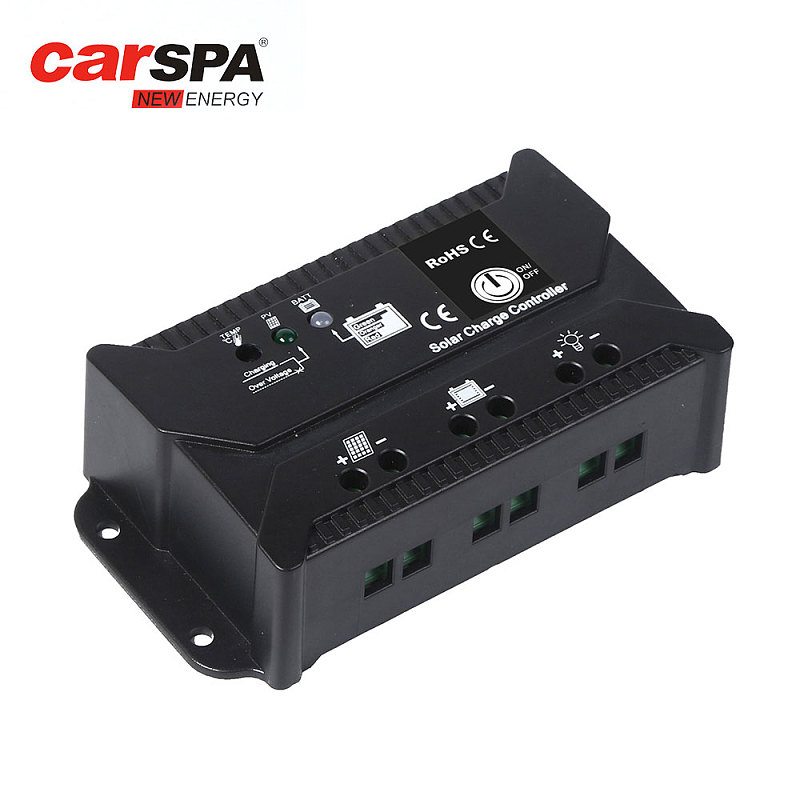
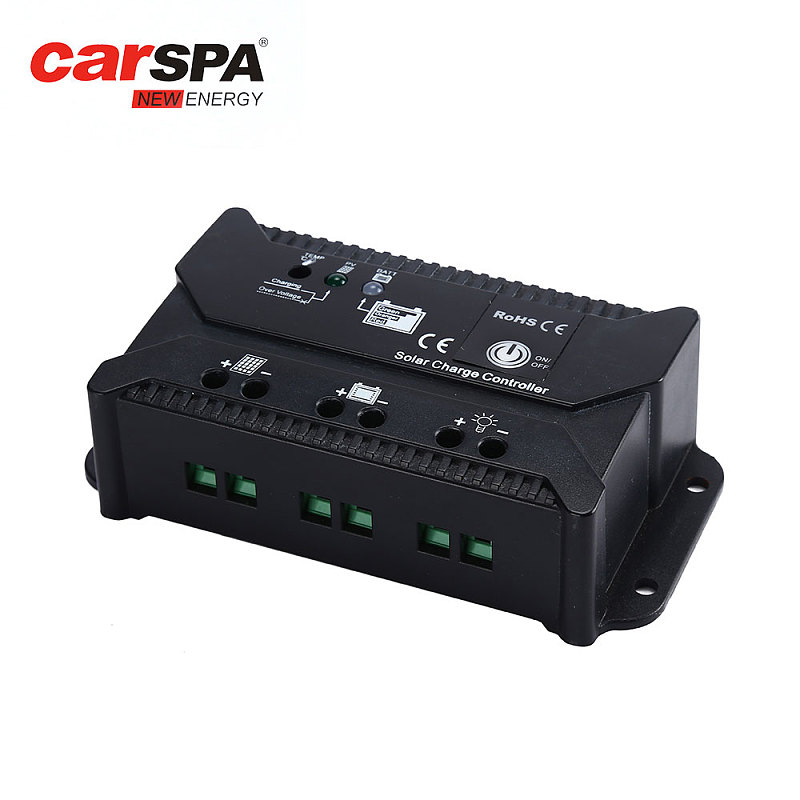
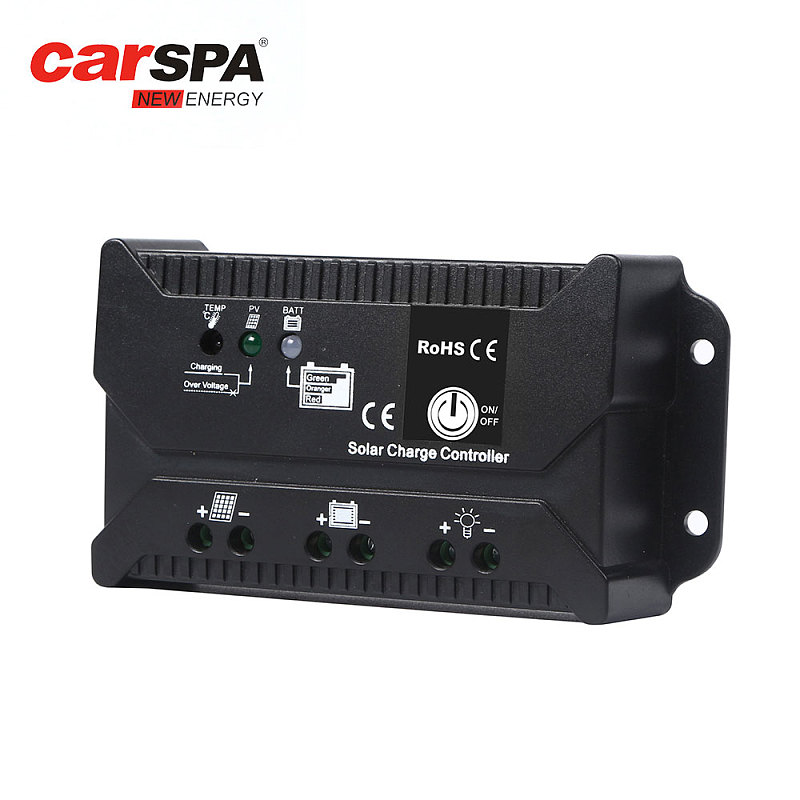
When outdoor systems require uninterrupted reliability, choosing trusted manufacturers makes a difference. CARSPA, with years of experience in solar energy solutions, provides both PWM and MPPT solar charge controllers designed for outdoor resilience and long-term performance. From compact RV systems to professional-grade off-grid installations, CARSPA controllers are engineered to deliver stable charging, smart protection, and enduring reliability—making them a dependable choice for diverse outdoor power applications.
Conclusion
Outdoor solar applications demand more than just sunlight—they require smart, durable, and efficient energy management. Whether it’s powering remote lighting systems, RV setups, or off-grid communication towers, the right solar charge controller ensures stable voltage regulation, longer battery life, and higher overall efficiency. Understanding the distinctions between PWM and MPPT controllers allows system designers and users to make informed decisions that align with project scale, environmental conditions, and performance goals.
As renewable energy continues to expand across outdoor environments, reliable control technology becomes the foundation for long-term success. CARSPA, with its experience in developing advanced solar power solutions, offers both PWM and MPPT controllers that meet diverse outdoor requirements—combining intelligent design, superior protection, and consistent performance under any weather conditions. By choosing the right solar charge controller, you’re not just powering your system—you’re investing in stability, safety, and sustainable energy for years to come.