
Why Combine a Solar Charge Controller and Inverter in Your Solar Power System? 5 Critical Questions Answered
Designing a reliable and efficient solar power system takes more than just choosing high-quality panels. Two critical components—the solar charge controller and the inverter—must work in harmony to ensure consistent power delivery, battery protection, and long-term energy savings. While each plays a distinct role, their integration unlocks performance benefits that go far beyond what they can achieve alone.
In this article, we explore the most important questions professionals ask when combining these two components: what each does, why their coordination matters, and how to choose the right pair for your application.
What Is the Role of a Solar Charge Controller in a Solar System?

Protecting the battery is just the beginning.
A solar charge controller is the unsung hero of any solar power system. Its main role is to act as the gatekeeper between your solar panels and the battery storage unit. Without it, batteries would be at risk of overcharging during peak sun hours or discharging too deeply at night—both of which drastically reduce battery lifespan and system stability.
Key Functions of a Solar Charge Controller:
Voltage Regulation & Overcharge Protection
When solar radiation is high, panels may output voltages far beyond what a battery can safely handle. The solar charge controller intercepts and moderates this energy, converting excess into heat or rerouting it. Modern MPPT (Maximum Power Point Tracking) controllers dynamically adjust to extract maximum power from solar panels while protecting battery banks from damage.
Prevention of Reverse Current
At night, without sunlight, solar panels can draw current back from the batteries, leading to unwanted discharge. Quality charge controllers include a blocking diode or smart circuitry to prevent this reverse flow, maintaining energy integrity.
Multi-Stage Charging Profiles
Advanced charge controllers support multi-stage charging (bulk, absorption, float, and equalization), tailoring power delivery to the battery's charge level. This not only prevents sulfation in lead-acid batteries but also enables optimal charge efficiency in lithium batteries.
System Monitoring and Smart Features
Many solar charge controllers now include LCD displays, Bluetooth/WiFi apps, or integration with remote monitoring systems. These features allow users to track input voltage, battery condition, current draw, load status, temperature, and system errors in real-time.
Importance for Long-Term System Health:
Installing a solar power system without a charge controller is like running a vehicle with no brakes. Even in simple off-grid applications like lighting or water pumping, ignoring battery protection will result in frequent replacements and unpredictable power delivery. For complex systems with variable sunlight conditions, temperature shifts, or large-capacity batteries, the role of a well-specified charge controller is absolutely critical to ensuring consistent and safe performance.
Why Do You Need an Inverter Alongside a Solar Charge Controller?
Solar panels and batteries produce DC power—but most equipment runs on AC.
While a solar charge controller ensures that batteries are safely charged and protected, the inverter plays a different yet equally essential role: converting the stored direct current (DC) power into alternating current (AC), which is required by most appliances and industrial machines. Without this conversion, solar energy remains locked in a form that many devices simply cannot use.

Core Functions of the Inverter:
DC to AC Conversion for Usable Power
The most fundamental job of an inverter is to convert 12V/24V/48V DC battery power into standard 230V or 120V AC power. This is what allows users to run everyday equipment—lighting, pumps, refrigeration units, communication systems, or industrial tools—using solar energy.
Pure Sine Wave vs. Modified Sine Wave
High-quality inverters produce pure sine wave output that mimics the smooth, clean electricity from the grid. This is critical for sensitive electronics like medical devices, computer systems, or variable-speed motors. In contrast, modified sine wave inverters may cause overheating, noise, or malfunction in such devices.
Load Prioritization and Smart Switching
Many advanced inverters now feature intelligent load prioritization, allowing critical systems to continue running even when power is low. Some also support automatic switching between solar, battery, and grid or generator inputs—ensuring energy continuity without manual intervention.
Off-Grid and Hybrid Operation
In off-grid systems, the inverter is the final power output source. In grid-tied or hybrid systems, it may feed excess energy back to the utility or work alongside other energy sources. Modern hybrid inverters also enable time-of-use management, allowing you to use solar during the day and battery at night for optimal efficiency.
The Inverter's Role in System Integration:
An inverter acts as the brain of the power delivery side of the solar system. When paired with a charge controller, the two create a feedback loop: the solar charge controller ensures the battery is optimally charged, and the inverter ensures that stored energy is delivered safely and efficiently to the load. Their cooperation minimizes energy loss, prevents overdraws, and adapts to changing conditions like cloud cover or power surges. Without the inverter, all the energy harvested and stored by the solar charge controller would remain inaccessible to AC-powered tools and appliances.
What Are the Benefits of Integrating Both Components in a Single System?
Compatibility means performance—and peace of mind.
A solar power system works best when its components are not just functional individually, but optimized to work together. Integrating a solar charge controller and inverter in a single system—either as physically separate but compatible units or as part of a hybrid all-in-one setup—brings significant operational, safety, and financial benefits.
Seamless Power Management and Energy Flow
When a charge controller and inverter are designed to communicate or are pre-matched from the same manufacturer, they can coordinate charging, discharging, and load delivery in real time:
Dynamic energy routing: The system can intelligently decide whether to charge batteries, feed loads directly, or draw supplemental power from the grid or generator.
Auto-failover mechanisms: In integrated setups, if the solar supply drops (e.g., during cloudy conditions), the inverter can seamlessly switch to stored battery power or alternate sources without interruption.
Load sharing and peak shaving: The system can prioritize critical equipment, reduce peak demand, and balance the energy load to minimize battery strain.
Simplified Installation and Configuration
Integration also makes physical deployment easier, especially for installers or non-specialist technicians:
Pre-configured parameters: Matched components often come with recommended settings, reducing the need for complex manual calibration.
Reduced wiring errors: Fewer connections mean fewer chances for miswiring or current mismatches.
Compact footprint: All-in-one systems or wall-mounted modular units save space—ideal for small rooms, containers, or mobile power units.
Enhanced Safety and Monitoring
Integrated systems often support unified monitoring platforms—via display panels, mobile apps, or remote interfaces:
Real-time alerts: Overvoltage, low battery, overheating, or inverter faults can all be detected early.
Historical performance data: Enables optimization, predictive maintenance, and return-on-investment analysis.
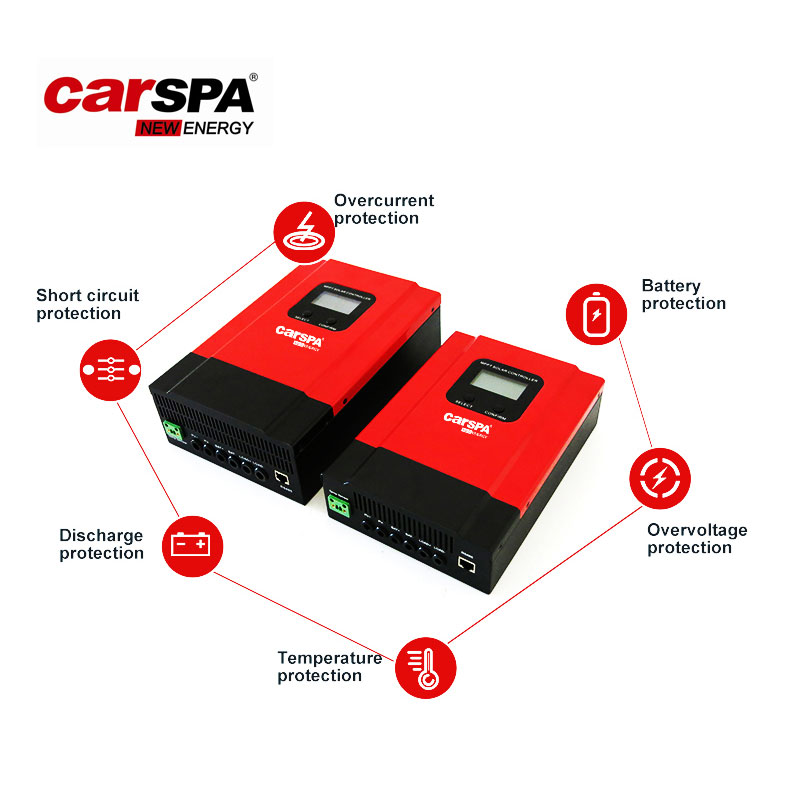
Protection protocols: Includes fail-safes such as overcurrent protection, short-circuit shutdowns, reverse polarity safeguards, and surge suppression.
Future-Proof and Scalable
Another major benefit is modularity. Integrated systems are typically designed to be scaled:
You can add more solar panels without changing the main controller-inverter backbone.
Battery storage can be upgraded or expanded later as energy needs grow.
Some systems allow firmware updates for performance improvements or compliance with evolving regulations.
In summary, integrating the solar charge controller and inverter streamlines the entire power conversion and management process—from sunlight capture to usable electricity—delivering a cleaner, safer, and more cost-effective solution for long-term use.
How Does This Configuration Improve Long-Term Reliability and ROI?
The right configuration saves money in the long run.
In solar systems, performance isn't only about daily energy output—it's about how well the system operates year after year. Pairing a solar charge controller with an appropriately selected inverter ensures not just day-to-day efficiency, but also long-term system durability and financial return on investment (ROI).
Enhanced Battery Life and Fewer Replacements
One of the most expensive parts of any solar system is the battery bank. Improper charging is a leading cause of battery failure, but integrated systems help address this by:
Preventing deep discharge: Charge controllers prevent batteries from dropping below critical thresholds, protecting battery cells from irreversible damage.
Avoiding thermal stress: Integrated thermal sensors adjust charging behavior based on temperature, reducing risk of overheating.
Ensuring balanced charging: Multi-stage charging ensures full battery saturation without overcharging, which maintains capacity over thousands of cycles.
By maintaining optimal battery health, you reduce the frequency of replacements—significantly lowering long-term ownership costs.
Reduced Downtime and Maintenance Costs
In commercial or off-grid applications, power interruptions can halt operations or damage equipment. Integrated systems offer:
Early warning and diagnostics: Real-time system monitoring identifies voltage spikes, inverter overdraws, or charge faults before they become critical.
Fewer moving parts and manual interventions: Pre-integrated systems require less technician time during setup and routine inspections.
Higher uptime: Intelligent switching and error protection minimize outages, ensuring smoother operation of machinery, lighting, or pumps.
This translates into greater operational continuity—especially valuable in sectors like agriculture, telecommunications, or mobile health clinics.
Optimized Energy Yield and Load Matching
Integrated controller-inverter setups manage energy production and consumption holistically:
No wasted solar power: MPPT controllers extract peak power from panels and deliver it efficiently, even in partial shade or low light.
Smart inverter logic: Matches AC output to real-time load demand, reducing battery cycling and improving overall energy utilization.
Adaptive scheduling: Some systems allow users to configure time-of-use settings, such as charging batteries when tariffs are low or discharging during peak rate periods.
All these improvements boost the system's energy return per dollar spent, shortening the payback period and increasing overall ROI.
System Longevity and Warranty Benefits
Finally, using components from the same brand or ecosystem (especially when supported by the manufacturer) often extends warranty coverage and simplifies support:
Unified technical support: Troubleshooting is easier when components are designed to work together.
Extended warranties: Many manufacturers offer longer warranties for integrated systems due to their lower failure rates.
Predictable performance: System degradation is easier to monitor and manage, supporting proactive replacement or scaling decisions.
How Do You Choose the Right Controller-Inverter Pair?
Not all units are made equal—selection matters.
With so many solar components on the market, selecting the right solar charge controller and inverter pair can be overwhelming. However, getting this pairing right is critical to the success and efficiency of your system. A mismatch in power ratings, voltage compatibility, or communication protocols can lead to underperformance, frequent errors, or even equipment damage.
Key Selection Criteria:
System Voltage Compatibility
Ensure both the inverter and the charge controller are designed for the same battery voltage—typically 12V, 24V, or 48V systems. For example, pairing a 24V inverter with a 12V controller will result in failed operation or unstable output.
Power Rating and Load Demand
Estimate your daily load (in watts or kilowatt-hours) and choose an inverter that can handle both your average and peak power usage. The controller must also support the solar array's total current output. Oversizing either component without matching the other can cause inefficiencies or heat build-up.
MPPT vs. PWM Controllers
MPPT (Maximum Power Point Tracking) controllers are more efficient, especially in variable sunlight conditions and larger systems. While PWM (Pulse Width Modulation) controllers are cheaper, they offer less energy conversion efficiency and are more suitable for small-scale or stable-light conditions.
Brand and Ecosystem Considerations:
Choosing both components from the same manufacturer offers several benefits:
Interoperability: Systems from the same brand often feature built-in communication protocols (e.g., RS485, CAN Bus) that allow seamless data exchange, auto-configuration, and joint performance optimization.
Centralized monitoring: Unified software platforms allow you to monitor both battery health and inverter performance from one interface, improving user experience and reducing learning curves.
Support and updates: Brands often release firmware updates or offer tech support that specifically addresses their own ecosystem. This is less guaranteed with mixed-brand systems.
Practical Tips and Common Pitfalls:
Don't undersize the inverter just to save cost—it can overheat under peak load and fail prematurely.
Don't oversize the controller without confirming the inverter can handle the downstream load or AC conversion capacity.
Watch for environmental ratings—if the system is to be installed outdoors, both components should be sealed, dust-proof, and weather-resistant (check for IP65 or higher).
Check warranty terms—a longer warranty may signal better build quality, but only if you follow the brand's pairing recommendations.
In essence, a carefully selected controller-inverter pair ensures the entire system runs efficiently, safely, and predictably, providing years of dependable performance with minimal maintenance.
Conclusion
Building a high-performance solar energy system requires more than just choosing efficient panels—it hinges on how well your solar charge controller and inverter work together. By integrating these two components properly, you gain tighter control over battery charging, safer and cleaner AC power output, and a streamlined energy flow that supports both short-term functionality and long-term system health.
From protecting batteries to powering mission-critical equipment, a well-matched controller-inverter pair ensures that every watt of solar energy is put to effective use. Whether your application is residential, agricultural, or commercial, investing in the right integration strategy can deliver unmatched value and reliability.
Brand Note: For dependable and efficient solar components, CARSPA offers a full line of solar charge controllers and inverters engineered for seamless system integration and long-term performance.


.jpg)

.jpg)
.jpg)
.jpg)
.jpg)
.jpg)


