Solar Charge Controller for Industrial Use: 5 Key Things You Need to Know
In today's solar energy systems, efficiency and safety hinge on the performance of one critical device: the solar charge controller. Whether you're powering agricultural systems, industrial facilities, or remote infrastructure, the controller is the brain that manages energy flow between your solar panels and batteries.
Understanding how it works, what type fits your needs, and which features truly matter can make all the difference between a system that lasts for years—and one that fails prematurely. This article explores five key questions that will help you choose the right controller for reliable, scalable, and cost-effective solar installations.
What Is a Solar Charge Controller and Why Is It Essential?
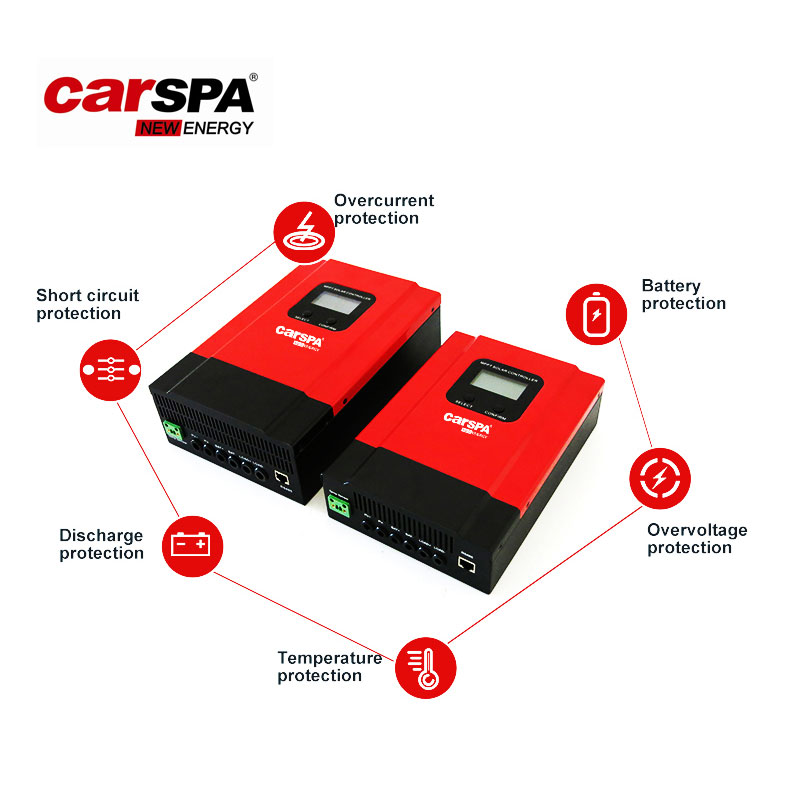
A solar charge controller is a crucial component in any solar power system, acting as the bridge between solar panels and batteries. Its primary role is to regulate the voltage and current flowing from the photovoltaic (PV) panels to the battery bank. Without this regulation, batteries could be overcharged, leading to overheating, electrolyte loss, and ultimately reduced lifespan or system failure.
In essence, the controller ensures that batteries are charged safely and efficiently, avoiding both overcharging and deep discharging. These two conditions are the most common reasons for early battery degradation. Moreover, a controller can prevent reverse current flow at night when the panel voltage drops below that of the battery—an issue that, if left unchecked, could drain stored energy overnight.
Why It Matters in Real Installations:
In remote industrial applications, agricultural fields, telecommunications towers, or even containerized solar stations, battery banks are costly and difficult to replace or maintain regularly. Using a solar charge controller becomes not only a matter of performance, but also of long-term cost control. Even in small setups, improper charging can lead to serious power delivery issues, especially during cloudy days when battery levels are already low.
Additionally, modern charge controllers often come with built-in load management capabilities. These features allow them to disconnect non-critical DC loads once voltage drops too low, further protecting the battery from being overdrawn and ensuring priority devices remain functional.
This level of intelligence makes the controller indispensable in autonomous or off-grid power systems, where reliability is more than a convenience—it's mission-critical.
How Does a Solar Charge Controller Work in an Off-Grid or Hybrid System?
In off-grid and hybrid solar systems, a solar charge controller plays a vital role in maintaining energy flow between the solar panels, batteries, and in some cases, backup generators or grid connections. It constantly monitors voltage and current from the PV panels and dynamically adjusts how much energy is allowed into the battery bank.
Key Workflow Breakdown:
Energy Collection: During peak sunlight, solar panels generate high voltage. The controller steps this down to a safe level for battery charging.
Battery Charging: It ensures the batteries charge in stages—Bulk, Absorption, and Float—preventing overheating or incomplete charging.
Load Management: In systems with DC loads, the controller supplies power directly to equipment and disconnects non-essential loads during low-voltage scenarios.
Power Diversion: In some hybrid setups, excess energy may be diverted to secondary loads or routed to the grid (depending on controller and inverter compatibility).
Real-World Usage in Varied Conditions:
For example, in remote telecom towers in desert regions, a reliable controller ensures that battery banks receive consistent power despite daily temperature fluctuations. Similarly, in European agricultural installations, where weather varies and system autonomy is critical, a solar charge controller with MPPT technology ensures the system harvests the maximum available energy even under partial shading or cloudy conditions.
Moreover, some advanced controllers support temperature sensors and real-time communication protocols such as RS485 or CAN bus, allowing them to integrate with smart energy management systems. This is especially valuable in hybrid systems that need to coordinate energy from multiple sources while prioritizing solar input whenever possible.
Ultimately, the solar charge controller acts as the system's command center, making intelligent decisions every second to balance supply and demand efficiently.
Which Type of Solar Charge Controller Suits Your Application Best?
Choosing the right type of solar charge controller is crucial to ensure efficiency, compatibility, and long-term performance. There are two main categories: PWM (Pulse Width Modulation) and MPPT (Maximum Power Point Tracking), each with distinct working principles and ideal use cases.
Core Differences:
| Controller Type | Best For | Efficiency Range | Cost Level | Typical Use |
| PWM | Small systems (12V/24V) | 70–80% | Low | Mobile systems, small rural setups |
| MPPT | Medium–large systems | 95%+ | Moderate–High | Industrial, commercial, agricultural |
Application-Specific Guidance:
PWM controllers are more cost-effective and perform well in stable, warm environments where solar panel voltage closely matches the battery voltage. They are ideal for fixed-load systems, small-scale irrigation, or rural electrification projects with modest energy demands.
MPPT controllers actively track the maximum power point of the solar array and adjust input dynamically, making them ideal for variable sunlight conditions, long cable runs, and high-voltage arrays—common in Europe's colder regions and Middle Eastern installations with high solar irradiance.
For instance, if your solar panels are operating at 36V and charging a 24V battery bank, a PWM controller would waste the excess voltage. An MPPT controller, however, can convert that surplus voltage into additional current, increasing efficiency significantly.
Other Factors to Consider:
System Expandability: MPPT is better suited for growing systems with future load or panel additions.
Environment: In high-altitude or shaded environments, MPPT offers better performance under inconsistent lighting.
Budget: For cost-sensitive installations, PWM may suffice, but with a trade-off in power yield.
In industrial or mission-critical systems, MPPT is generally preferred due to its superior adaptability, return on investment, and ability to maintain efficiency across seasonal variations.

What Are the Most Important Features to Look for in a Controller?
When selecting a solar charge controller, it's not just about matching voltage and current ratings. The right unit should offer features that support system stability, safety, and ease of monitoring. In industrial-grade or mission-critical applications, overlooking these features could lead to unnecessary downtime or reduced energy performance.
Must-Have Technical Features:
Multi-Stage Charging: The controller should support Bulk, Absorption, Float, and Equalization stages to optimize charging for different battery chemistries. This is essential for battery longevity and performance stability.
Battery Compatibility: Modern controllers support various battery types—lithium-ion, sealed lead-acid (SLA), gel, AGM, and flooded. This flexibility allows the system to evolve without needing controller replacement.
High Accuracy MPPT Algorithm: For MPPT controllers, look for tracking efficiency above 99% and conversion efficiency near 98% to ensure maximum energy yield from your solar array.
Load Terminals: For off-grid systems, having a load output port enables you to power devices directly from the controller while still protecting the battery bank.
Usability and Monitoring Functions:
User Interface: An LCD screen or mobile app support can offer real-time system data, alarm status, and setup options. This is helpful for technicians working on remote or unmanned sites.
Remote Monitoring: Industrial setups benefit from RS485, CAN bus, or Wi-Fi-enabled controllers, allowing for cloud-based control and integration with energy dashboards or SCADA platforms.
Comprehensive Protections: Look for features such as:
Overvoltage and undervoltage protection
Overcurrent and short circuit safeguards
Reverse polarity and anti-backflow protection
Temperature derating and thermal shutdown
Practical Installation Considerations:
Form Factor: Controllers designed for DIN-rail or panel mounting help streamline installation within electrical enclosures.
Fanless Design: Passive cooling designs reduce mechanical failure rates and are preferred in dusty or vibration-prone environments.
Firmware Upgrade Support: This ensures that the controller can be kept up-to-date with the latest performance improvements or protocol changes.
Ultimately, investing in a well-featured controller reduces maintenance time, improves system diagnostics, and enhances operational resilience.
How Do You Ensure Long-Term Reliability and Compatibility?
A solar charge controller is often deployed in harsh environments—hot deserts, humid coastal zones, or high-altitude regions. Ensuring long-term reliability means selecting a unit that's engineered to survive such conditions while continuing to perform with minimal degradation over time.
Key Durability Factors:
Wide Operating Temperature Range: Controllers used in Middle Eastern deserts or European winters must tolerate ambient conditions ranging from -20°C to +60°C or higher. Heat-resistant components and thermal protection circuitry help maintain safe operation.
Ingress Protection (IP) Rating: Look for an IP65-rated enclosure or higher for outdoor or dusty environments. This protects internal electronics from moisture, insects, and particulates that can cause corrosion or short circuits.
Vibration and Corrosion Resistance: For marine or mobile solar applications, ruggedized housings and conformal-coated PCB boards are essential.
Ensuring System Compatibility:
Voltage and Current Range: Choose controllers that support flexible PV input voltages (up to 150V or more for MPPT models) and can be used with both 12V, 24V, or 48V battery banks. This flexibility helps when scaling systems in the future.
Communication Protocols: Controllers with RS485, CAN bus, or Modbus support are easier to integrate with energy management platforms and industrial control systems.
Expandable Load Control: Some advanced units allow for programmable relay outputs or timers, ideal for managing irrigation pumps, lighting systems, or other time-dependent loads.
Maintenance and Lifecycle Support:
Self-Diagnostics and Alerts: Built-in diagnostic tools can alert users of system anomalies before they become critical, reducing service costs.
Upgradeable Firmware: This allows the controller to evolve with new battery technologies or operational modes without needing full replacement.
Manufacturer Support: Select brands with proven customer support, warranty coverage, and documentation to assist in troubleshooting or integration.
Choosing a future-ready charge controller ensures not just current performance, but also long-term return on investment as your energy needs evolve.
Conclusion
A solar charge controller isn't just a technical necessity—it's a strategic choice that impacts system longevity, operational stability, and overall return on investment. By choosing the right controller type, integrating essential features, and prioritizing long-term reliability, you can ensure that your solar setup delivers consistent performance in any environment.
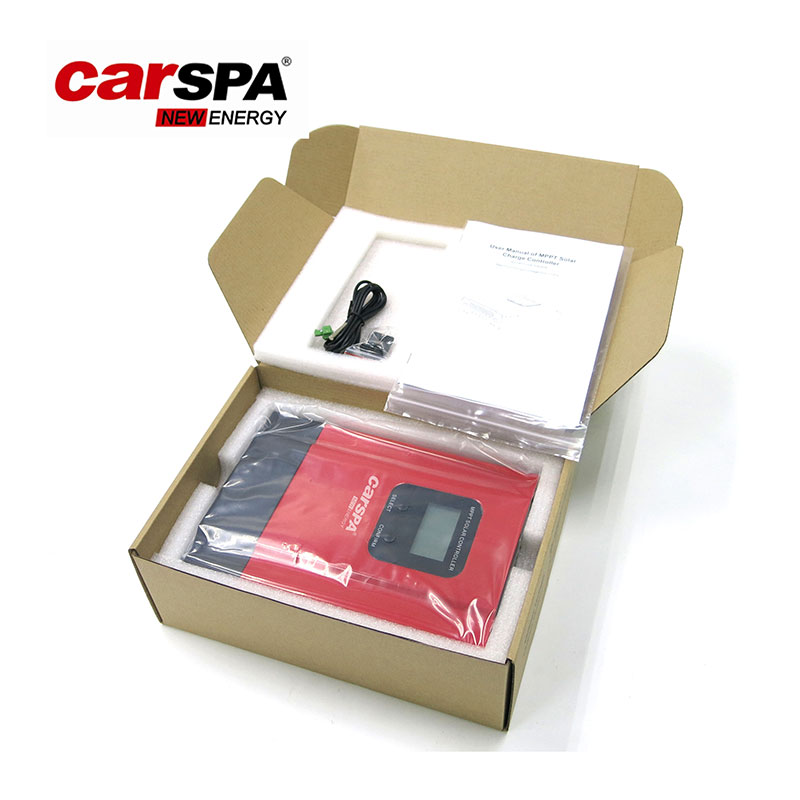
For high-efficiency PWM and MPPT charge controllers engineered for demanding conditions, CARSPA offers a trusted lineup designed with industrial performance in mind—combining advanced protection, smart monitoring, and versatile system compatibility.