
Is a Battery Monitor Essential for Reliable Power Management? 5 Critical Questions Answered
In today's energy-dependent world, the ability to monitor and manage battery performance is more than just a technical advantage—it's a critical necessity. Whether you're powering an off-grid solar system, managing backup energy for a facility, or operating battery-driven industrial equipment, having real-time insight into your battery's condition can make the difference between smooth operation and costly downtime. That's where a battery monitor becomes indispensable.
Unlike basic voltage meters, battery monitors offer comprehensive diagnostics, including real-time current measurement, state-of-charge estimation, programmable alerts, and long-term data tracking. These features allow users to maintain system efficiency, extend battery lifespan, and ensure overall operational reliability. As energy storage systems grow in size and complexity, choosing the right monitoring tool becomes a strategic decision for both performance and safety.
This article explores the fundamental functions of a battery monitor, why it matters across various applications, how to choose the right model, and what benefits it offers over time—especially for systems where power failure is not an option.
What Does a Battery Monitor Actually Do?

Real-time voltage and current tracking
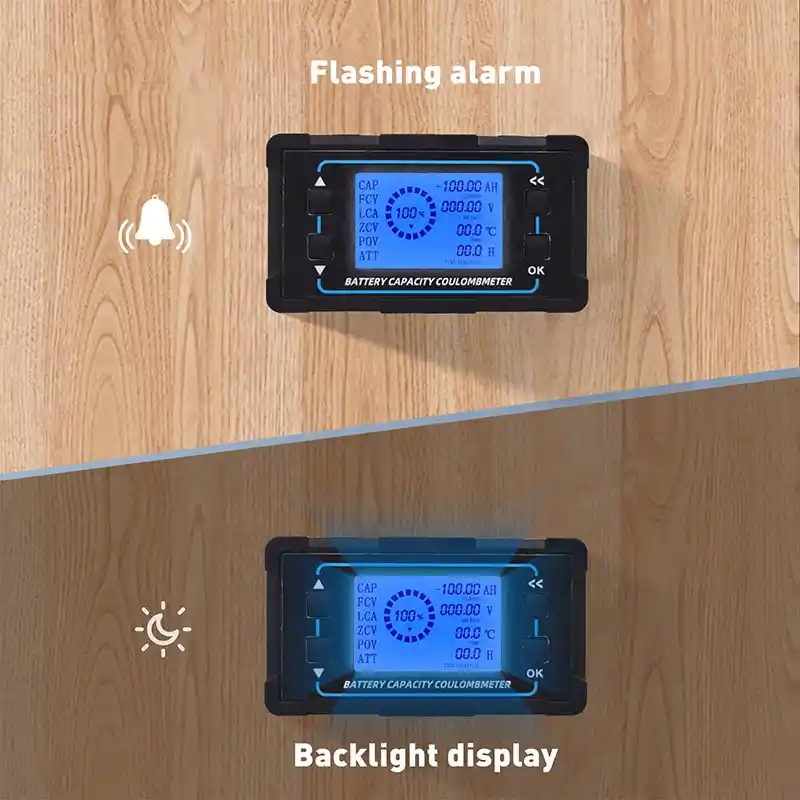
At its core, a battery monitor functions as a digital dashboard for your power system. It continuously measures the battery's voltage, charging and discharging currents, and calculates the remaining capacity in amp-hours (Ah) or as a percentage. This live feedback allows operators to quickly assess whether the system is operating within safe parameters. For instance, a sudden voltage drop or excessive current draw can indicate issues such as battery degradation or equipment malfunction. Having real-time visibility reduces the risk of surprises and helps optimize performance under varying load conditions.
Historical data and alarms
Beyond instant readings, many advanced monitors record performance history—tracking how the battery performs over time. This includes the number of charging cycles, time spent at high or low voltages, and temperature fluctuations. These insights help detect long-term trends like capacity loss or irregular charging behavior. Additionally, programmable alarms notify users when the battery falls below safe voltage or reaches full charge, helping prevent under- or over-charging. Some systems even support customizable warning levels based on the specific needs of different applications.
Accuracy via shunt technology
A critical component of any high-quality battery monitor is the precision shunt resistor. Installed inline with the battery's negative terminal, the shunt measures tiny voltage drops caused by current flow and calculates exact amperage. This method ensures accurate tracking of power usage, even under heavy or fluctuating loads. Monitors like the CARSPA BMC500 use this method to deliver reliable readings up to 500A—making them suitable for both small-scale and industrial systems. By minimizing measurement errors, shunt-based systems enable better decision-making and more precise control over energy reserves.
Why Is Battery Monitoring Crucial for Energy Systems?
Prevent over-discharge and extend battery life
One of the most common causes of battery failure is deep discharge, where the battery is drained beyond its safe limit. Without a battery monitor in place, operators may not notice the battery reaching critically low levels—especially in systems without clear visual indicators. Consistent over-discharge not only reduces battery lifespan but can also lead to permanent damage or safety risks. A quality battery monitor offers early warnings through programmable alarms, allowing preventive actions such as load shedding or generator backup activation. This protection is especially valuable in systems using expensive deep-cycle batteries or lithium-ion packs.
Optimize charging and discharging patterns
Battery monitors allow you to fine-tune how energy flows in and out of the system. For example, by analyzing charge and discharge cycles, operators can schedule loads more intelligently—avoiding peak discharge times or overloading the inverter. This is particularly important in solar-powered systems, where energy availability varies throughout the day. Monitoring tools help balance storage capacity with energy consumption, ensuring that batteries are charged optimally during sunlight hours and discharged efficiently during the night. Over time, this optimization not only improves system reliability but also increases energy autonomy.
Detect system inefficiencies early
Small inefficiencies in power systems often go unnoticed until they cause major issues. A battery monitor can help catch these problems early by highlighting unusual current draw, low charge retention, or erratic voltage drops. For instance, a device pulling unexpected current during standby hours may indicate a wiring fault or parasitic load. Similarly, slow charging behavior might point to a failing solar charge controller or incorrect system sizing. Having accurate, long-term monitoring enables maintenance teams to pinpoint such issues before they escalate—saving both time and operational costs.
How Do You Choose the Right Battery Monitor?
Check voltage and current range compatibility
Every battery system has its own voltage and current characteristics, so selecting a compatible battery monitor is essential. For instance, industrial setups or large solar arrays may operate at higher voltages—sometimes up to 120V—while smaller RV or marine systems may run on 12V or 24V. A good monitor should cover a wide voltage range to ensure flexibility across different applications. Equally important is the current rating. A model capable of handling up to 500A, such as those using a 500A shunt, ensures safe and accurate monitoring even under heavy loads like inverter startup surges or electric motor operations. Choosing an undersized monitor can lead to inaccurate readings or system overload.
Ensure programmability and alarm functions
In real-world operations, fixed thresholds are rarely enough. That's why programmable battery monitors are preferred—they allow users to define specific alarm limits for high or low voltage, charge level, or remaining capacity. These features enable tailored system protection, such as automatically disconnecting loads if the battery drops below 20% or triggering backup power when nearing full discharge. Programmable settings also accommodate seasonal adjustments or load profile changes without needing to replace hardware. This adaptability improves both safety and operational control.
Look for communication options
In many professional settings, remote monitoring is becoming a standard requirement. Battery monitors that support Bluetooth, RS485, or external display modules can transmit real-time data to a central interface or mobile app. This not only increases convenience but also enables centralized supervision of distributed power systems across fleets or facilities. For instance, a technician can review battery health on multiple systems without being physically present. Visual interfaces—especially those with LCDs showing live current, voltage, and historical graphs—also simplify troubleshooting and training for onsite teams.
Off-grid solar systems and RVs
Battery monitors are indispensable in off-grid energy systems where power availability depends entirely on stored energy. In solar-powered installations—such as those used in cabins, farms, or construction sites—the battery bank must be carefully managed to avoid unexpected outages. A monitor provides precise insight into how much usable energy remains at any moment, enabling users to schedule power usage based on real-time data. In mobile environments like RVs, campers, and expedition vehicles, a battery monitor offers reassurance during travel. It helps travelers avoid draining their auxiliary batteries overnight, and ensures charging from alternators or solar panels is effectively managed throughout the journey.
Marine and backup power systems
In marine vessels, battery power is often relied upon for both navigation systems and comfort equipment. A failure mid-voyage could be catastrophic. Battery monitors in this context ensure the system is functioning reliably under high humidity and vibration conditions. Likewise, in backup power systems used in commercial buildings, telecom towers, or remote installations, knowing battery status in real time helps prevent downtime. During a power outage, these monitors guide decisions about load prioritization, generator start timing, and post-event battery recovery.
Industrial equipment and forklifts
Battery-powered industrial equipment, such as forklifts, scissor lifts, AGVs (automated guided vehicles), and mobile workstations, also benefit significantly from accurate monitoring. In logistics and warehousing, downtime caused by battery failure can halt operations and create costly delays. A battery monitor enables predictive maintenance by identifying declining battery health early. Operators can plan replacements or recharge schedules based on real data rather than guesswork. For high-frequency usage in shift-based operations, this improves equipment utilization and prolongs battery investment.

What Makes a Good Battery Monitor a Smart Investment?
Reduces downtime and replacement costs
Battery replacement is one of the highest ongoing costs in any power system, especially when using deep-cycle lead-acid or lithium-ion technologies. Without a monitoring system, batteries are often over-discharged or inadequately charged, accelerating wear and requiring premature replacements. A high-quality battery monitor acts as an early warning system, allowing users to identify abnormal discharge cycles or ineffective charging patterns. By taking corrective action early—such as balancing loads or improving charge settings—companies can significantly extend battery lifespan and reduce total cost of ownership. This minimizes unplanned downtime, particularly in systems that provide critical functions or operate on tight production schedules.
Enhances system control and decision-making
Battery monitors turn invisible battery behavior into actionable data. With real-time and historical insights into how power is used, managers and technicians can make informed decisions about energy allocation, load management, and system scaling. For example, in an off-grid solar installation, knowing daily discharge patterns allows operators to size additional panels or storage capacity more accurately. In fleet management, centralized battery data helps standardize maintenance schedules and reduce human error. The result is a more transparent and predictable energy infrastructure that aligns with operational goals.
Contributes to overall safety
Batteries, especially when used at high voltages or in large arrays, pose safety risks including thermal runaway, short circuits, and even fire. A battery monitor helps mitigate these risks by alerting users to dangerous conditions before they escalate. Configurable alarms can notify operators of overvoltage, excessive temperature, or abnormal current draw. Some advanced monitors also allow for automatic shutdowns or relays that disconnect loads when unsafe thresholds are breached. This level of control is crucial for safety compliance in regulated environments and for protecting both assets and personnel.
Conclusion
For professionals seeking precision, reliability, and long-term value in battery management, CARSPA offers a robust and intelligent monitoring solution. The CARSPA BMC500 battery monitor supports a wide voltage range from 8V to 120V and manages currents up to 500A through a precision shunt. Its programmable alarms, real-time display, and high accuracy make it suitable for demanding environments such as solar energy systems, marine power banks, and industrial battery packs. Backed by CARSPA's expertise in energy electronics, the BMC500 ensures that your batteries are always under control—minimizing risk, maximizing uptime, and supporting smarter energy decisions.


