
How to Choose the Right Battery Monitor? 5 Key Questions to Ask
Battery monitor technology has become indispensable in modern energy systems—ranging from off-grid solar installations to industrial UPS units. Without accurate battery data, energy usage becomes inefficient, system lifespan shortens, and failures become unpredictable. But with the right battery monitor in place, you gain visibility, control, and long-term cost savings. This guide explores five critical questions to ask when choosing a battery monitor, helping you make a confident and informed decision for your setup.
What Is a Battery Monitor and Why Is It Essential for Your Power System?
A battery monitor is more than just a display of voltage or current—it's the brain of your energy storage system. It constantly measures incoming and outgoing current, calculates the real-time state of charge (SoC), and estimates how long your battery can continue to power your system based on current consumption. This allows you to make informed operational decisions rather than relying on guesswork or static voltage readings.

Key Functions:
Live Monitoring: Shows how much energy is being drawn or charged in real time
Cumulative Tracking: Records total amp-hours used and returned over time
Performance Logging: Helps identify inefficiencies or trends such as battery degradation
Alert Systems: Warns of unsafe battery conditions like undervoltage, overvoltage, or excessive discharge
Battery monitors are especially critical in systems where power reliability is non-negotiable—such as telecom base stations, marine vessels, off-grid solar homes, and industrial backup setups. By constantly supervising battery behavior, these monitors help prevent over-discharge, minimize energy waste, and support preventive maintenance.
Business Implication:
In professional applications, the use of a battery monitor directly translates into cost savings. It minimizes downtime, prolongs battery life, and supports energy audits by providing historical data. Without a reliable monitoring system, battery-related failures could lead to equipment malfunction, revenue loss, or safety hazards.
Which Battery Types and System Voltages Should Your Monitor Support?
When selecting a battery monitor, one of the first considerations should be its compatibility with your specific battery type and system voltage. Battery technologies vary significantly in their discharge characteristics, voltage response, and safety needs. Using a monitor that is not tailored to your system can result in inaccurate readings or even damage to the equipment.
Key Compatibility Factors:
Battery Chemistry Support: Lead-acid, AGM, gel, and lithium (such as LiFePO4 or LFP) batteries each require specific charging profiles and state-of-charge algorithms. A monitor that supports multiple chemistries or allows manual configuration is more versatile.
System Voltage Range: Ensure your monitor supports the nominal voltage of your setup—12V, 24V, 36V, 48V, or higher (even 96V or 120V for industrial uses). Some monitors automatically detect system voltage, while others require manual setting.
Current Range and Shunt Rating: Industrial systems may draw hundreds of amps. The current shunt included with your monitor must match the maximum expected current—common ratings include 50A, 100A, 200A, 500A, and beyond.
Application Tip:
For multi-battery setups (e.g., 4x12V batteries in series for a 48V system), a monitor that can handle cumulative voltage and track energy across the entire bank is essential. Advanced models also provide individual cell or bank balancing features.
For example, CARSPA offers the BMC500 battery monitor, which supports a wide voltage range from 8V to 120V and handles up to 500A of current. It is compatible with various battery chemistries, including lead-acid, NiCd, NiMH, and LiFePO4, making it suitable for both industrial and solar energy storage systems.
Why This Matters:
Incorrect matching between your monitor and battery type can lead to underreporting or overreporting SoC, triggering premature charge/discharge actions. This not only affects performance but can drastically shorten battery life. Choosing the right monitor ensures your system operates efficiently and safely under real-world conditions.

How Important Is Data Accuracy and Display Format in Battery Monitoring?
In critical power systems, accurate data isn't just a bonus—it's essential. A deviation of just a few percentage points in state-of-charge (SoC) can result in over-discharging a battery or prematurely triggering a recharge cycle. Both situations can reduce system efficiency and shorten battery lifespan. A high-quality battery monitor should therefore deliver precise, real-time information with minimal margin of error.
Why Accuracy Matters:
Operational Decisions: For applications like solar storage or telecom base stations, knowing the exact battery level helps operators decide whether to switch loads, activate generators, or scale down consumption.
Battery Protection: Accurate monitoring prevents excessive cycling, which can damage batteries, especially lithium types that are sensitive to overcharging and deep discharging.
Efficiency Tracking: Systems with energy auditing capabilities need precise amp-hour readings to calculate energy efficiency and identify losses.
Advanced battery monitors often feature high-resolution shunt measurements with ±1% or better accuracy. This ensures reliable readings even during rapid fluctuations in load or charging current.
Key Display Features to Look For:
Real-Time Graphs and Trends: Displays that visualize charging/discharging curves help identify abnormal behavior quickly.
Backlit or Color Screens: Useful in low-light industrial or marine environments
Multi-Parameter Display: Shows voltage, current, energy consumed (Ah/Wh), remaining runtime, and temperature on a single screen
Configurable Alarms: High/low voltage, overcurrent, or temperature alerts can trigger protective actions or notify maintenance teams
Some models also allow customization of display units, language settings, or refresh rates, making them ideal for multinational teams or specific regional standards.
CARSPA Insight:
The CARSPA BMC500 battery monitor features a high-resolution LCD display that shows essential metrics such as voltage, current, battery capacity, and energy consumption in real time. It includes programmable high and low voltage alarms to ensure operational safety.
Should You Choose a Battery Monitor with Remote Monitoring Capabilities?
As energy systems become more distributed and decentralized, the ability to monitor battery performance remotely is no longer a luxury—it's a necessity. Whether your batteries are installed in solar fields, telecommunications towers, mobile vehicles, or off-grid stations, remote access enables real-time visibility, reduces maintenance costs, and enhances decision-making.
Benefits of Remote Monitoring:
Real-Time Alerts: Get notified instantly via email, SMS, or app push notifications when battery parameters exceed safe thresholds—such as low voltage, high temperature, or unusual discharge rates.
Performance Optimization: Remote dashboards allow you to track efficiency trends over time and make proactive adjustments to load or charging strategy.
Reduced On-Site Maintenance: Technicians can diagnose issues remotely, reducing travel time and minimizing downtime.
Centralized Monitoring: Ideal for businesses with multiple sites, allowing unified battery management from a single control center.
Connectivity Options to Consider:
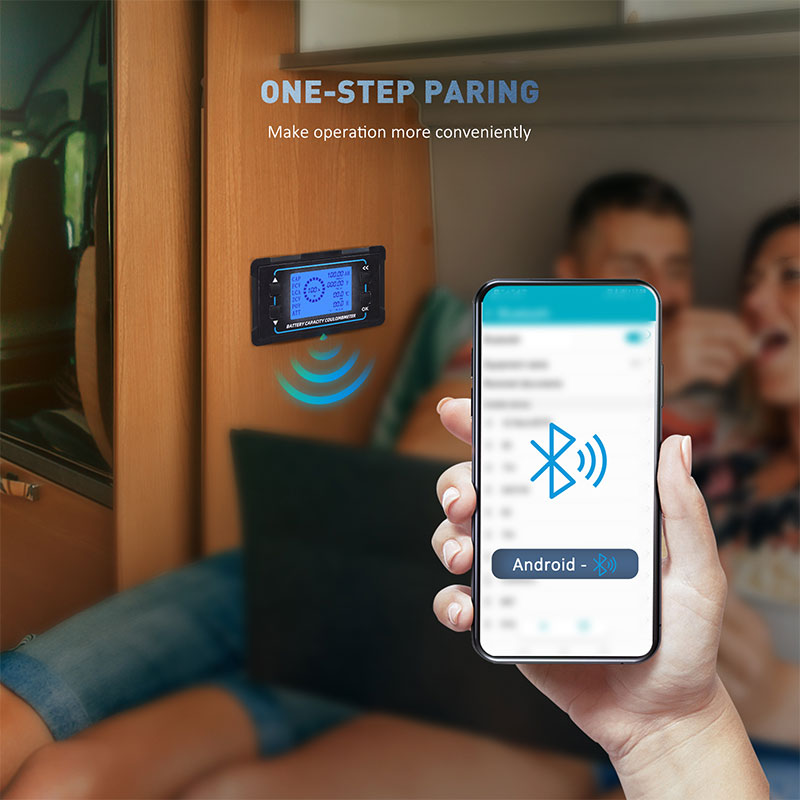
Bluetooth: Convenient for short-range monitoring via smartphone apps—ideal for mobile or personal-use systems.
Wi-Fi & LAN: Enables access from local networks or cloud-based dashboards—commonly used in industrial or building energy systems.
RS485 / MODBUS: Preferred in industrial automation, compatible with PLCs and SCADA systems for seamless integration
4G/5G Modules: Useful in remote locations without Wi-Fi infrastructure
Use Case Example:
A telecom company with off-grid relay stations may equip each station with a CARSPA battery monitor featuring RS485 and cloud interface. This allows centralized monitoring of battery health across hundreds of sites, avoiding emergency power failures and supporting planned battery replacements.
Industrial Value:
Remote monitoring dramatically increases operational efficiency, especially in sectors like agriculture (for solar pumps), transport (electric fleets), and energy utilities. It empowers preventive maintenance strategies that save both time and cost while ensuring continuous uptime.
What Installation and Integration Features Should You Look For?

No matter how advanced a battery monitor is, poor installation design can quickly become a barrier to adoption. In real-world industrial or commercial setups, ease of installation and integration with existing equipment are critical factors. A good battery monitor should offer plug-and-play capability, clear wiring documentation, and flexible mounting options.
Installation Considerations:
Form Factor: Compact, panel-mounted monitors save space and are ideal for tight enclosures or electrical cabinets. Some models also support DIN rail mounting for fast integration into industrial control panels.
Wiring Simplicity: Look for pre-calibrated current shunts with labeled terminals and clearly marked connectors. Quick-connect plugs or terminal blocks make field deployment faster and safer.
Multilingual Manuals and Diagrams: Installation teams across different regions benefit from clear instructions in multiple languages, reducing the chance of errors.
Power Source Flexibility: Monitors that can draw power from either the battery bank or an independent DC source offer greater installation flexibility.
Integration Features:
Inverter & Solar Charger Compatibility: Battery monitors should be able to work in harmony with inverters, solar charge controllers, and DC converters.
Communication Protocols: For seamless system-level integration, MODBUS-RTU(Remote Terminal Unit)over RS485 or CANBus (Controller Area Network Bus) support is highly valuable.
Expandable Ports: Advanced models allow chaining of sensors or temperature probes, making them scalable for larger systems.
Firmware Updates: Some monitors support over-the-air updates, ensuring long-term compatibility with evolving system needs.
CARSPA Deployment Insight:
The BMC500 from CARSPA includes a pre-calibrated 500A shunt, RS485 port, and standard mounting accessories, making it easy to install in control cabinets or solar energy setups. Its design supports fast deployment and long-term reliability in industrial environments.
Bottom Line:
In industrial operations, minimizing installation time means reducing labor costs and downtime. A well-integrated battery monitor enhances safety, enables advanced automation, and ensures compliance with system documentation standards. Always choose a monitor that's as easy to install as it is to operate.
Conclusion
Choosing the right battery monitor is not just a matter of technology—it's a strategic step toward energy reliability and operational efficiency. Whether you're managing solar-powered facilities, industrial machines, or mobile systems, having the ability to track battery performance in real time will optimize your workflow and prevent costly breakdowns. For those seeking reliable, accurate, and easy-to-integrate monitoring solutions, CARSPA offers a range of battery monitors tailored for professional applications, with models that combine precision, remote connectivity, and rugged industrial design.


.jpg)

.jpg)
.jpg)
.jpg)
.jpg)
.jpg)


