How Should Energy Storage Systems Be Sized and Configured for Different Power Needs?
Introduction
As Energy Storage systems become a core element of modern power architectures, their role extends far beyond simple energy backup. In real-world power systems, storage capacity and system configuration directly influence how reliably energy can be delivered, how efficiently resources are used, and how well a system adapts to changing operating conditions. For this reason, proper sizing and configuration have become central design considerations rather than secondary technical details.
Energy Storage is often discussed in terms of nominal capacity, yet capacity alone does not define system performance. The way energy is stored, distributed, and scaled over time determines whether a system can respond effectively to varying power demands. Differences in load behavior, operating schedules, and future expansion requirements all place distinct demands on how storage systems should be sized and structured.
Improper sizing can introduce hidden risks. Systems that are undersized may experience frequent deep cycling, reduced stability, and accelerated degradation, while oversized systems can lead to unnecessary complexity and underutilized assets. Configuration choices further shape system behavior by affecting modularity, scalability, and long-term operational flexibility.
Understanding how Energy Storage systems should be sized and configured for different power needs is therefore essential for building power solutions that balance performance, reliability, and adaptability. By aligning storage design with actual usage patterns and system objectives, energy storage becomes a strategic asset that supports stable operation and long-term system evolution.
Why Is Proper Energy Storage Sizing More Than a Capacity Calculation?
Proper Energy Storage sizing goes far beyond selecting a battery based on nominal capacity values. While capacity is an important parameter, it represents only one dimension of how a storage system behaves in real operation. In practical power systems, the interaction between energy availability, load demand, and operating duration determines whether a given storage size truly supports stable and efficient performance.
One key reason sizing is more complex than a simple calculation is that energy demand is rarely uniform. Power consumption often varies throughout the day, with periods of high demand followed by extended low-load operation. A storage system sized only for average consumption may struggle during peak demand, while a system sized solely for peak conditions may operate inefficiently for most of its service life. Effective sizing requires understanding how energy is used over time, not just how much energy is required in total.

Another factor is the relationship between usable capacity and operating limits. Energy Storage systems are typically designed to operate within defined charge and discharge windows to preserve long-term stability and battery health. This means that not all nominal capacity is intended for continuous use. Sizing decisions must therefore account for usable energy rather than theoretical maximum values, ensuring that the system can meet demand without forcing operation beyond safe or efficient boundaries.
Sizing also influences system stress and aging behavior. Storage systems that are consistently pushed close to their limits experience higher thermal and electrical stress, leading to accelerated degradation and reduced predictability over time. By contrast, appropriately sized systems operate within balanced ranges, maintaining consistent performance and extending operational lifespan.
For these reasons, proper Energy Storage sizing should be approached as a system-level design process. It connects load behavior, operating strategy, and long-term reliability, forming the foundation upon which configuration choices and future scalability are built.
How Do Load Patterns and Usage Scenarios Influence Energy Storage Sizing?
Different power needs are primarily defined by how loads behave over time rather than by their nominal power ratings alone. In Energy Storage system design, understanding load patterns and usage scenarios is essential for determining how much usable energy is required and how that energy should be delivered.
Peak loads and short-duration power demand
Some systems experience brief but significant power peaks caused by motor starts, inrush currents, or temporary load stacking. These peaks may represent only a small portion of total operating time, yet they place high demands on the Energy Storage system’s discharge capability. If storage capacity is sized without considering these short-duration events, the system may struggle to maintain voltage stability or trigger protective responses during peak conditions.
Proper sizing in such scenarios requires enough available energy and power headroom to absorb these peaks without forcing the system into stressed operating ranges.
Continuous operation versus intermittent usage
Usage scenarios also differ in how consistently energy is consumed. Systems with continuous operation require storage that can deliver stable output over extended periods, emphasizing total usable capacity and thermal stability. In contrast, intermittent usage places greater importance on rapid response and recovery, where storage systems must repeatedly charge and discharge over shorter cycles.
Energy Storage sizing must reflect these differences. A system designed for intermittent loads may not perform well under continuous demand, even if nominal capacity appears sufficient.
Daily operating schedules and energy availability
Operating schedules strongly influence storage requirements. Some applications concentrate energy use within defined time windows, while others distribute consumption evenly throughout the day. When energy availability does not align with consumption timing, storage capacity must compensate for this mismatch.
Sizing decisions should therefore consider not only total daily energy consumption but also when that energy is needed. Aligning storage capacity with realistic operating schedules improves efficiency and reduces unnecessary cycling.
Load growth and evolving usage patterns
Power needs rarely remain static over a system’s lifetime. Additional loads, extended operating hours, or changes in usage behavior can gradually increase demand. Energy Storage systems sized strictly for initial conditions may become constrained as usage evolves.
Accounting for potential load growth during the sizing stage helps ensure that storage systems remain effective as power requirements change, reducing the need for premature upgrades or system redesign.
How Should Energy Storage Systems Be Configured for Flexible and Scalable Power Demand?
While proper sizing defines how much energy a system must manage, configuration determines how that energy is deployed, expanded, and controlled over time. In Energy Storage system design, configuration choices directly affect flexibility, scalability, and long-term adaptability, especially in applications where power demand is expected to evolve.
Modular configuration for incremental capacity growth
One of the most effective ways to support flexible power demand is through modular Energy Storage configurations. By dividing total storage capacity into standardized modules, systems can be deployed with an initial capacity and expanded as requirements increase. This approach avoids overbuilding at the early stage while preserving a clear upgrade path for future growth.
Modular configurations also simplify system planning, as additional capacity can be integrated without disrupting existing operation or redesigning the entire power architecture.
Compact configurations for space-constrained installations
In some power systems, physical space and installation constraints play a significant role in configuration decisions. Compact, wall-mounted Energy Storage configurations allow storage capacity to be integrated efficiently into existing system layouts. These configurations support applications where power demand is moderate but reliability and accessibility remain important.
From a system perspective, compact configurations emphasize ease of installation, organized power distribution, and straightforward integration with control and protection components.
Stackable configurations for higher energy demand
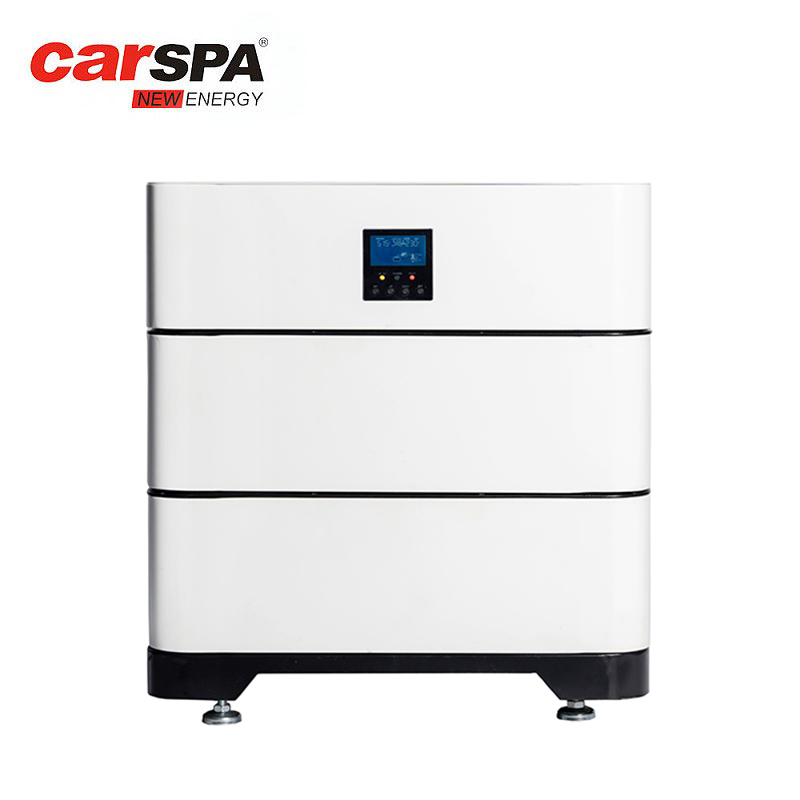
When power needs increase beyond baseline requirements, stackable Energy Storage configurations provide a scalable solution. By layering storage modules vertically, total capacity can be increased while maintaining a consistent system footprint. This approach supports higher energy demand without sacrificing structural clarity or system organization.
Stackable configurations are particularly effective when long operating hours, higher daily energy consumption, or future expansion are anticipated. They allow systems to grow in a controlled and predictable manner.
Configuration alignment with control and protection strategy
Energy Storage configuration should always align with system-level control and protection design. The way modules are arranged influences current distribution, monitoring accuracy, and fault isolation capability. Well-aligned configurations enable balanced charging and discharging across modules, improving both performance consistency and long-term reliability.
By selecting configurations that support modular growth, physical constraints, and coordinated control, Energy Storage systems gain the flexibility required to adapt to changing power demand while maintaining stable operation.

What Role Does Battery Technology Play in Sizing and Configuration Decisions?
Battery technology is a fundamental factor that shapes how Energy Storage systems should be sized and configured. While system architecture and load behavior define overall requirements, battery characteristics determine how reliably those requirements can be met over time. Ignoring battery behavior during sizing often leads to mismatches between theoretical design and real-world performance.
Usable capacity versus nominal capacity
Different battery technologies offer varying levels of usable capacity within safe operating limits. Nominal capacity alone does not reflect how much energy can be consistently accessed without accelerating degradation. Battery chemistry influences recommended depth of discharge, charge efficiency, and tolerance to frequent cycling. These characteristics directly affect how much installed capacity is actually required to support a given power need.
When sizing Energy Storage systems, designers must consider usable energy rather than nameplate values to ensure that storage capacity remains sufficient under normal operating conditions.
Cycle life and long-term energy availability
Cycle life plays a critical role in both sizing and configuration decisions. Storage systems designed for frequent charge–discharge operation must maintain stable performance across thousands of cycles. Battery technologies with longer cycle life allow systems to operate within balanced ranges for extended periods, reducing the need for oversizing as a safeguard against early degradation.
From a configuration perspective, long cycle life supports modular and expandable designs by maintaining predictable performance across added modules over time.
Thermal behavior and operational stability
Battery technology also influences thermal behavior, which affects both sizing margins and configuration layout. Batteries with stable thermal characteristics allow tighter configuration and more consistent performance across modules. This stability reduces the need for excessive spacing or conservative capacity buffers, enabling more efficient system design.
Thermal considerations therefore link battery selection directly to how storage systems are physically arranged and scaled.
Compatibility with system control strategies
Effective Energy Storage sizing depends on how well battery behavior aligns with system control and monitoring strategies. Technologies that provide consistent voltage behavior and predictable response across operating ranges simplify balancing, monitoring, and fault detection. This compatibility supports more precise control of charge and discharge processes, improving overall system efficiency and reliability.
By accounting for battery technology early in the design process, Energy Storage systems can be sized and configured to deliver stable, long-term performance rather than short-term capacity alone.
How Can Proper Sizing and Configuration Improve Long-Term System Performance?
Proper sizing and configuration directly determine how Energy Storage systems perform over their entire service life. When storage capacity and system structure are aligned with real power needs, systems operate within balanced ranges that reduce stress, improve efficiency, and enhance predictability.
Reducing operational stress and extending system lifespan
Energy Storage systems that are correctly sized avoid excessive deep cycling and prolonged operation at performance limits. Balanced operation reduces thermal buildup, electrical stress, and uneven aging across battery modules. Over time, this controlled operating profile helps preserve usable capacity and supports more consistent system behavior, extending overall service life.
Improving efficiency under real operating conditions
Well-configured storage systems distribute load evenly across modules and operate closer to optimal efficiency points. This improves charge–discharge efficiency and minimizes unnecessary energy loss. By matching configuration strategy to actual usage patterns, systems avoid inefficiencies caused by underutilized capacity or frequent corrective adjustments.
Supporting stable performance as power needs evolve
Power demand often changes gradually rather than abruptly. Proper sizing combined with scalable configuration allows Energy Storage systems to adapt to these changes without compromising stability. Modular expansion and flexible layouts enable capacity growth while maintaining coordinated control and balanced operation, ensuring that performance remains stable as systems evolve.
Simplifying maintenance and system management
Clear configuration and appropriate sizing also simplify monitoring and maintenance. Systems designed with logical module distribution and predictable operating ranges are easier to inspect, service, and manage over time. This reduces the likelihood of human error and supports safer, more efficient lifecycle management.
Enhancing overall system reliability
Ultimately, correct sizing and configuration improve reliability by aligning system behavior with real-world operating conditions. Instead of compensating for mismatches through aggressive control or frequent intervention, well-designed Energy Storage systems operate smoothly and predictably, delivering dependable power across varying demand scenarios.
Conclusion
Sizing and configuring Energy Storage systems is a strategic design process that goes beyond selecting battery capacity. By understanding load behavior, planning for scalable demand, and aligning configuration with battery technology and system control, storage solutions can be tailored to support both immediate power needs and long-term operational goals.
When Energy Storage systems are properly sized and configured, they deliver stable performance, improved efficiency, and greater adaptability as power requirements change. With a focus on practical system design and flexible configuration strategies, CARSPA provides Energy Storage solutions engineered to support reliable operation across a wide range of power needs.