
How Can a Battery Monitor Optimize PV System Performance and Reliability?
In any photovoltaic (PV) system, batteries play a critical role by storing energy for use when solar production is low or demand is high. However, without precise insights into battery health and energy flow, it can be challenging to ensure the system operates at peak efficiency. Issues such as overcharging, deep discharge, and unexpected battery failure can significantly reduce overall performance and shorten the lifespan of the energy storage bank.
This is where a battery monitor becomes an indispensable tool. By providing accurate, real-time data on key parameters such as state of charge (SOC), battery voltage, current flow, and energy consumption, a battery monitor helps operators make smarter decisions about energy usage and system maintenance. Beyond simply tracking numbers, it delivers actionable insights that enhance reliability, reduce operational costs, and protect valuable battery assets.
Whether you’re designing a new PV system or optimizing an existing one, investing in the right battery monitor will enable better energy management and long-term performance. In this article, we’ll explore what a battery monitor is, how it improves energy efficiency and system longevity, the features you should prioritize when selecting one, and the best way to integrate it into your PV project.
What Is a Battery Monitor and Why Is It Essential for PV Systems?
A battery monitor is a specialized device designed to track the performance and health of batteries in energy storage applications. In a photovoltaic (PV) system, where solar energy is converted and stored for later use, the battery bank is a critical component. Without a reliable way to measure how much energy is stored, how much is being consumed, and the state of the batteries’ health, operators can face unexpected failures, reduced efficiency, or even permanent damage to their battery assets. A battery monitor solves this challenge by providing accurate, real-time information about the system’s energy status.
Unlike simple voltage meters, modern battery monitors use advanced measurement techniques to track multiple parameters, including state of charge (SOC), state of health (SOH), battery voltage, current flow, and energy consumed or replenished. These detailed insights allow operators to make informed decisions about energy usage and charging cycles. For instance, by knowing the exact SOC, it becomes possible to prevent deep discharge conditions, which significantly reduce battery lifespan, or avoid unnecessary charging that wastes solar energy.
In PV systems, where energy production can fluctuate based on sunlight availability, having a battery monitor is essential to maintain system balance. It ensures that energy storage is fully optimized, prevents downtime caused by depleted batteries, and improves the predictability of power supply. Furthermore, a battery monitor can alert users to irregularities such as abnormal voltage drops or spikes, allowing for preventive maintenance before a small issue turns into a costly failure.
How Does a Battery Monitor Improve Energy Efficiency and System Longevity?
A battery monitor plays a vital role in optimizing how energy is stored, distributed, and used in a PV system. By continuously analyzing battery data, it helps reduce energy loss, improve storage efficiency, and extend the overall lifespan of the battery bank. Below are several key ways a battery monitor contributes to system performance:
Accurate State of Charge (SOC) Monitoring
One of the most important functions of a battery monitor is to track the battery’s state of charge (SOC) with precision. Unlike basic voltage-based readings, an advanced battery monitor uses coulomb counting and real-time current measurements to calculate how much energy is left in the battery bank. This accurate data prevents situations where batteries are unknowingly over-discharged, which can lead to irreversible damage, or under-utilized, which wastes available energy. For PV systems that operate with fluctuating solar input, having a clear understanding of SOC ensures the stored energy is used in the most efficient way possible.
Protection Against Overcharging and Deep Discharge
Battery degradation is often accelerated by frequent deep discharges or consistent overcharging. A battery monitor mitigates these issues by providing alarms and automated triggers when the battery voltage approaches critical thresholds. By preventing batteries from reaching unsafe levels, operators can significantly extend the cycle life of their energy storage assets. This protection is especially valuable in off-grid or hybrid PV systems, where battery replacement costs are high and downtime can disrupt operations.
Optimizing Energy Flow for Higher Efficiency
Battery monitors also improve system efficiency by analyzing real-time energy flow. They record how much energy is being stored versus consumed, allowing operators to identify inefficiencies in the system. For example, if energy losses are detected during charging, adjustments can be made to the solar charge controller or inverter settings. By fine-tuning energy use in this way, the PV system delivers higher usable power output, resulting in better return on investment.
Early Fault Detection and Maintenance Planning
Another critical benefit is the ability to detect irregularities such as sudden voltage drops, excessive current draw, or imbalance between battery cells. These early warning signs can indicate battery aging or impending failures. By acting on these alerts promptly, operators can perform preventive maintenance, reducing the likelihood of unexpected downtime and avoiding costly replacements. Over the long term, this proactive approach preserves battery health and ensures stable system performance.
A battery monitor is therefore more than just a measurement tool; it is a central component for maintaining the reliability and longevity of any PV energy storage setup. Whether the system is deployed for residential, commercial, or industrial applications, the monitor’s ability to balance energy flow, protect batteries, and provide actionable data is indispensable for maximizing efficiency and reducing operational costs.
What Key Features Should You Look for in a Battery Monitor?
Choosing the right battery monitor is crucial for ensuring accurate data collection and reliable operation within your PV system. With so many models available, understanding the key features to prioritize can help you select the most suitable device for your energy storage setup.
Wide Voltage and Current Range
A high-quality battery monitor must be compatible with the battery bank’s operating voltage and current levels. Look for a device that supports a broad voltage range—for example, 8V to 120V—so it can be used across different battery configurations. Additionally, the current handling capacity, typically measured through a shunt, should match the maximum current draw of your system. Monitors with ratings up to 500A provide greater flexibility, ensuring that both small and large PV installations can be accurately monitored without risk of overload.
Programmable Alarms and Safety Alerts
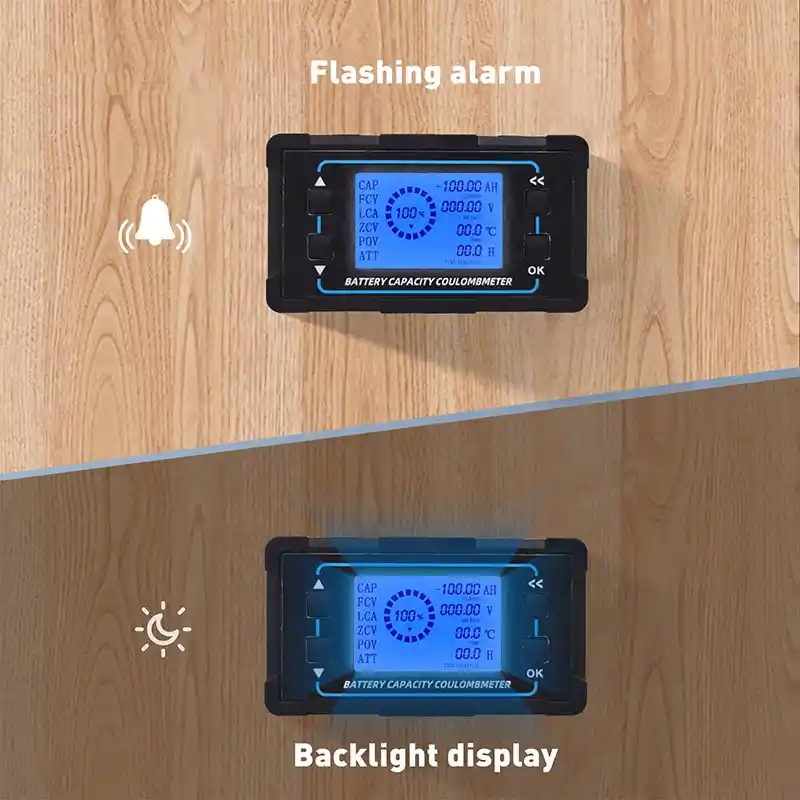
An advanced battery monitor should include programmable high- and low-voltage alarms. These alerts act as a safety net, notifying you whenever the battery voltage approaches critical thresholds. Some models can even trigger automated shutdowns or corrective actions through integrated relays. This feature not only prevents overcharging and deep discharge but also minimizes the risk of damage to connected components like inverters and charge controllers.
Real-Time Data Display and Historical Logging
A user-friendly interface is another must-have feature. Clear LCD or digital displays allow you to instantly view critical parameters such as state of charge (SOC), battery voltage, current flow, and energy consumed. Beyond real-time data, the ability to log historical information is invaluable for analyzing performance trends over time. Detailed logs help you identify patterns, troubleshoot inefficiencies, and plan for battery maintenance or upgrades.
Compatibility and Integration Options
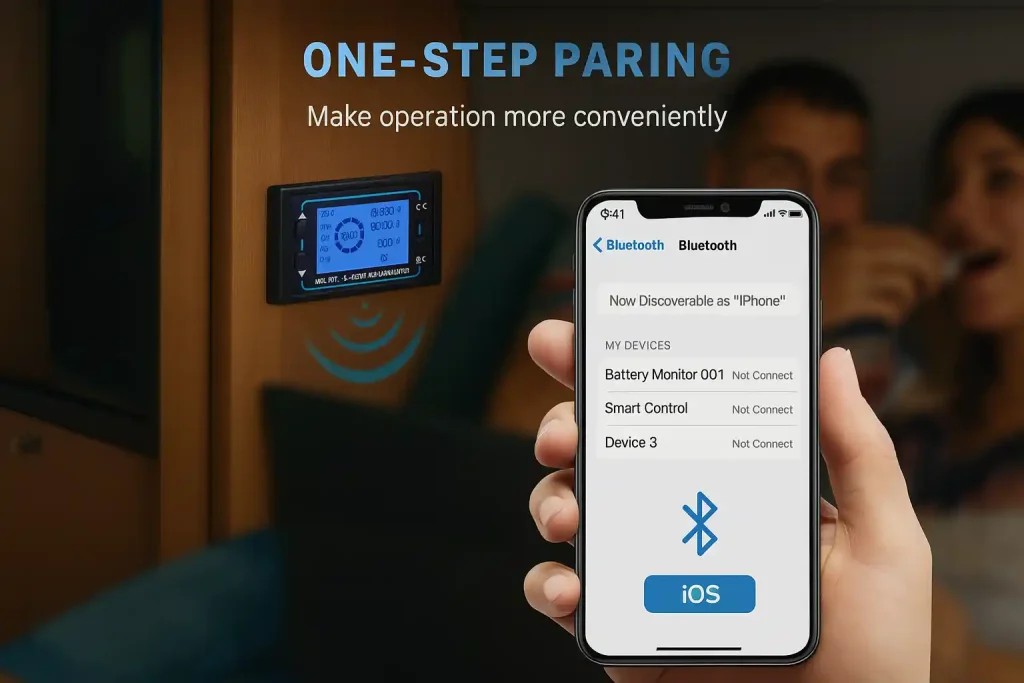
Modern PV systems often require devices to communicate with one another. A reliable battery monitor should be capable of integrating with other system components, such as solar charge controllers, inverters, or remote monitoring platforms. Features like data output ports, Bluetooth connectivity, or support for industry-standard communication protocols (e.g., RS485, CAN bus) make it easier to centralize system management.
Durability and Installation Flexibility
Lastly, consider the build quality and installation options. Battery monitors designed with robust housings and sealed electronics can withstand harsh operating environments, including high humidity or temperature fluctuations common in PV installations. Flexible mounting options and clearly labeled connection terminals simplify the installation process, reducing downtime and ensuring a clean setup.
By prioritizing these features, you can ensure that the battery monitor you select not only provides accurate and actionable insights but also integrates seamlessly into your PV system for long-term reliability.
How Do You Integrate a Battery Monitor into Your Existing PV System?
Integrating a battery monitor into a PV system may seem complex at first glance, but with proper planning and the right tools, the process can be straightforward. Whether you’re upgrading an existing setup or installing a new energy storage solution, a well-installed battery monitor will ensure accurate data collection and improved system performance.
Step 1: Identify Connection Points and Prepare the Shunt
Most battery monitors work with a shunt, a precision resistor that measures the current flowing in and out of the battery bank. Begin by identifying the main negative connection point in your battery setup. The shunt is typically installed between the battery’s negative terminal and the system’s negative busbar or ground connection. Installing it at this point ensures that all current paths are measured, providing accurate readings. Before proceeding, disconnect the PV system and battery to ensure safety.
Step 2: Connect the Voltage and Signal Wires
Once the shunt is securely in place, connect the monitor’s voltage sense wires directly to the battery terminals. This allows the device to measure real-time voltage levels. Then, connect the signal cable from the shunt to the monitor’s display or control unit. If the monitor supports communication with other devices, such as solar charge controllers or inverters, use the designated data output ports (e.g., RS485, CAN bus, or Bluetooth modules) for integration.
Step 3: Configure Parameters and Calibrate the System
After wiring is complete, power up the battery monitor and configure system-specific parameters. Set the battery capacity (Ah), high and low voltage thresholds, and any programmable alarms based on your system’s design. Many monitors allow you to perform an initial calibration by fully charging the battery bank. This process ensures that the state of charge (SOC) readings are accurate from the start. Some advanced models even allow remote configuration via dedicated apps or monitoring platforms.
Step 4: Verify Compatibility and Optimize Communication
Before finalizing the installation, confirm that the battery monitor is fully compatible with your PV system’s other components. For example, check whether the monitor’s voltage range and communication protocols align with those of your solar charge controller and inverter. Optimizing communication between these devices allows for more coordinated energy management, such as adjusting charging profiles based on battery health data from the monitor.
Step 5: Perform a Test Run and Analyze Data
Finally, run the system under typical load and charging conditions to verify that the battery monitor is working correctly. Review real-time data and historical logs to ensure the readings align with expected battery behavior. If inconsistencies arise, double-check connections and recalibrate as necessary. Regularly analyzing the data provided by the monitor will help you spot inefficiencies and plan preventive maintenance, further improving the PV system’s reliability and lifespan.
A properly integrated battery monitor becomes the central intelligence hub of your energy storage system. By providing accurate insights into battery health and energy flow, it empowers you to make better decisions, reduce downtime, and ultimately enhance the return on your PV investment.
Where Can You Find a Reliable Battery Monitor for Your PV Project?
Selecting a dependable battery monitor is as important as choosing the batteries themselves. A high-quality monitor will not only deliver accurate readings but also provide the durability and functionality needed to support long-term PV operations. Here’s what you should focus on when searching for the right supplier and product:
Look for Proven Reliability and Industry Experience
Battery monitors operate at the heart of your PV system, so reliability is non-negotiable. Choose manufacturers with a strong track record in energy storage and solar system components. Established brands typically offer products that have undergone rigorous testing in different environments, ensuring dependable performance over years of continuous use. In addition, suppliers with industry experience can provide better technical support and after-sales service, both of which are invaluable when integrating complex systems.
Verify Performance Specifications and Certifications
Before committing to a purchase, thoroughly review the product’s technical specifications. Confirm that the monitor’s voltage and current range are compatible with your battery bank and that it offers key features such as programmable alarms, real-time data display, and historical logging. Industry certifications such as CE, RoHS, or ISO-compliant manufacturing add further assurance of product quality and safety.
Consider Integration Capabilities and Future Scalability
Your battery monitor should work seamlessly with your PV system’s other components. Verify whether the device supports common communication protocols (e.g., RS485, CAN bus, Bluetooth) and if it can be easily integrated with existing inverters, charge controllers, and monitoring platforms. If you plan to scale your system in the future, a monitor with flexible specifications and expansion options will save you from costly replacements later on.
Evaluate User-Friendliness and Installation Support
An intuitive user interface and clear installation instructions can significantly reduce downtime during setup. Look for monitors with straightforward wiring, flexible mounting options, and detailed user manuals. Some advanced models also offer remote configuration and mobile app connectivity, which can simplify ongoing system management and troubleshooting.
Choose a Trusted Brand for Peace of Mind
For PV operators seeking a reliable battery monitor, CARSPA offers a well-regarded option: the BMC500 Battery Monitor with Shunt. Designed for voltage ranges from 8V to 120V and capable of handling up to 500A, it includes features such as programmable high- and low-voltage alarms, clear real-time displays, and robust compatibility with other system components. Built for both small-scale and large-scale installations, the BMC500 is engineered to deliver the accuracy and durability your PV system demands.

Conclusion
Why a Battery Monitor Is the Key to PV System Reliability
A PV system is only as reliable as the information you have about its energy storage. Without accurate battery data, it’s nearly impossible to optimize energy usage, protect your batteries from damage, or plan for future maintenance. A battery monitor fills this critical gap by delivering real-time insights, automated alarms, and long-term performance tracking.
By accurately measuring state of charge (SOC), preventing deep discharge and overcharging, and enabling early fault detection, a battery monitor transforms how you manage your energy storage assets. These benefits translate directly into greater energy efficiency, longer battery lifespan, and reduced operational costs—all of which are essential for the long-term success of any PV project.
Choosing a high-quality battery monitor ensures your PV system runs at its full potential. Reliable brands such as CARSPA offer advanced solutions like the BMC500 Battery Monitor, designed to integrate seamlessly with modern energy storage systems. With features like wide voltage and current support, programmable alarms, and robust data logging, the BMC500 gives you the tools you need to protect your investment and maintain uninterrupted energy supply.


